Category Archives: Health

“Out of the Darkness” walk raises awareness about suicide prevention

thumbnail_img_6604

Patterson student Andy Marquez and art teacher Ms. Marchewka at the “Out of the Darkness” suicide prevention walk at Patterson Park (Photo: Ms. Marchewka)

By Dabria Brown,

A student and a teacher from Patterson participated in a suicide prevention walk called Out of the Darkness on November 5th in and around Patterson Park. Between 500-600 people attended the walk, including Ms. Marchewka, the art teacher, and a student from Patterson.

The purpose of this walk was to raise awareness about suicide and how to help prevent it. According the The National Institute Of Mental Health, “In 2009, suicide was the third leading cause of death for young people ages 15-24. In this age group, suicide accounted for 14.4 percent of all deaths in 2009″.

Andy Marquez, the student who participated in the walk, had personal reasons for getting involved. ” I had some suicidal experiences and I also had a friend that I lost from suicide”, Marquez explained.

People around the world deal with suicidal thoughts. Most people commit suicide or even have the thought of it because they are depressed. Last year a Patterson student committed suicide. If you see anybody that seems depressed or suicidal, try to talk to them or get them help from one of the counselors or social workers in Room 113.

Gardening Club promises benefits for school and community

The Patterson Garden.  (Photo: Mikal McCoy)

The Patterson Garden.
(Photo: Mikal McCoy)

By Mikal McCoy

Ms. Steigner and Ms. Scott are working together with students at Patterson High School to develop a ongoing gardening club. It is their hope that this gardening club will impact students’ lives in a variety of ways.

The Patterson High School garden was first created during the summer of 2011, around the time period when Mr. Benton became principal of Patterson High School. Using two grants, a hoop-house was added in 2013. In the past, students and teachers have worked on the garden. However, during the summer of 2016, little attention was paid toward the school garden. To get things back on track, students and teachers at Patterson High School are developing a gardening club.

Having a school gardening club is a goal Patterson’s Student Government Association (SGA), is pushing to reach. One of the problems we face today here at Patterson is that some students want to learn gardening while others do not.

In response to the question, “If there was a gardening club at Patterson, would you join?”, T. Moore, a student from Patterson, responded saying, “No, I don’t think I would be interested’.’ Although some students have no interest in joining a gardening club, others think it’s a great idea, ”If you grow food, you can save money and it looks good”, says M. Adams, an intern from Morgan State University.

Around the world, a large number of people believe eating healthy can improve our mental, physical and spiritual environment. Ms.Scott, an ESOL teacher at Patterson, believes students should eat healthy because eating healthy helps a person focus in class. “When you eat healthy foods, your brain responds to the ingredients like a car reacts to gas. If you put the right gas into the car it will perform to its highest potential”, explained Ms.Scott. In the past, Patterson’s garden has produced large quantities of quality vegetables such as strawberries and tomatoes, which students have eaten.

Patterson High School is a place where students and teachers can grow food and eat healthy. Patterson’s gardening club is dedicated to teaching, growing, and providing healthy foods for the surrounding community. Ausar Mesh, a teacher on healthy living, gave a few words to share: “Urban farming may not be the solution to all the problems in the inner cities across America; however it’s a prerequisite to the achievement of practical solution of the most faceted issues. Food sovereignty in urban neighborhoods and global climate change into connected sustainable organic urban farming is a low industry that is ambitions enough to tackle both issues on a micro and macro economic level”.

The gardening club will teach students useful skills and contribute to a healthier community. To get involved, see Ms. Steigner in Room 113.

Patterson continues tradition with 6th annual community fair

A stand from the community Fair (Photo: Patterson Press)

A stand from the community Fair (Photo: Patterson Press)

By Mikal McCoy,

Patterson High School had its 6th annual Back to School Night and Community Fair on the evening of September 22, 2016. Students, teachers and family members met together in the cafeteria to share a night of fun.

During the fair, there were games, activities and food. “It was a lot of food, a lot of chicken, vegetables and drinks”, said Yero Goloco, a student who attended the fair. For entertainment, different activities were planned. Students who were asked agreed that the fair was entertaining. “There was a lady belly dancing, people played drums, and there was a dance battle”, said Amadou Bah, another student who attended the fair. These responses reveal that people enjoyed the food and activities, but the Community Fair served other purposes as well.

Many families attended the fair. Students from Patterson High School invited their parents, friends, and relatives. Around 500 people attended the event. Dozens of community organizations, businesses and universities participated in the fair, along with many school groups and programs such as Robotics, Gardening, Coding Club and more. Each club had a stand with representatives who spoke with students and family members about what they do.

One group that attended the Community Fair was Patterson’s AFJROTC program. Cadets who attended the event helped out with setting up and seating visitors. “I was standing outside, greeting people, giving them their tickets for their sheets”, explained Abdullah, one of the cadets. Teachers, students and family members came together to make the Community Fair a success.

This year marked the 6th consecutive year that there has been a community fair event at Patterson. Ms. O’Brien and Mr. Alukwu started the event in 2011. “It was an idea that Mr. Alukwu and I came up with the summer before Mr. Benton became the principal”, recalled Ms. O’Brien. It takes planning, organization, and thought to come up with an idea like a school community fair and make it work. This year’s event was no exception.


Help end childhood cancer

Childhood Cancer Awareness  (Photo: http://www.charlottemomsblog.com/2014/09/12/september-childhood-cancer-awareness-month/ )

September is Childhood Cancer Awareness month.
(Photo: http://www.charlottemomsblog.com)

By Dabria Brown,

Childhood cancer is a big problem in our country. Childhood cancers are often the result of DNA changes in cells that take place very early in life. According to the American Cancer Society, “1 in 258 young people will be diagnosed with cancer by the time they turn 20. Because childhood cancers are rare, there are no widely recommended screening tests to look for cancer in children who are not at increased risk”. The American Cancer Society also said, “Less than 5% of federal funding for cancer research is dedicated to childhood cancers each year”.

The American Cancer Society takes a comprehensive approach to childhood cancer through funding research, advocating for policies that advance the childhood cancer agenda and improve access to quality care, providing support for patients and their families. The American Cancer Society has many resources to help families understand and cope with a cancer diagnosis in their child. Cancer is bad enough, but when it affects a child it is particularly devastating. Kids deserve a chance to experience life–to laugh and have fun, to be amazed and to dream, to grow.

One thing people can do to help solve this problem is making a donation. Your generous gift will support the gold standard in childhood cancer research. Its the simplest way to keep the research going. One way you can donate is by going to https://shop.stjude.org . Another way you can help is by sending cards to children suffering from cancer. Doing these things can make a difference in a child’s life, or even save someone’s life.

Inside the mind of a teenager

photo from Wall Street Journal

Photo from Wall Street Journal

By Jessica Branch,

All teenagers make stupid mistakes that one day they may look back at and laugh. But then there are some mistakes that can’t be undone and some become detrimental. Studies have found that it’s not the case that some teenagers don’t always think about a situation they may be involved in; they just can’t always come to a clear decision like adults can.

Just think of it like this: If you’re on a diet and see a slice of pepperoni pizza, are you more likely to just glance at the pizza before eating it or stop and think about the pros and cons?

You can think of it the same way as a teenager. Our brains don’t move fast as adults. They don’t fully form everything we should take into consideration and we tend to just look at what we’re getting out of the situation that would be “fun”.  Teens take an average of 170 milliseconds longer to go over the consequences of a decision, which in turn makes them more likely to decide the risk is worth it. For more information about this, go to:http://www.telegraph.co.uk/news/health/children/11739219/Revealed-Inside-the-mind-of-a-teenager.html

It’s okay to make mistakes when you’re a teenager but you have to start thinking outside the box when you’re an adult. Some teenagers don’t realize that since their brains aren’t fully functioned like adults, that they can start now by making good decisions to get their minds processed and functioned like adults and it wouldn’t be as hard if they tried later.

It’s okay to make great decisions because great decisions form you into a great person. So the next time you’re stuck between choosing your diet and that slice of pepperoni pizza, choose the right thing.

Senioritis outbreak sweeps through Patterson

by Ms. Kirsch,


Public Health Advisory!

A serious, seasonal disease is sweeping Patterson High School, and staff and students should be on alert. The disease, known colloquially as “Senioritis,” attacks the central nervous system often causing those affected to act erratically and illogically.

Symptoms include listlessness, red eyes, angry outbursts, inability to take responsibility for ones own actions and putting off for tomorrow what could be done today.

While the disease effects Seniors at a much higher rate, it is so highly contagious that no one is completely safe. Juniors are particularly susceptible to contamination in the late Spring, as we bid Farewell to the Seniors and the Juniors rise to fill their shoes. In this instance, the disease is most serious, since Juniors’ last quarter grades can mean the difference between acceptance to their dream college or flat, cold rejection.

Indeed, even faculty and staff are not completely immune. Since Senioritis is not viral, it can be contracted multiple times. Therefor, teachers who suffered through Senioritis in their own school days can be reinfected through contact with current Seniors. Symptoms manifest slightly differently in adults, and affected teachers may be found to suffer from crashing headaches, inadvertent rolling of the eyes, and the overwhelming urge not to work harder than their students.

The best protection is long-term goal setting and focus on those goals. When students can keep their minds set on their future, it is easier to maintain a state of health during those last few months of school.

Passionately Pink Day Attacks Breast Cancer

(Photo: Patterson Press)

By Joshua Carr,

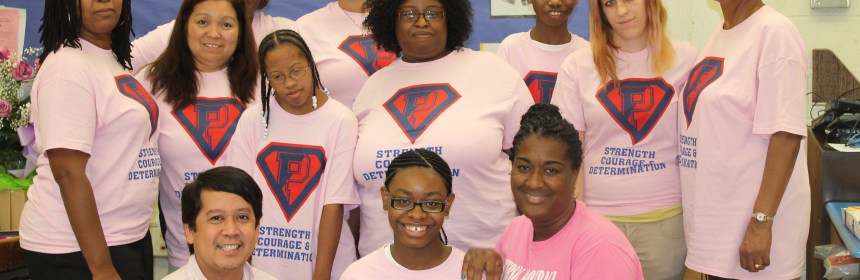
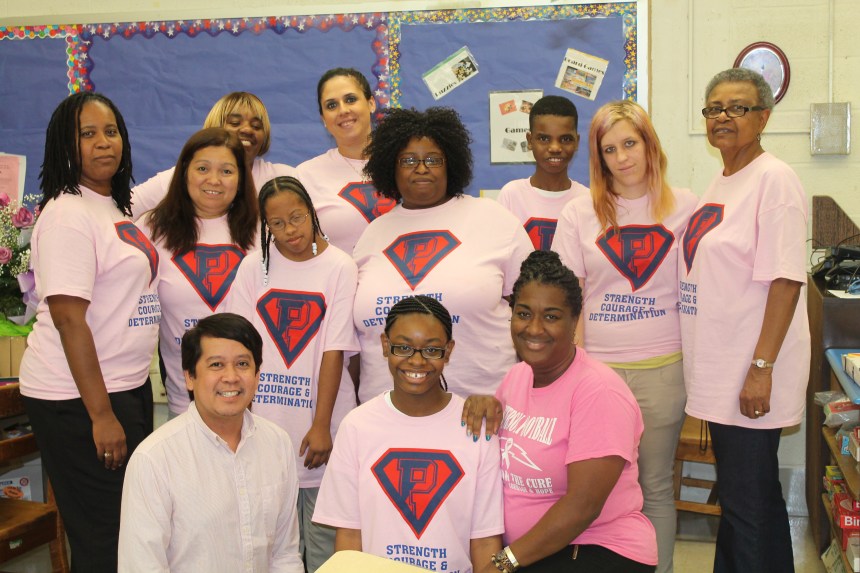
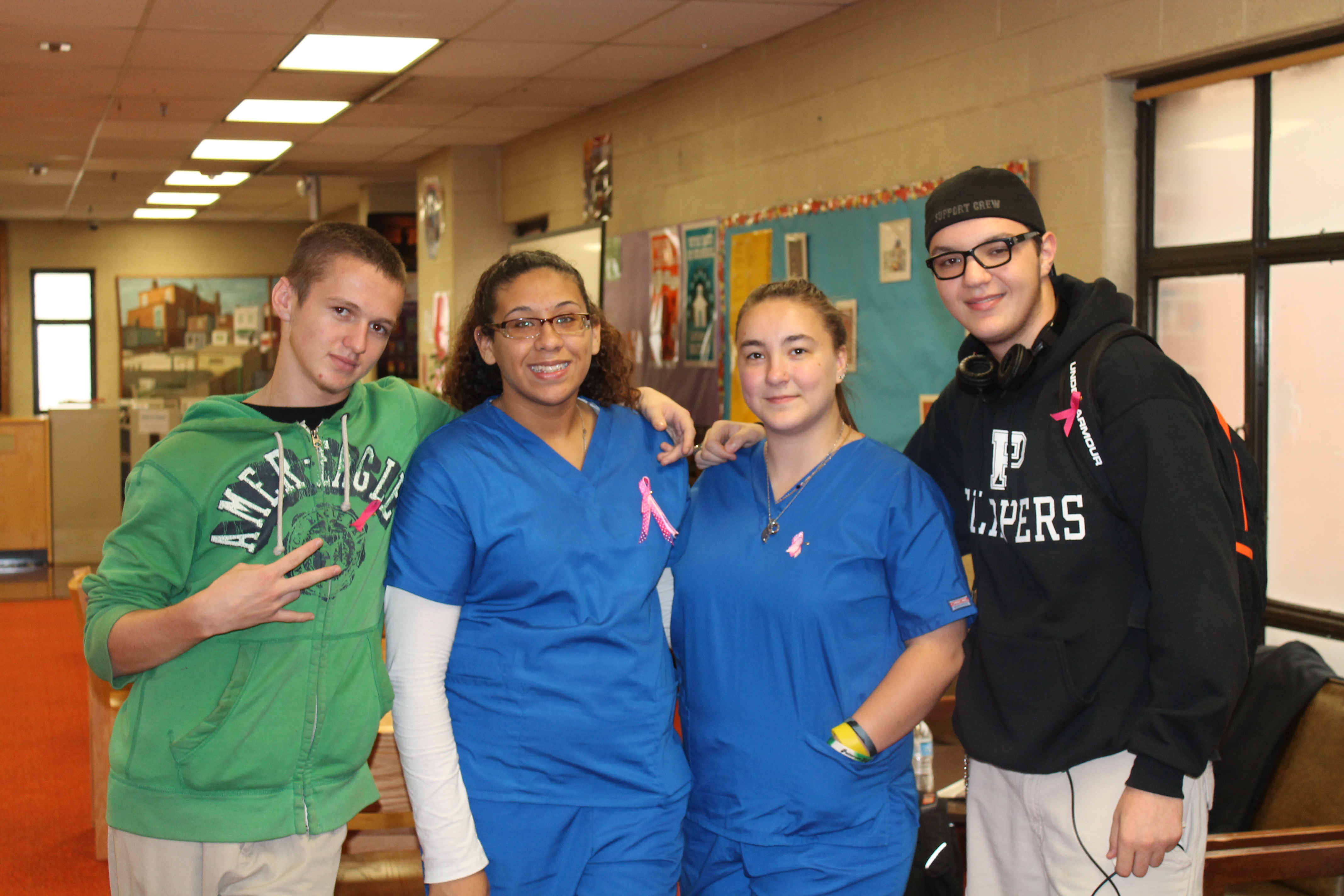
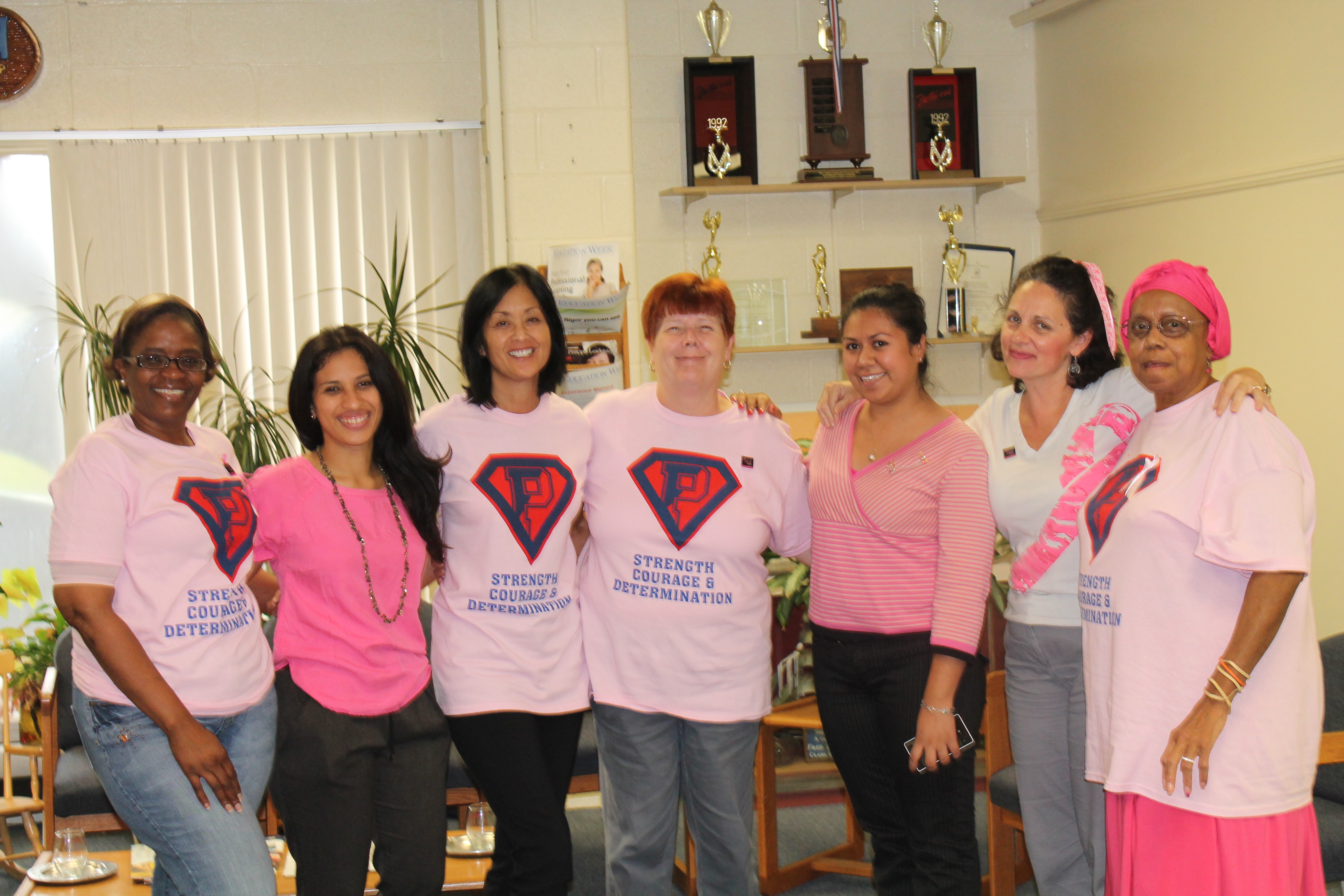
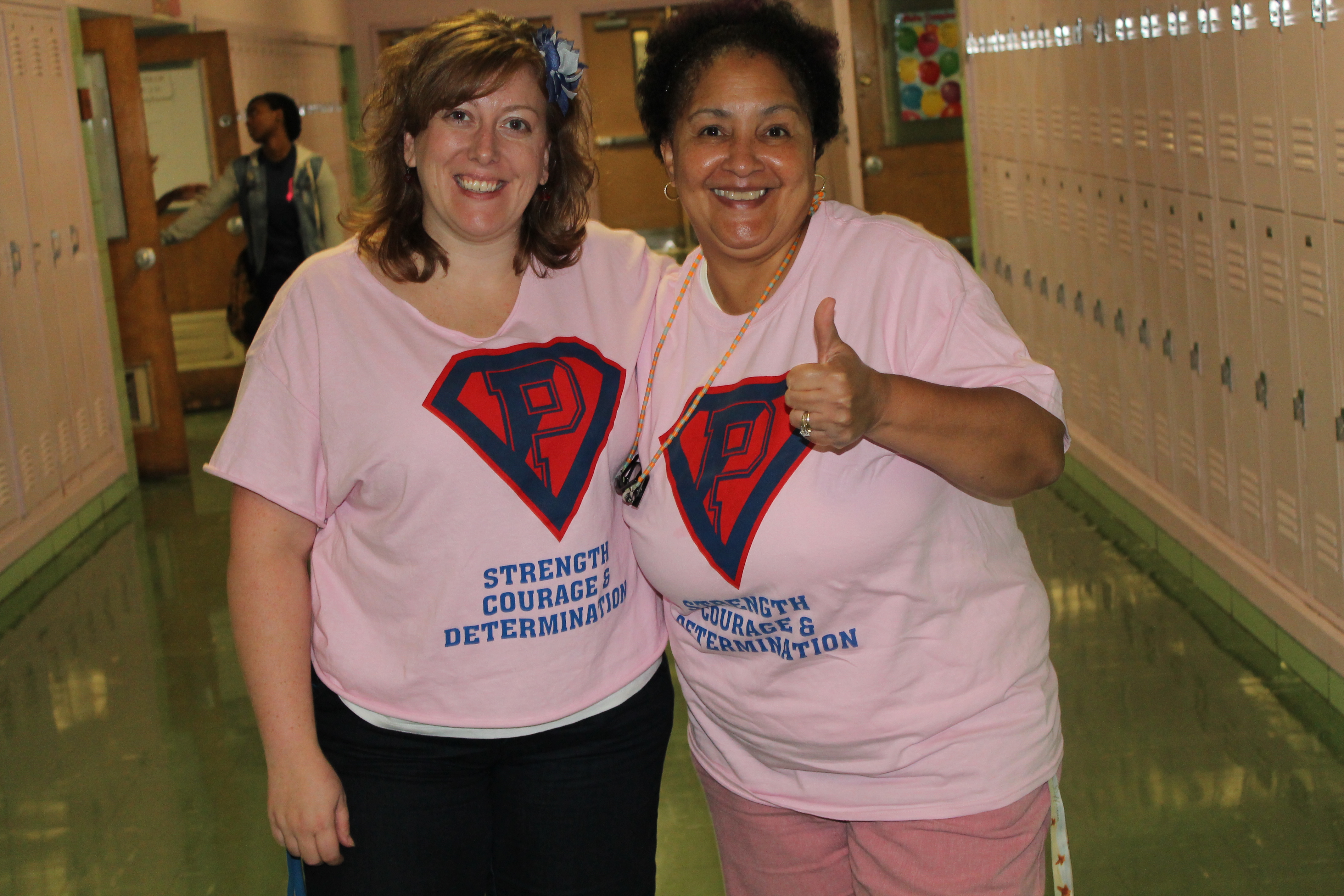
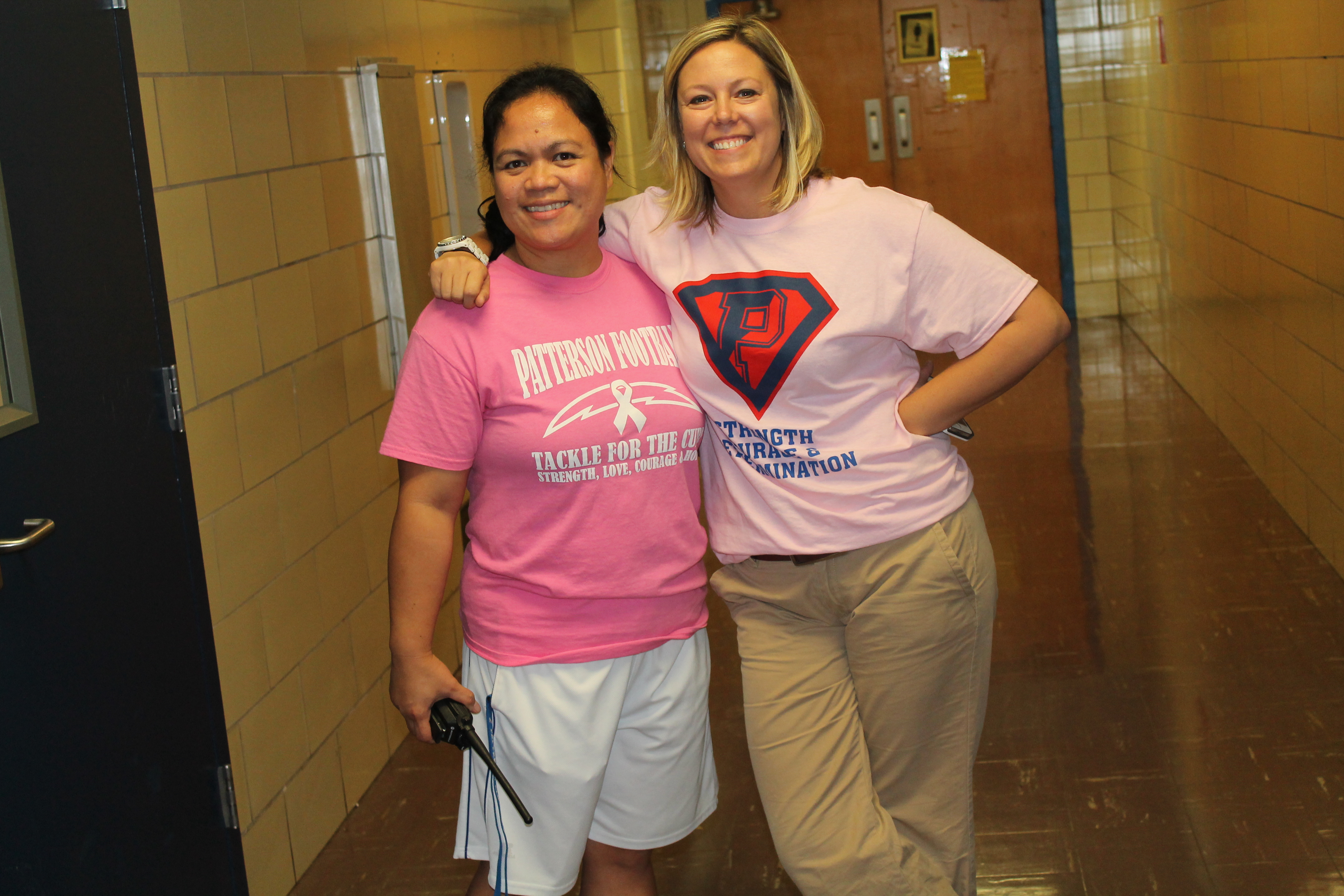
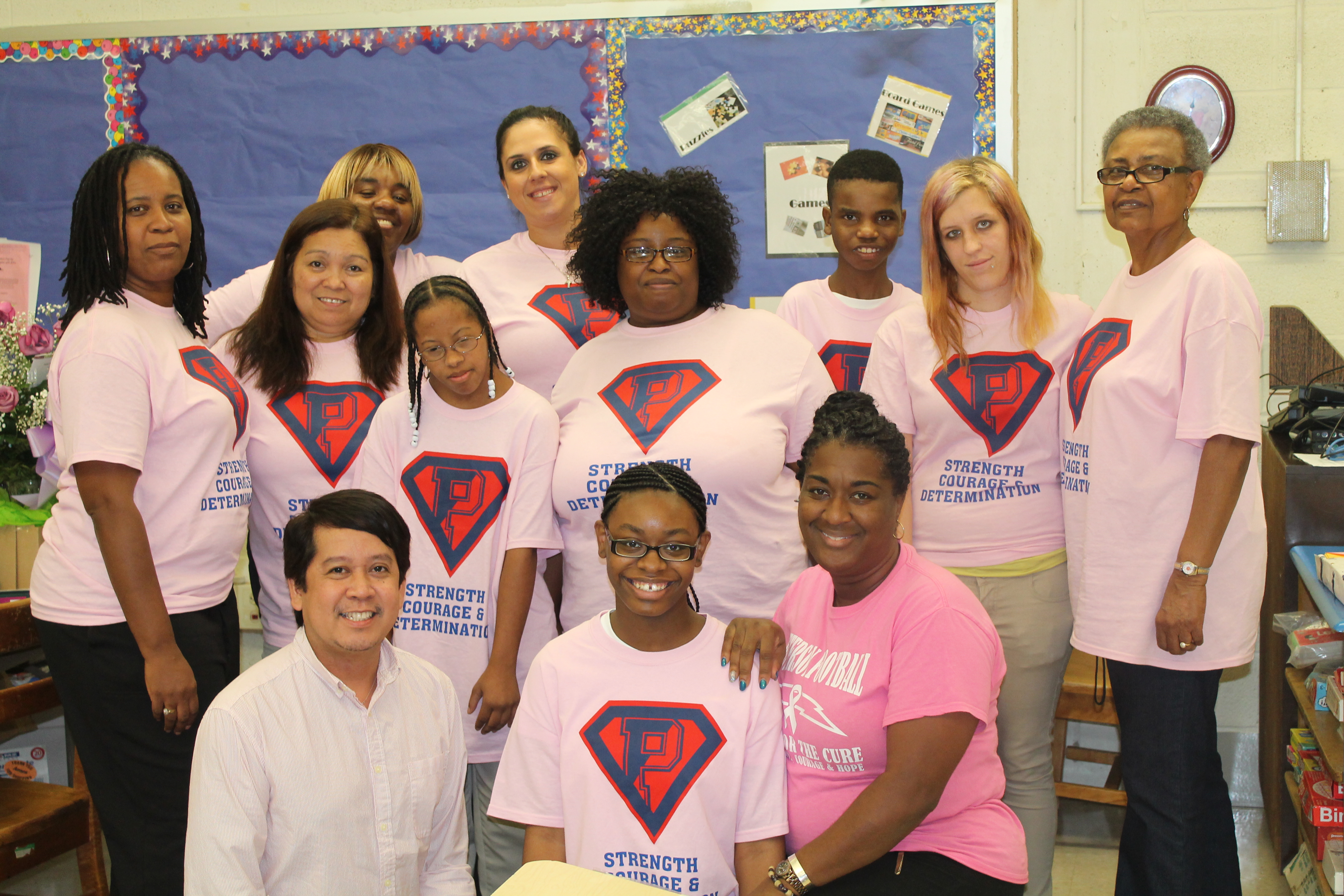
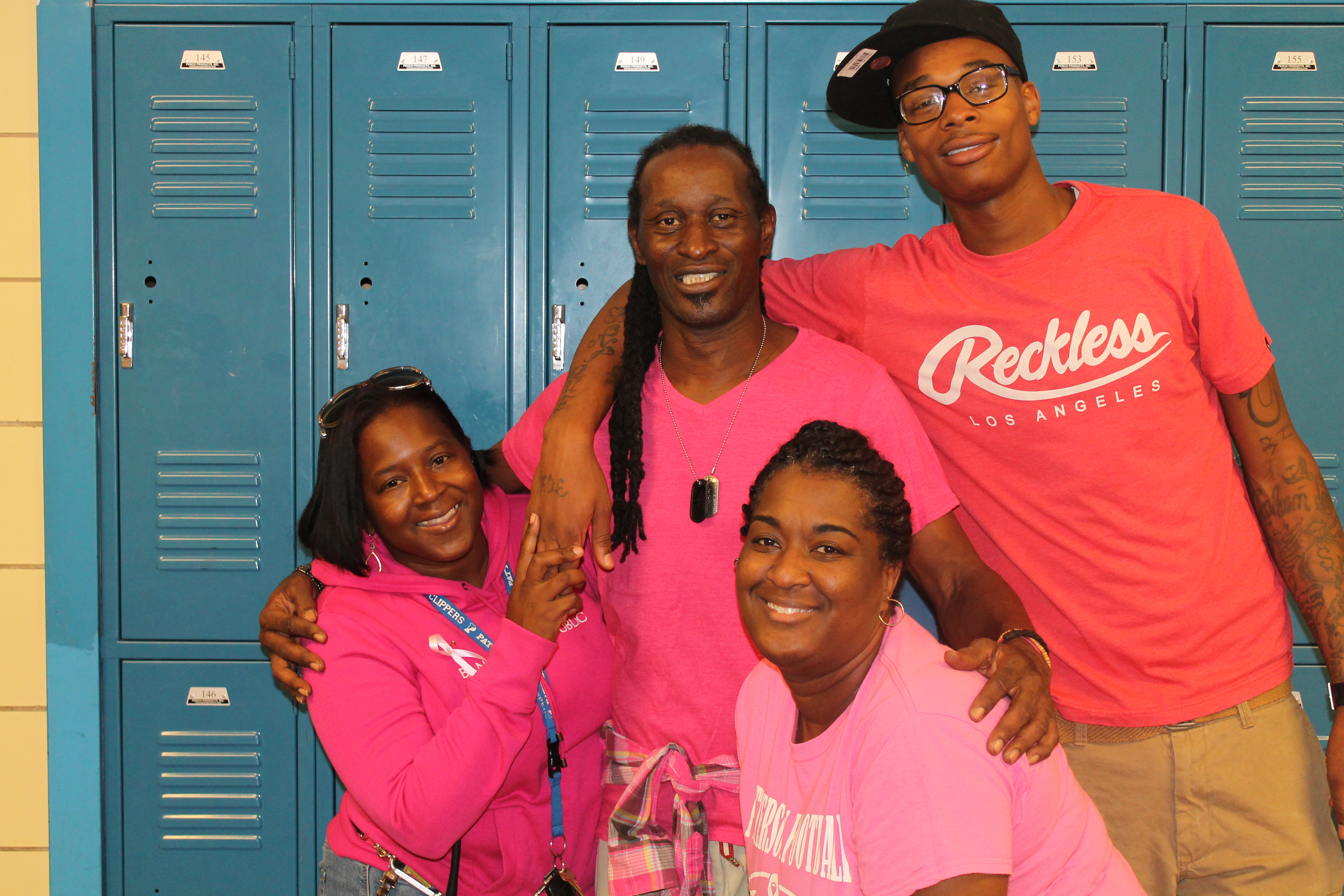
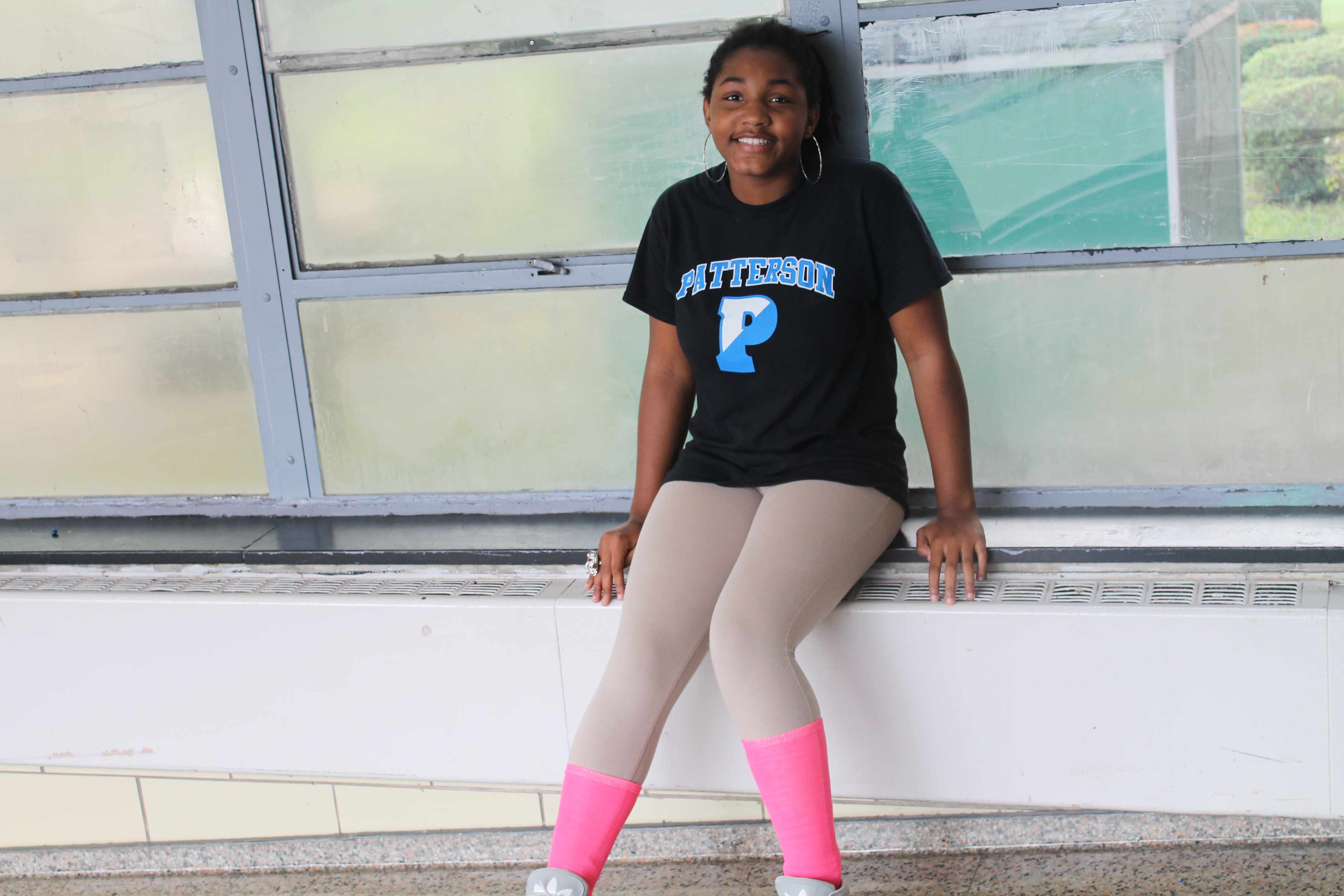
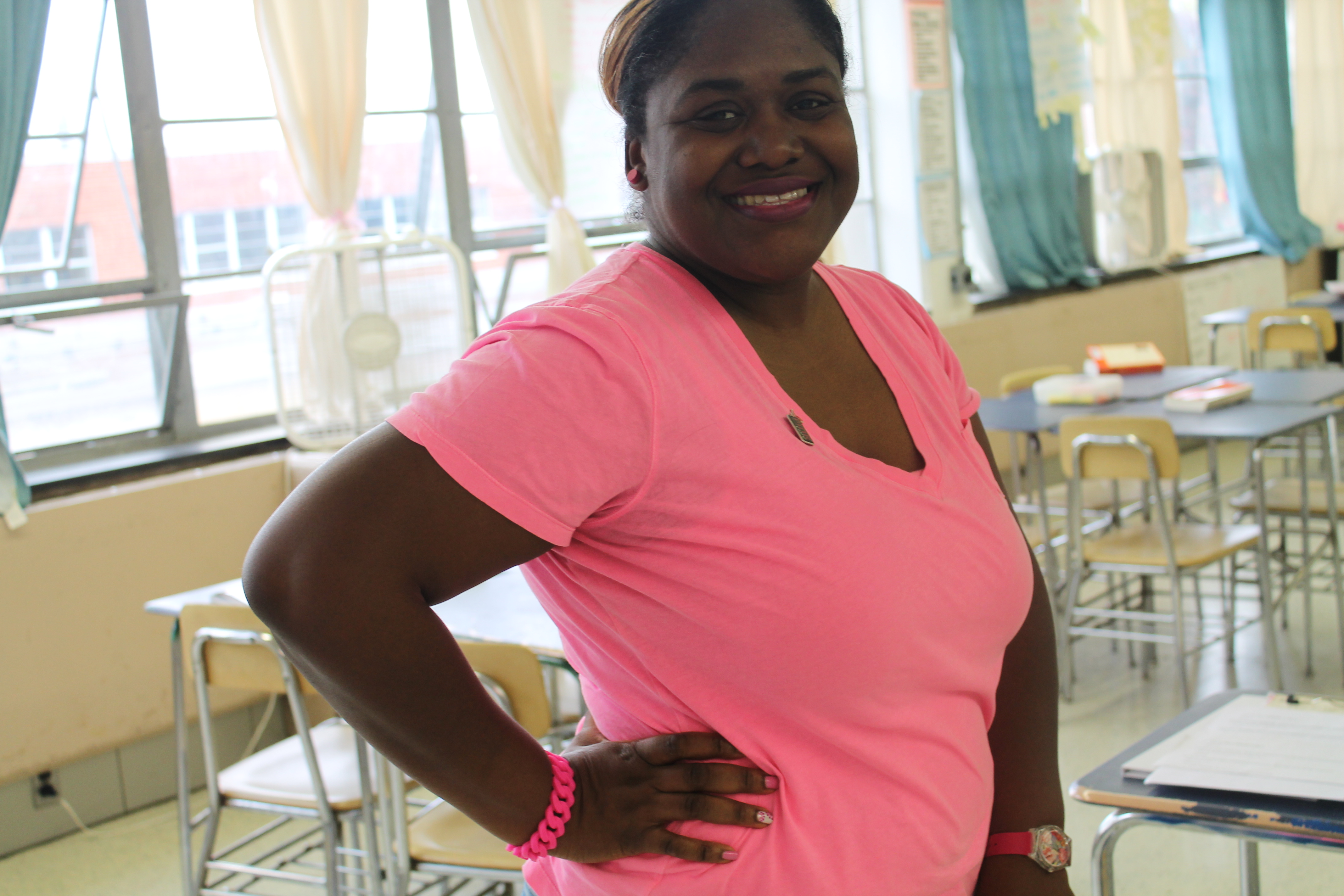
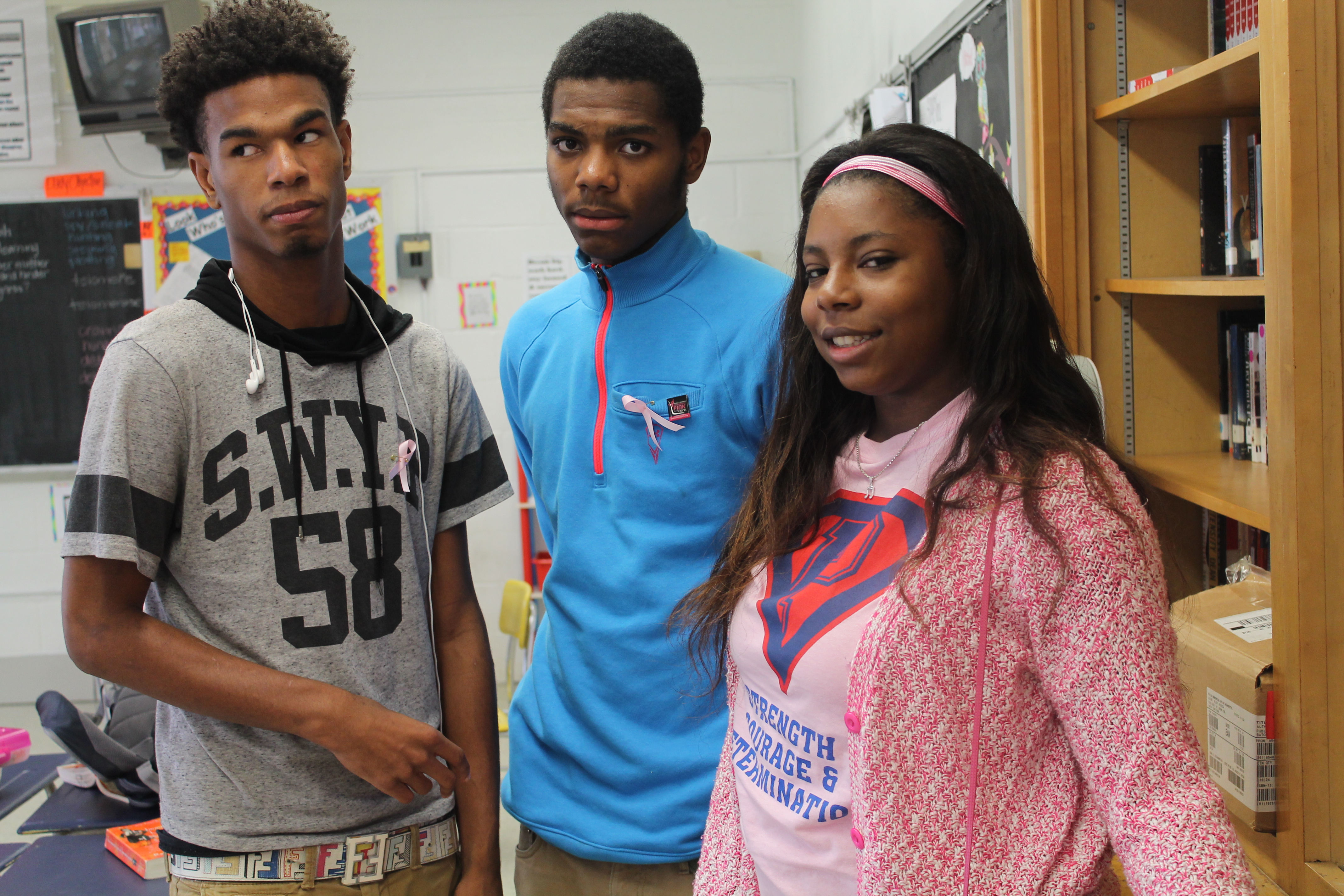
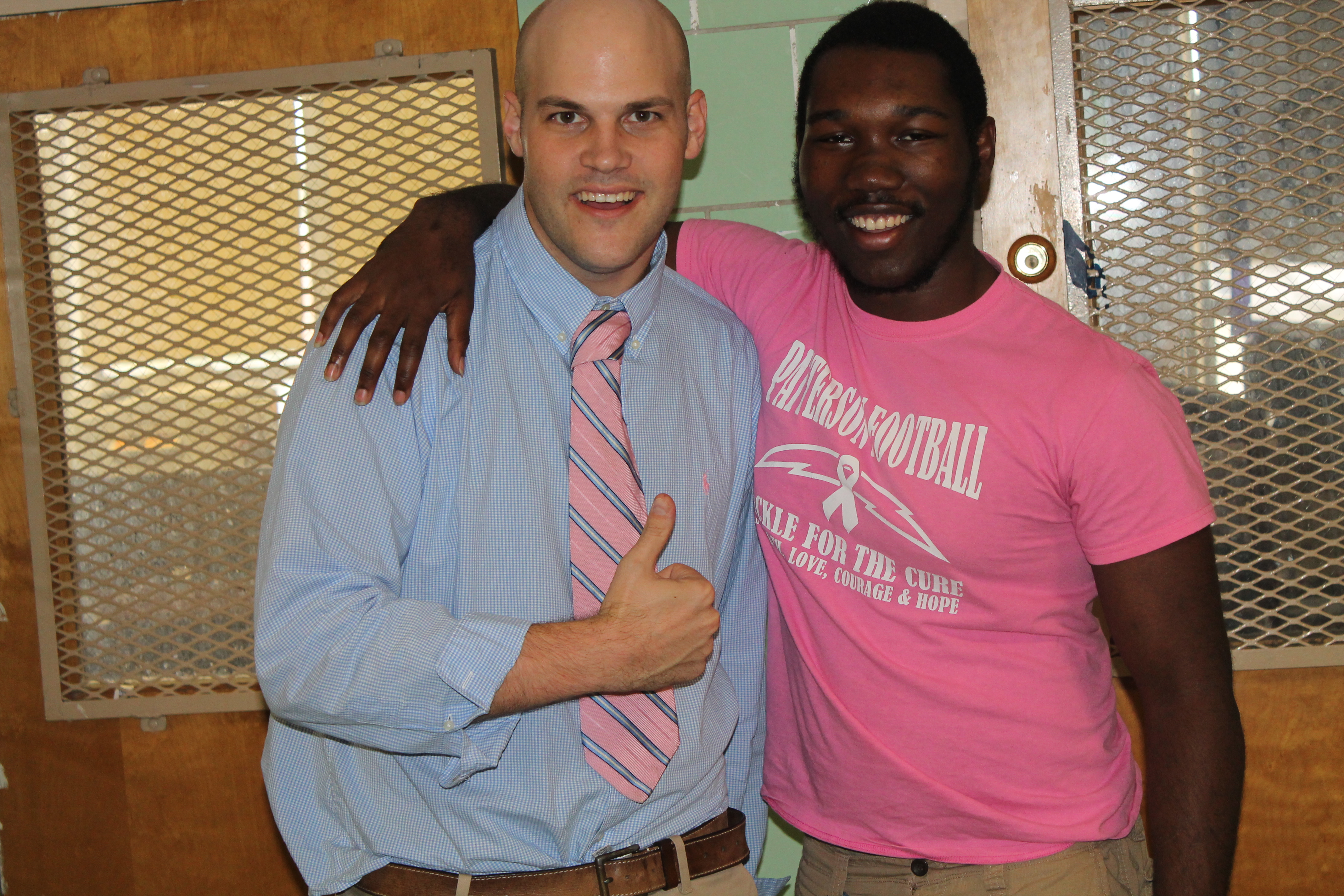
Did you see Passionately Pink Day go by? That was the day students and staff wore pink to raise money and awareness to fight breast cancer on October 16. The day may have passed, but you can still give money.  See Ms. Edwards in room 230. It was a great success, and we are still fighting!


(Photos: Patterson Press)

Clipper Corner Predicament (OPINION)

By Taj Beatty,

I love going to the Clipper Corner (Patterson’s school store). However, the teachers don’t necessarily want us to chew, eat or drink anything that we buy from the Clipper Corner. You know we all have multiple teachers that will not hesitate to say, “No Gum! No Drinks!”. Yet when they sell it at the Clipper Corner you think, “Oh–they sell gum, so I guess since they sell it, I’ll be able to chew it in class”. So where does the confusion end?

Studies show that when you chew gum while taking notes on a test, if you chew the same flavor of gum during the test, it”ll help you remember your notes. Crazy, huh? Well, I guess teachers just want us to rely on pure brain memory, and to see if we’re actually paying attention.

So don’t be mad at the teachers, they’re just trying to do their part. If you want things to change, ask your teachers and Coach Kelley about this Clipper Corner predicament.

While you’re at it, ask yourself another question: Do your health and gym teachers want you to eat unhealthy snacks before class starts? The candy and chips cause loss of energy and tire you out. You wouldn’t want that–especially if you have a swim meet or a football game. In fact, in all sports we all know that we need a lot of energy and fuel to dominate and destroy the other team. You don’t want to pay the price and lose the game. So maybe eat some fruit and drink some milk.

Still, everybody wants a tasty candy bar once in awhile, which is why you should get your snacks after school ends so you can have it as a treat to yourself, knowing you survived another day of school. Just make sure you make it to school fast enough to get to the Clipper Corner. That’s one more reason to get to school early!

Those are my thoughts on the subject. Do you agree? What are your thoughts? Spread the word and we’ll figure out the Clipper Corner Predicament!

Incarceration does not deter drug use, student survey suggests

by Nila Strong,

Edited by Ms. Kirsch’s Creative Writing class

This semester, our Creative Writing class received a visit from Ms. Kelly Burke, Patterson’s Sr. Rehabilitation Therapist through the Department of Community Psychiatry at Johns Hopkins Bayview Medical Center. She spoke with us about drugs and how they can affect our minds and bodies.

Her visit inspired us to look deeper into the issue, so we created an unscientific anonymous survey that asks questions about drug use and drug possession laws. For example, we asked questions like “Do you feel putting people in jail makes them stop using drugs?” We found that, of the almost 200 people we surveyed, 161 believed that putting people in jail does not make them stop using drugs. People wrote down their reasons for their opinions. Many said that they knew people who had gone to jail and had just as easy a time getting drugs in jail as on the streets. One person wrote, “We are doing this [putting people in jail] but I haven’t seen something change.”

Yet those surveyed, mostly Patterson students, did believe that many drugs are dangerous and that laws should be changed, not to make drugs more accessible, but to keep people safer.

We came up with the questions by having discussions about drugs and possession laws. We asked each other questions and we brainstormed, too. Creating and administering a survey was a great way to find out more about an important topic.


¿Porque los estudiantes usan drogas? (SPANISH)

Por Lithza Juarez (traducción por Adarely Perez-Angeles),

Editor’s Note: This article is written in Spanish for the benefit of our Spanish-speaking readers. To read this article in English, click here.

Depresión es algo común en los adolescentes que provoca que usen drogas para sentirse bien, pero las drogas y alcohol son la manera más fácil para causar más depresión. Muchos estudiantes les gustan usar drogas para resolver sus problemas o simplemente para olvidarlos. Algunos estudiantes tienen mucha presión del trabajo de escuela, o puede ser que tienen problemas en su casa o en otro lugar. La escuela Patterson High School no es fácil y hay muchos caminos malos que puedes tomar. Todos necesitan un escape y casi siempre todos los estudiantes escogen lo más fácil para ellos que son drogas o alcohol.

Algunos estudiantes usan drogas porque sus amigos les ofrecen o porque les gusta seguir lo que los demás adolescentes hacen solo para que crean que son “cool” o para que sean populares. Adolescentes siempre necesitan expresar sus sentimientos y en mi opinión enojo, retraerse y drogas ofrecen lo mismo. Cuando los adolescentes tienen o sienten depresión todo lo que quieren es detener ese sentimiento o lo que sea que estén sintiendo. Alcohol y drogas son muy peligrosos pero a veces hay algo pasando en nuestras vidas que nos hacen pensar que es la única solución. Las drogas pueden ayudar a parar ese sentimiento pero también puede hacer que regrese, y por eso ellos creen que drogas son la manera de salir de tus problemas.

Padres, maestros, consejeros, y amigos pueden hacer una diferencia en la vida de un adolescente.

« Older Entries Recent Entries »