Category Archives: Education News

AP psychology disorder presentations 

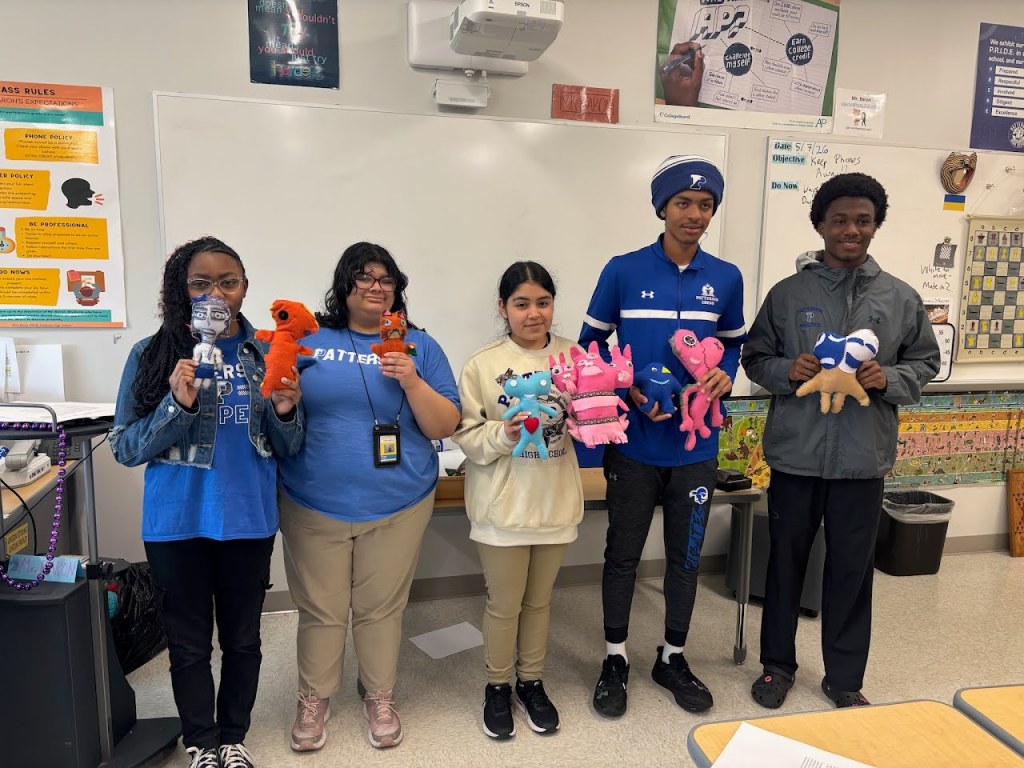
AP Psychology students show off their “ugly dolls”

By Saniyah Courtney

At Patterson High School, in our AP psychology class led by Mr. Baron, students researched, presented different mental health disorders, created ugly dolls with special powers, and guided notes to help the class better understand how the disorder could affect someone.

Taron Taylor presented on ADHD (Attention Deficit Hyperactivity Disorder), explaining the common symptoms like difficulty focusing and hyperactivity, and how it is treated. He also discussed medication options and possible side effects, and even used his own life examples to help the class understand both the benefits and challenges of treatment.

Jae’lynn Newby-Goode presented on cluster disorders, which focused on groups of personality disorders that are often categorized together. She explained ten different types of personality disorders and how medication can help manage symptoms, and how common it is for each gender. Jaalyn’s presentation helped show how complex personality disorders can be and how treatment often depends on the individual.

Zoe Harris talked about somatic symptom disorder, explaining how it is caused by a strong focus on physical symptoms that may not have a clear medical explanation. She discussed how stress and mental health can affect the body and explained ways people live with the disorder, and also used a celebrity as an example.

Marshall Mallory presented on bipolar disorder, explaining how it causes extreme mood swings between manic episodes. He also talked about the different types of bipolar and how it can be passed down through genetics, while also discussing how people manage the disorder through medication, therapy, and lifestyle changes to keep their moods more stable.

Roman Clark talked about OCD (Obsessive Compulsive Disorder), explaining how people experience unwanted thoughts and feel the need to perform certain actions repeatedly. He also shared myths about OCD, explaining how therapy can reduce these behaviors and improve daily life. 

Genesis Lagombra presented on dissociative disorders, going into detail about how they affect memory, identity, and awareness. She described how people may feel disconnected from themselves or from reality. She also discussed treatment options like therapy to help individuals regain a sense of stability.

Cesia Lopez Velasquez talked about eating disorders, explaining how they affect both mental and physical health. She discussed different types, the pressure that can contribute to them, and how treatment often includes therapy, medical support, and building a healthier relationship with food.

Sierra Skaggs presented on social anxiety disorder, explaining how it causes intense fear in social situations. She also discussed how it can affect communication and daily life, and she explained how therapy and coping strategies can help people feel more comfortable in social settings.

Along with these presentations, AP psychology students have also worked on a creative project where they created “ugly dolls” with superpowers to help the person with the disorder, allowing them to express themselves artistically while connecting their understanding of psychology to art.

Patterson SGA participates in Ocean City convention

By Yeimi Banegas

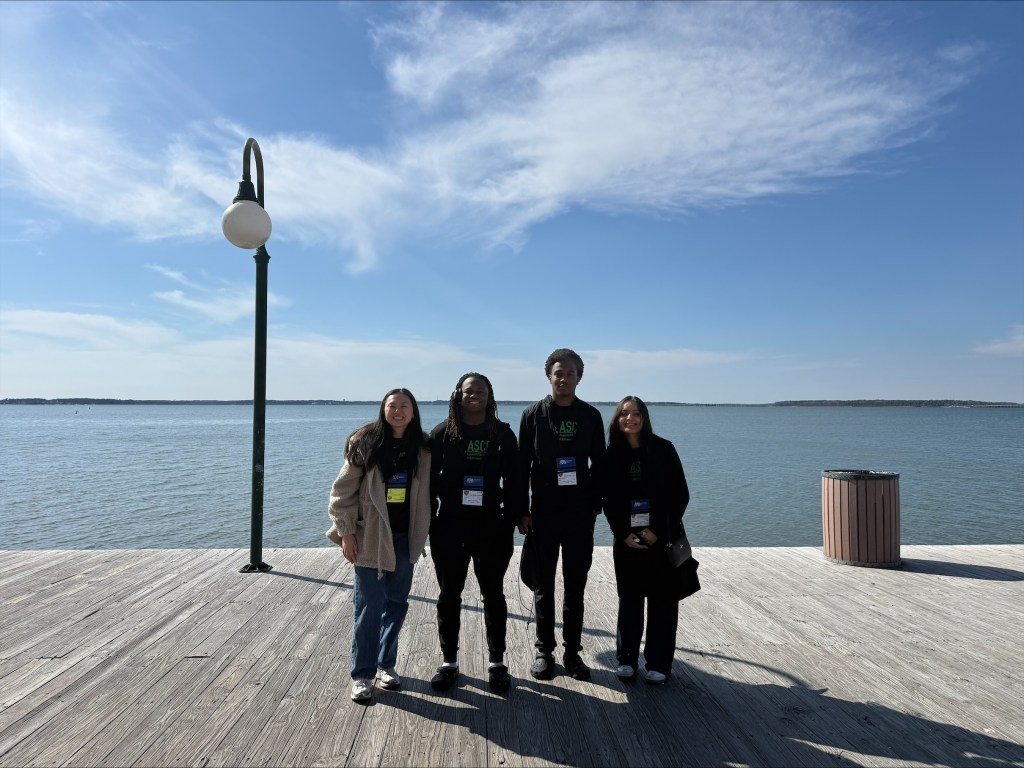
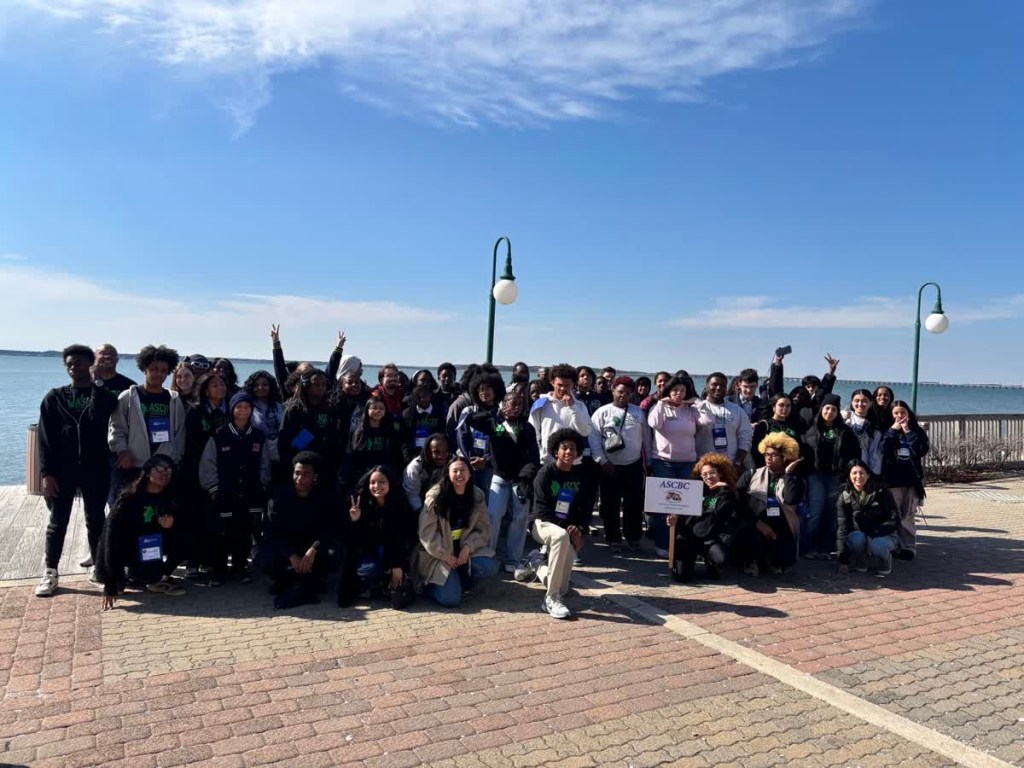
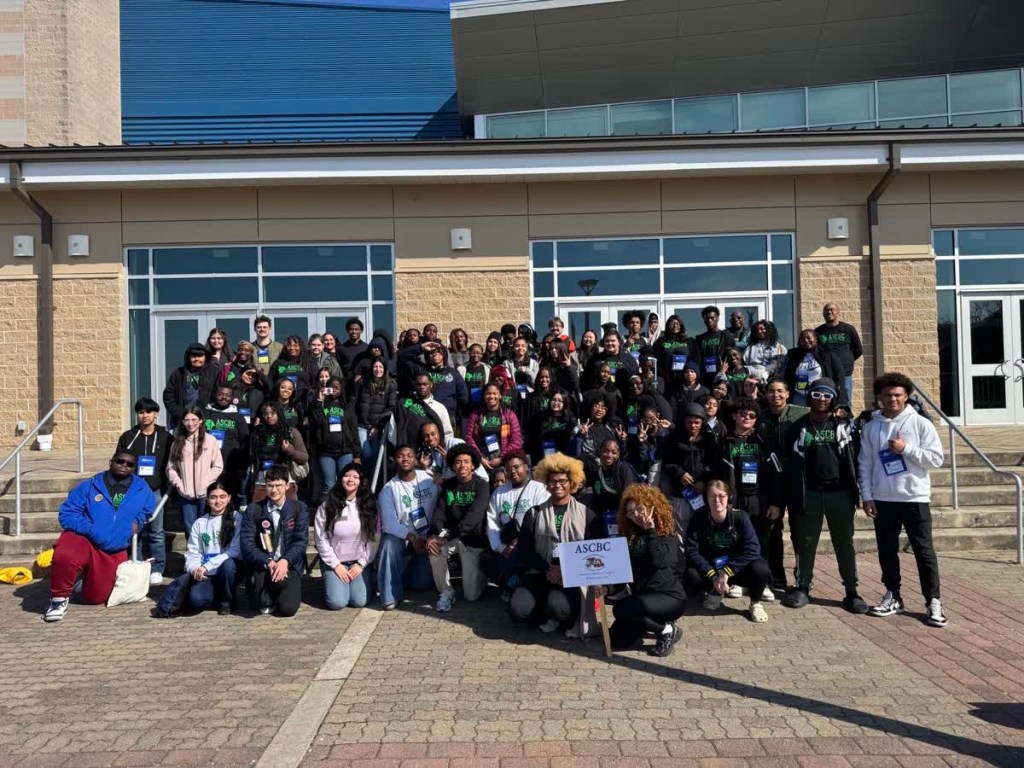
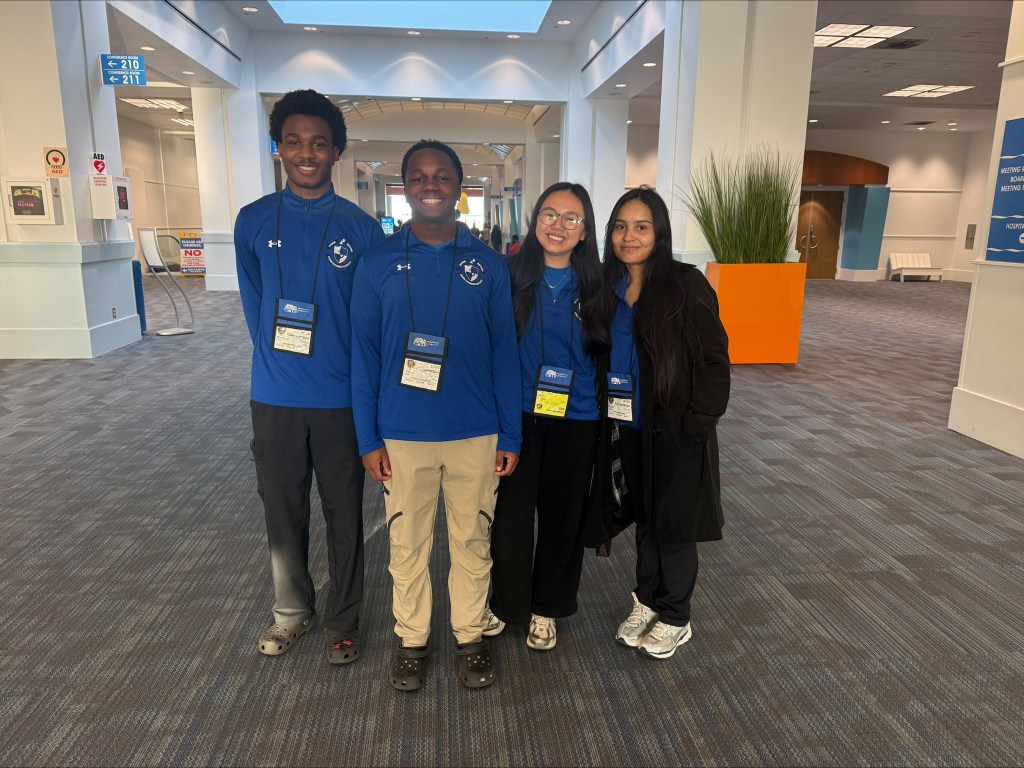
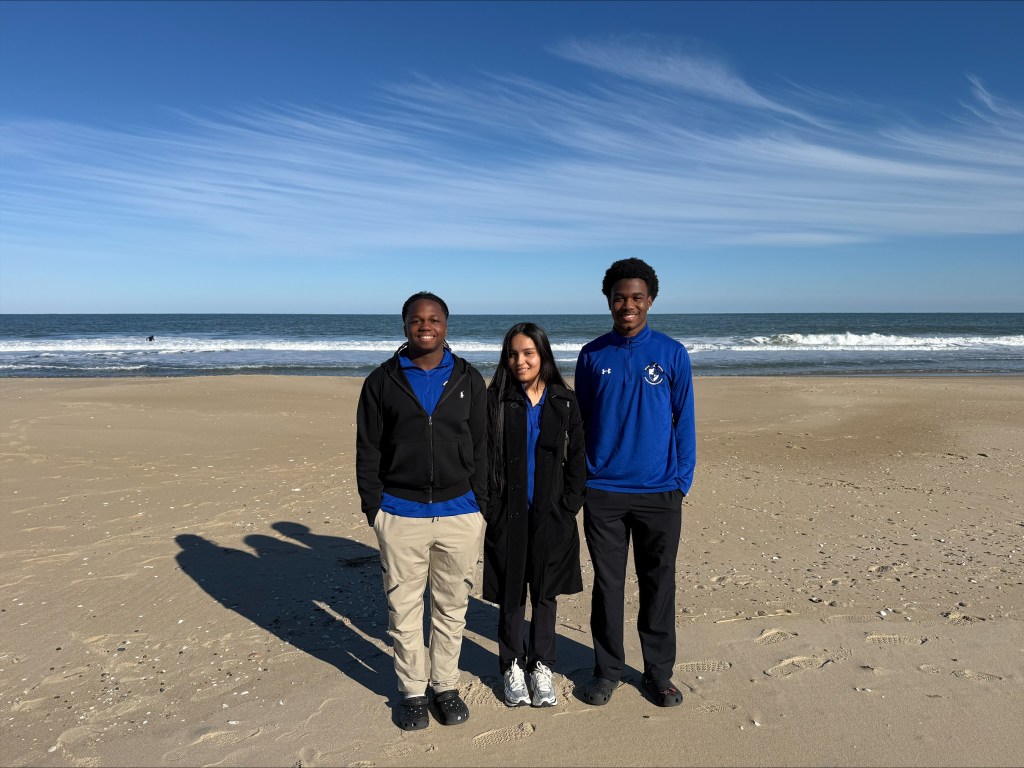
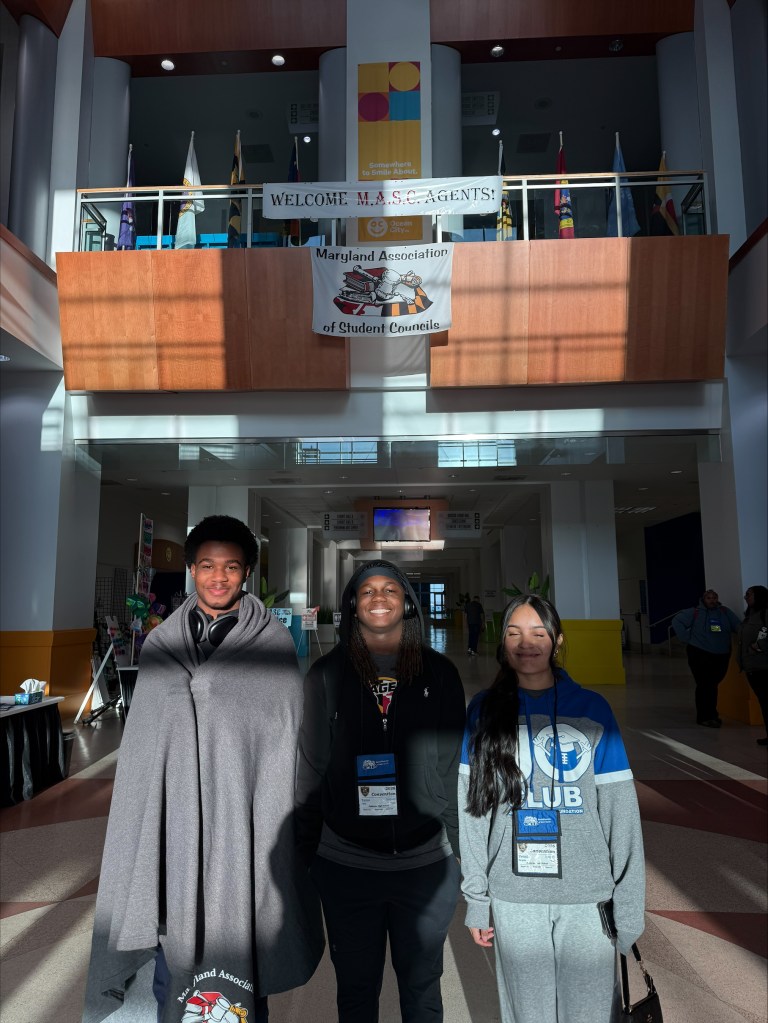
Student Government Association (SGA) members Yeimi Banegas, Marshall Mallory, and Taron Taylor traveled to the Maryland Association of Student Councils (MASC) convention in Ocean City in March to represent Patterson High School. 

The convention took place from March 18-20 with a jam packed schedule that kept students busy from 7:00 in the morning until 10:30 in the evening. The Patterson SGA members learned new leadership skills by attending workshops and networking with many student leaders from across the state of Maryland. The mission for this year was “SGA Agents”: The goal was to investigate new ways to improve school spirit, address students’ concerns, and deploy new leadership strategies back home. 

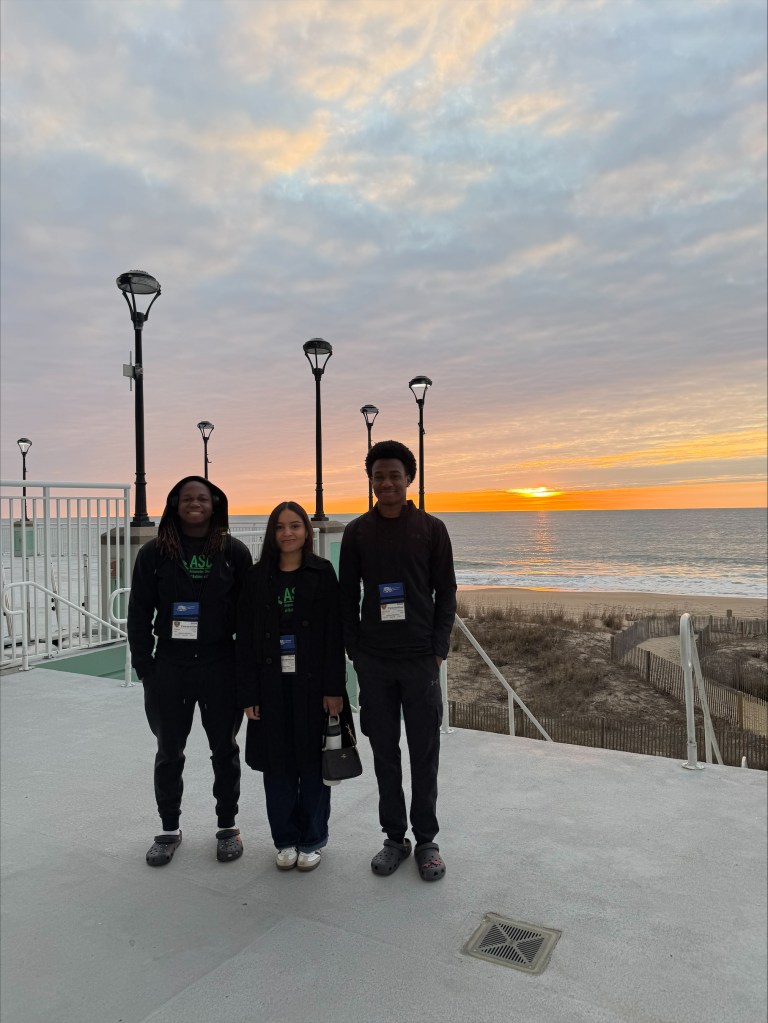
Accompanied by their passionate Advisor, Ms. Tran, it was the first time the four of us attended the MASC Convention, but we all had a great time making connections with students and advisors from other schools. We definitely feel more encouraged to continue serving as excellent leaders in our school, and likewise, to try to encourage all our fellow leaders who have not yet taken the step of joining our SGA. We hope that more students will continue to join us, so that we may learn from them just as they learn from us, and also so that they have the opportunity to experience MASC and enjoy the wonderful time that we did. The convention left us with many great memories, such as watching beautiful sunrises and sunsets over the ocean, all while learning how to become better leaders.

Graduating senior reflects on his experience at Patterson

Click here to read this article in Spanish.

By Jose Ismael Serpas Montoya

Hello everyone. My name is Jose Ismael Serpas Montoya. Many of you know me by my first name, Jose, and some by Ismael. I am a student at Patterson High School, and these are my final days at the school because I am a 12th-grade student, a senior.

I want to start by thanking David Montoya, my uncle, for all the support he has given me since I came to this country. From the very first moment I arrived, you were there supporting me, guiding me, and giving me strength to keep moving forward. Thank you for every piece of advice you gave me, because every word had value in my life. Many times I may not have said it, but I always listened to your teachings and kept them with me. Thank you for helping me when I needed it most, for caring about me, and for always checking on how I was doing in school and in life.

Thank you for teaching me to be strong, responsible, and to never give up. Thank you for showing me that nothing in life comes easy, and that everything is achieved with effort and discipline. Also, thank you for the scoldings, because today I understand that each one was a way of wanting to see me improve, to correct me, and to push me to be a better person. If I am where I am today, a big part of it is thanks to you. I will never forget everything you did for me. You will always have my respect, my love, and my eternal gratitude. I love you.

Patterson became my second home. It is a place full of endless opportunities, challenges, lessons, and also people with big hearts. During these four years, I met many people: good people, difficult people, people who came into my life to teach me something. I also met two very special people who will always live in my heart: Maria and Estenia. When they read this, they will know I am talking about them. Thank you, truly. I love you both with all my heart.

You came into my life and left memories that I will never erase. On days when I felt tired, sad, or unmotivated, you managed to make me smile. Sometimes with something small—a word, a look, a joke, or simply your presence—you made everything feel better. That means so much, and I will never forget it.

With you, I experienced very special moments—moments that may seem small to others, but which meant so much to me. Thank you for making my days more beautiful, for being with me through different stages, and for giving me memories that I will always carry with me.

Maybe some days I also made you upset–especially you, Estenia (hahahaha). Sometimes I was grumpy with you, and for that I apologize. But no matter how much time passes, I will always carry you in my heart.

Maria, thank you for your support, for being by my side through good and bad times, when I was sad and when I was okay. Thank you for listening to me, for advising me, and for being such a special person. You are one of those people who radiate beautiful energy and brighten the day of those around you. Your friendship meant so much to me, and I will always value it. You are in my heart.

Estenia, thank you for every smile, every shared moment, and every memory. Thank you for your personality, your kindness, and for all the times you made my days better without even realizing it. You will always have a special place in my heart. I love you both, Maria and Estenia, with all my heart, and I will always wish you the best.

In my final days at Patterson, I also met wonderful people who gave me many laughs with their jokes and funny moments: Noah, Cecia, and Britney. I met them in Ms. Holter’s ceramics class. Thank you guys for your kindness, your advice, your jokes, and the laughter.

I had many difficult moments at Patterson, but I took each one as a challenge, as an opportunity to grow and never give up. I also want to thank my parents for their support. Even though they are not with me in this country, they have always supported and believed in me. Also, thank you to my sister for her advice.

Ms. Sánchez—there is a teacher I will be grateful to for the rest of my life: Ms. Sánchez from the Teacher Academy of Maryland (TAM). There are not enough words to express everything she meant to me during these years. You were not just a teacher in a classroom—you were a guide, constant support, and someone who believed in me even in moments when I doubted myself.

Thank you, Ms. Sánchez, for helping me grow not only as a student, but also as a person. Thank you for teaching me discipline, responsibility, and the importance of working hard every day. Thank you for showing me that dreams can come true when you work with dedication and heart.

You didn’t just teach me how to manage a classroom, work with students, or understand what it means to be a teacher—you taught me life lessons that I will carry with me forever. You taught me to get back up in difficult moments, to not let problems defeat me, and to keep going even when the path seems hard.

Every piece of advice you gave me had value. Every word of encouragement helped me more than you can imagine. In moments when I felt tired, sad, or worried, you were always there to listen, guide me, and remind me that I could achieve more than I thought.

Thank you for the laughs, the good moments, the conversations, the details, the gifts, and for showing me genuine care. I always knew you did everything because you wanted to see me succeed and because you cared about me.

You became like a second mother to me at Patterson. Knowing I could count on you made a big difference in my school life. Sometimes a person just needs someone to believe in them, and you did that for me. Everything I learned from you, everything I experienced in TAM, and all those beautiful memories—I will never forget them.

No matter what happens in the future, I will always remember you with love, respect, and gratitude.

I also want to thank Ms. Pérez for allowing me to teach alongside her in AP Spanish class. Thank you for teaching me how to stand in front of a class, how to help students, and how to continue growing as a future educator. Thank you as well for the advice, the laughs, and the hugs.

During my internship as a teacher assistant with Ms. Pérez, I met many students who became my own students. Now when I see them in the hallways, they greet me and show me kindness. It’s something beautiful to leave a positive mark on others and be able to say: “Wow, I did well.”

Thank you also to Ms. Jaen. I still remember the day you told me to join the TAM class—you insisted and insisted. And look at me now–I made it. You never stopped believing in me. Thank you.

At Patterson, there were laughs, difficult moments, trips, and new experiences. I did things I had never done before in my life—visited new places, learned new things, and lived unforgettable experiences.

I am writing this with tears in my eyes because I don’t want to leave Patterson. But even though I have to go, I leave with a smile because I know I have left a mark on this school and in the hearts of many people, just as they left a mark on me.

I remember my first day at Patterson. It was very difficult because I didn’t know much English and didn’t understand how the school worked. But little by little, I learned more English and improved every day. Now I look back at that boy who started from zero, and I tell myself: “Wow, you did it. You never gave up, and look where you are now.”

All the effort, the challenges, and the hard moments were worth it. Patterson taught me that you don’t have to climb a mountain to feel on top of the world.

I also want to thank all the teachers who were kind to me and impacted my life in one way or another: Ms. Sánchez, Ms. Pérez, Ms. Jaen, Mr. Pernia, Ms. Torregoza, Mr. Callahan, Mr. Galdamez, Mr. Ski, Mr. Frederick, Mr. Cortez, Ms. Harris, Ms. Waker, Ms. Holter, Ms. Redington, Ms. Edwards, Ms. Ramos, Ms. Wallace, Ms. Monica, Ms. Mayra, Ms. Morgan, Ms. April, Ms. Blum (Coach), Ms. B., Ms. P., Mr. Z., Mr. O’Neal (both brothers), Ms. Hade (both mother and daughter), Mr. Tyras, Ms. John, Mr. Pesa, Ms. Hux, Ms. Tyra, Ms. Foster, Mr. Maguirre, Ms. Dockery, Mr. Baron, and Mr. Lopez.

Also, thank you to the Patterson staff: Mr. Rivas, Ms. Karina, Ms. Salinas, and all the coaches and school workers.

Thank you all for every word, every piece of advice, every smile, and every lesson.

This is not a goodbye; it’s a see you soon.

I leave a little sad because I don’t want to leave my Patterson family, but I also leave happy because I know all this effort and all these years were worth it.

I leave smiling.

See you soon. I love you all.

TAM program prepares students for teaching careers

by Jose I. Serpas Montoya

At Patterson High School, there is a special program called the Teacher Academy of Maryland (TAM), designed for students who want to learn more about the teaching career and the education system. This program begins in 10th grade and continues through 12th grade, guiding students throughout their high school journey. Through classes, projects, and real experiences, TAM prepares young people not only to become future teaching assistants but also to be leaders capable of making a difference in other people’s lives.

The class is led by Ms. Sánchez, who has been in charge of the program for the past two years. Under her leadership, students gain important knowledge about the teacher’s role—from how to manage a classroom from start to finish, to how to support student learning and create engaging strategies that motivate everyone. Ms. Sánchez doesn’t just teach theory; she encourages students to put their learning into practice, giving them tools that prepare them for real-life situations.

Day by day, students learn how to organize a classroom, help other students, apply teaching strategies, and design activities that make learning fun and interesting. In addition, the program has created a strong sense of community among its members. “TAM isn’t just a class—it’s like a family. We always support each other and care about one another,” says Jihaad Everett, a TAM student.

As students move forward in the program, they reach 12th grade with a special opportunity: to work as teaching assistants in different types of classrooms. This hands-on experience allows them to apply everything they have learned—helping with classroom management, preparing lesson plans, assisting small groups, and using various strategies such as technology, games, and creative activities that make learning more dynamic and enjoyable.

The TAM program also encourages strong connections with teachers who act as mentors, guiding students and sharing their professional experience. Educators like Ms. Pérez, Mr. Pernia, Ms. Edward, Ms. Bell, Ms. Moschelle, Ms. Archie, Ms. Masati, and Dr. Tucker have opened their classrooms to us, allowing us to work alongside them, trusting us, and helping us grow as future educators. This opportunity to learn directly from teachers makes a huge difference and inspires us to continue our journey with passion for teaching.

For many of us, TAM has been more than just a class—it has been a space for both academic and personal growth. Students not only prepare for their future careers but also develop essential skills such as leadership, responsibility, commitment, and empathy. “This program taught me that teaching is not only about giving lessons; it’s also about inspiring, listening, and supporting others,” shares Nelson Fonseca.

TAM is a life-changing experience. It shapes us as students, as future professionals, and as human beings. At Patterson High School, this program has proven that education is not just about sharing knowledge—it’s about building relationships, inspiring others, and leaving a positive impact that lasts over time.

Towson University trip leads to inspiration and learning

by Jose I. Serpas

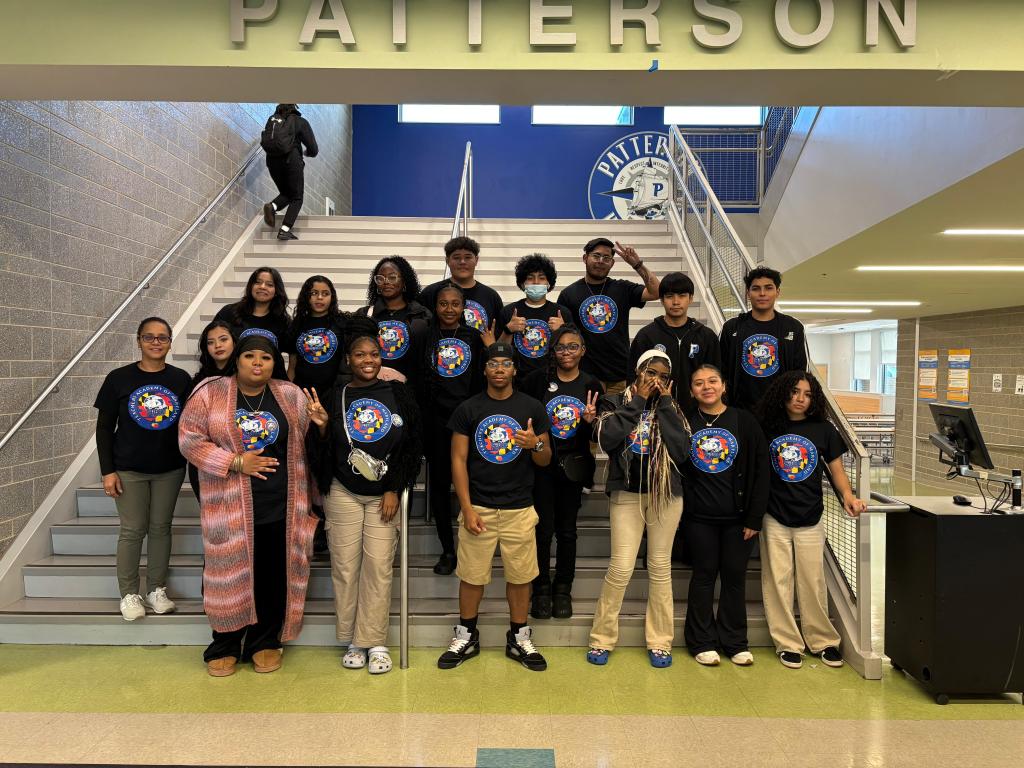
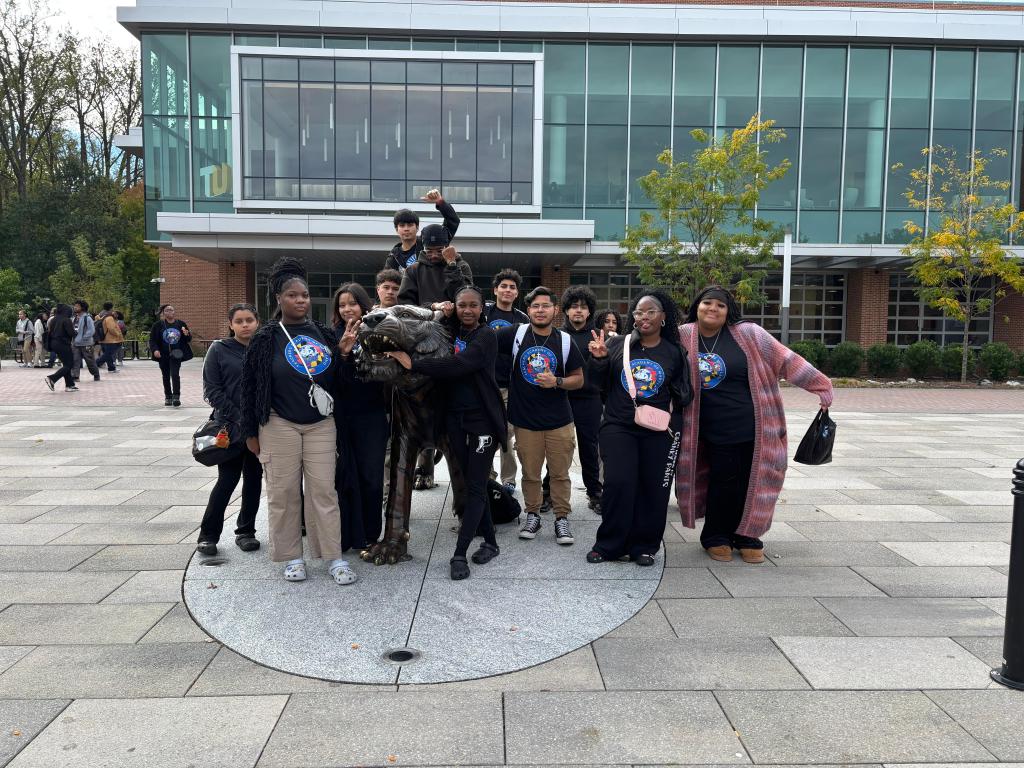
The 11th and 12th grade Teacher Academy of Maryland (TAM) students from Patterson High School went on a field trip to Towson University on October 15, 2025. The purpose of this trip was to visit the campus and attend a conference about education.

When we arrived, the university staff welcomed us and gave us a tour of the campus. We saw different buildings, classrooms, and student areas. Many of us were excited to imagine what it would be like to study there in the future.

The student who guided us around the campus was a very respectful and inspiring person. She explained the importance of education and talked about Towson University’s commitment to helping students stay on their path and become future educators. Her words made many of us think about our own goals.

Later, we attended several conferences where professors and college students talked about education, careers, and opportunities for the future. They inspired us to keep working hard and to think about our goals after high school.

Ms. Sánchez, the TAM teacher, said, “I am very proud of my students. This trip is important because it helps them see what college looks like in real life. Many of them are the first in their families to explore a university campus, and I feel happy watching them learn, ask questions, and think about their futures. I hope this experience gives them confidence and shows them that they can achieve their goals if they keep working hard.”

Nelson Fonseca, a 12th grade TAM student, said, “For me, this trip was very meaningful. Walking around the campus helped me understand what college life really is. I liked seeing the classrooms, the buildings, and the students. It made me think more seriously about what I want to study and what I want for my future. This visit motivated me to focus more on my graduation and to prepare myself for the next step after high school.”

The trip was a great experience for everyone. We learned more about college life and what it means to be a university student. It was a day full of learning, motivation, and dreams for the future.

School district implements new cell phone policy

by Genesis S. Machuca, Tiffany A. Martinez, & Jamaal McFadden

Baltimore City Public Schools will require students to keep their cell phones and other personal electronic devices powered off, put away, and secured throughout the school day beginning with the 2025–2026 school year. The policy applies to all students in the district and was approved by the Baltimore City Board of School Commissioners

Under the new rules, students may still bring phones to school, but they cannot use them from the time they arrive until dismissal unless permitted for specific educational or emergency reasons. City Schools officials say the policy is intended to reduce distractions, improve student focus, and support academic performance.

“This policy is designed to create a better learning environment by limiting disruptions and helping students stay engaged in class,” said a representative for Baltimore City Schools.

The policy not only covers cell phones but also tablets, smart watches, and wireless headphones. Devices must remain powered off and out of sight during instructional time, lunch, passing periods, and recess. Exceptions will be made for approved classroom activities, emergency communication, and circumstances approved by school administrators.

School district leaders encouraged families to prepare for the new rules and to communicate with their child’s school if necessary. While many parents and educators support the policy as a way to improve classroom engagement, some have raised questions about communication and access during non-instructional times.

The new policy reflects growing nationwide efforts by school systems to balance technology use with academic priorities.

Wellness Friday revitalizes students

by Akira Sumpter 

The staff of Patterson High School planned a special Wellness Friday, October 3, where students and staff could play stress-relieving games. On this shortened school day. students had the chance to sit in quiet rooms, do arts and crafts, or enjoy the airy outdoors.

The majority of students were outside near our baseball field basking in the sun or playing kickball, enjoying the fresh air and freedom. This day was like a middle school recess, only in high school–a time where everyone could get out of stuffy classrooms, artificial lighting, and uncomfortable chairs.

During these few hours of fun, teachers volunteered to be referees and supervise all the physical activities like soccer, basketball, and kickball. The others watched and smiled as kids had fun, which is something they don’t see often in a school setting.

Students were free of worry, pressure and finally able to interact with our peers without an authority figure demanding us to be robotic. “I wish we could do something like this every month”, said student Saniya Courtney. 

Mental health is very important in order to function throughout life effectively, so taking needed breaks should always be a top priority. Knowing when you need a positive outlet to release negative emotions helps you grow as a person and it strengthens your cognitive skills.

Since this event allowed all students to participate in fulfilling activities, the student enjoyment rate was at its most high for an activity. The days following this event were some of the calmest for teachers in this building, with few if any problems from students.

In the near future, there will be more school-wide activities like this to increase literacy rates, attendance, grades, and other things that this world needs. With this and many other successful events this school year, it is clear that the Clipper ship is sailing into a positive future.

School fights continue to be a problem at Patterson

by Ashley Sarmiento Rodriguez

Why do students fight in school? I’m a senior at Patterson High School and over the last few years I’ve seen many students get into fights around me. Some of my fellow students have even lost their lives because of school-related problems.

My 9th grade year was the first year Patterson’s new building was open. There were always many students having problems and they would constantly be fighting around the school with seemingly no consequences. I always wondered why the teachers and staff never called the parents of Patterson students who started fights and at least let parents know what the school where their children go to had going on, especially when there would be multiple very large fights going on school.

In December and January 2024, I posed that question to some of the school’s hall monitors and Climate staff. Ms. Enjoulek Jackson (AKA “New York”) said “We aren’t allowed to just call home and tell the students’ parents that there have been fights at school because they need permission from school boards to call parents and then if that was to happen it leads to parents being worried and rushing to come take their kids out of school over a situation that they will always have under control; Unless it involves a more serious situation–then they do call students’ homes.

I walked around the school interviewing Patterson staff/hall monitors and also our school police–Officer Torbit and Officer Jones–questions about these fights.

A few hall monitors such as Mr. Rivas told me students fight mostly over drama on social media and also problems which are easy to resolve but which some students don’t really like to resolve in easy ways. 

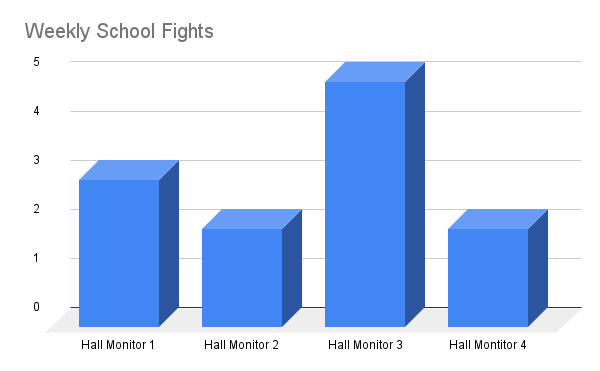
When asked how many fights the Patterson hall monitors had seen in the past month, most estimated the number at around 15-20 fights while others said about 3-5 fights. Some hall monitors like Mr. Walker haven’t seen many fights while others have seen fights break out more often in certain areas of the school.

Average number of fights per week witnessed by hall monitors in December 2024 (Source: Interviews with hall monitors)

Officer Jones said when someone gets into a fight at Patterson, she and or her partner would go to the location of the fight and stop it and figure out what happened and make sure everyone’s OK. Then the student is brought to the administrators and they figure out who was in the wrong and the guilty parties get suspended for 3-10 days depending on the way things escalated. 

Although school fights remain a serious problem at Patterson, a lot of progress has been made over the past few years. Three years ago, fights and problems at school were really bad and there was an uncountable amount of fights and dangerous activities going on, but by the time I entered 11th and 12th grade, the fights had most definitely calmed down and the school climate has continued to be calmer than it used to be. Yet even now, every other day there is a fight going on in school. 

What do school staff members do to prevent these fights and problems happening during school? According to Mr. Will, “After a fight we break it up, figure out what happened, then have a mediation group and make sure both parties resolve and agree to not fight again during school hours.”

At the end of the day I think Patterson High School is now changing for the better and there are far fewer fights than there used to be. The school is actually trying to prevent them and has put things in place to help achieve that goal. Patterson High School has long had a problem with fights that students keep causing. Although my research shows that it has gotten better over the years, it’s still an ongoing problem. I am hoping many students read this and realize that this is a problem in our school and maybe help stop or prevent a fight. At the end of the day, there are many other ways to resolve a problem or conflict.

How effective is Patterson’s uniform policy?

by Snit Kahsay and Mirian Maurizaca

Are uniforms effective at Patterson High School? Many students do not appreciate having to wear uniforms every day but some feel differently about them. To what extent do school uniforms make an impact and is that impact more positive or negative?

According to Principal Myrick, uniforms prevent students from getting picked on for not being able to afford fancy clothing. “…Some students can’t afford fancy clothes, so wearing uniforms prevents them from getting teased because everyone is on the same level when they are in uniforms”, stated Ms. Myrick. Patterson High School provides free uniforms so students don’t have to pay for their uniforms. However, free uniforms are only given out at the start of the school year. 

Uniforms could also be a part of safety. It can help identify students out of the building and inside, “…Because we have so many students so it helps us identify who’s in this school,“ not only does it help identify students but it represents our school pride “…uniforms show school pride it shows that you’re proud to go to this school,” stated Ms. Myrick. Additionally, Ms. Myrick said  “ Yes, I think it has an impact on their safety because it’s easier to identify students that don’t belong in the school  especially when it’s in the school area where people that don’t belong in the school are around the school property.

The Patterson Press conducted a survey of almost 100 students in late December 2024 to see how they felt about school uniforms. The results show that Patterson High School students have different thoughts and perspectives about school uniforms. 57.5% of students who responded to the survey said that uniforms were not important, but a significant minority disagreed.

Students expressed mixed opinions when responding to open-ended questions in the survey. “[The uniforms] are okay but I wished we had more options,” said one student. Since outfits come from creativity and inspiration, a common complaint was that uniforms do not allow students to express their individual style. One survey respondent said, “They take creativity from what you want to wear…”. Another said, “It doesn’t allow me to really express myself in my outfits.”

At Patterson high school the uniform is a black, blue, grey, or white t-shirt with the school logo on it and black or khaki pants. Also, each class has different colors: green and gold for the Class of 2025, maroon and gold for the Class of 2026, green and white for the Class of 2027, and red and white for the Class of 2028. Official class color T-shirts can be used as part of the school uniform.

Students get stopped at the entrance if they’re not wearing their uniforms. They get five chances before they can get detention for being out of uniform and the consequences depend on how many times they were caught without a uniform.

In conclusion, students have different opinions about uniforms. Based on what we have found out, we believe that uniforms might be effective in some ways such as preventing students from getting bullied for the way they dress and more but we think that students should have more options. Currently students are limited to khaki and black bottoms; we think that more colors should be added. The positive impacts that uniforms can have need to be carefully balanced against the negative impacts they can have on student self-expression and individual freedom.

Poster explaining school uniform policy
Class color T-shirts are an alternative to the standard uniform colors. (Photo: Snit Kahsay)
There are variations of the school uniform for students in certain programs and clubs, like this “Mentor” hoodie. (Photo: Snit Kahsay)

New school building’s lack of space impacts learning conditions

by Breon Thacker and Quaron Walker-Bey

Three years after the grand opening of the new Patterson High School building in 2021, students and teachers are struggling with a shortage of space, leading to a host of problems for the growing school population.

According to a 2015 report on the 21st Century Schools website, the old Patterson building took up 303,582 square feet. By contrast, the new building, which is shared with the Claremount School, was projected to be 267,771 feet total, including both schools. Teachers who remember the old building are glad to have the improvements in facilities and technology but are frustrated with the lack of space and the issues it creates.

“I like the new school building with the new technology, but at the old school building there was more room for students; teachers weren’t on top of each other”, reflects EMT instructor Mr. Casey. Mr. Casey thinks the 21st Century Building program could have planned the switch better. According to Mr. Casey, the building was originally designed for about 1,000 students and we are at or above about 1,300 now. The student population is overcrowded for the size of the building. Also, there is a bandwidth lag in the Wi-Fi system because so many students are on it at once. To compound the problem, there are not enough classrooms for the number of teachers in the building, forcing some teachers to share classrooms with other teachers whose curriculum or subjects are totally different from one another.

Some teachers have to move from classroom to classroom throughout the day, making it difficult to prepare for lessons. World History teacher Mr. O’Neal is one of these teachers. He says that some of the teachers here are very unsanitary, so he has to spend time cleaning up other after classes that aren’t his, and it can make it difficult to plan ahead of time for class. Mr. O’Neal has to switch classrooms every period that he teaches a class. Mr. O’Neal goes on to explain that he has 20-25 students per period and due to the small classroom sizes there is often not enough room for all his students to fit. Frequently kids may have to stand up for a whole class period.

Many staff members and and students share the opinion that the school should have been built larger, with more classrooms and offices and more space overall. Since the past can’t be changed, the question now is how to address this problem going forward. Should the school cap enrollment and try to lower the student population in future school years? Should school leaders seek funding for the building to be expanded? Should Claremount be relocated to a new site so that Patterson can utilize that section of the building? None of these potential solutions seem very viable in the present moment, but the problems caused by the lack of space at Patterson are becoming harder and harder to ignore. Something needs to be done about this issue or it will only get worse.

« Older Entries