Category Archives: Education News

Breaking down school funding: Where does the money go?

by Wilfredo Portillo

Funding public education is a crucial responsibility shared across state, federal and local governments. But how exactly is this money distributed, and where does it go? Here’s a closer look at the intricacies of school funding and how it impacts teachers, students and programs.

Public schools receive their funding from three primary sources: state funding, federal funding and local government contribution. Each source plays a vital role in ensuring schools have the resources they need to function effectively.
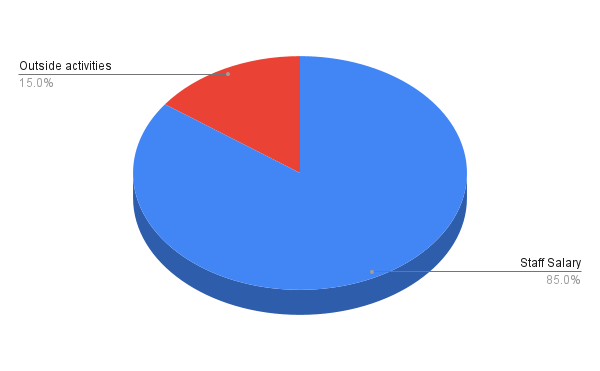
According to Patterson’s business manager, Mr. Cox, approximately 85% of school funding is allocated to paying the salaries of teachers and staff, along with health insurance and other related expenses. healthcare The remaining 15% is distributed across several categories. Some of it is spent on classroom materials and other necessities required to maintain daily operations, while the rest goes toward funding other priorities, including arts programs and extracurricular activities such as athletics, clubs, and field trips. These programs provide students with opportunities beyond academics, fostering personal growth and teamwork. The school district oversees the funding for school lunch programs, ensuring that students across different schools have access to meals.

Estimated Breakdown of 2024-2025 PHS School Budget (Source: Mr. Cox)


As schools prepare to receive additional funding later in the school year, there is a clear focus on addressing the pressing issues and improving student outcomes with key priorities being recruiting and retaining high quality diverse educators, supporting mental health initiatives for students, improving attendance rates, reducing dropouts, accelerating literacy and math achievements, and providing students with a well rounded education.

Based on the budget forum that was held in December 2024, there appear to be no major controversies surrounding the distribution of school funding. Most outside activities and extracurricular programs are funded equitably, with small percentages drawn from federal funding to support their cost. Additionally school districts and various agencies work collaboratively to manage and allocate these funds efficiently.

The distribution of school funding plays a pivotal role in shaping the quality of education and opportunities provided to students. While the majority of funds go towards staffing and essentials, efforts are being made to address evolving needs, such as mental health support and literacy improvement. With future priorities focused on equity, readiness and innovation, school funding remains a vital tool in preparing students for success.

Patterson holds language learning dinner

by Mirian Maurizaca

A language learning dinner took place at Patterson High School on November 14, 2024. There were two sessions for this event–the first one was for staff members at Patterson and the second session was for community members. This event was an opportunity for students in the Interpreting program to show off their language skills. 

There were three languages to learn: Spanish, Arabic, and Tigrinya. Students taught participants basic phrases in their language. Everyone had a chance to learn each language and many were enjoying it. There was also food which for many was the most exciting part of the event. The food reflected the diverse cultures of Patterson students, including pupusas from El Salvador, jollof rice and chicken from Nigeria, and falafel wraps from Syria.

Throughout the event, teachers, community members, and students were having conversations and learning each other’s languages. Everyone left with a packet with basic phrases so that they can keep practicing. 

AI presents new opportunities and new dangers for schools

by Wilfredo Portillo Quinones

Artificial intelligence (AI) is increasingly being integrated into education. The generative AI interactions that most students are most familiar with involve large language models like Chat GPT, which uses the internet to respond to questions users have and is capable of answering any sort of questions that would normally be asked on Google. A lot of tools have been implemented with AI in order to help students answer questions or understand classwork. It’s also used to help with teaching, which we see a lot now. AI is capable of teaching and helping students who struggle with regular learning. People have mixed feelings about this though. A lot of teachers are afraid of losing their jobs if AI gets too good and replaces them. There is also a concern that AI is negatively impacting learning because it can be used to cheat or take shortcuts instead of taking the time to develop academic skills. Is AI harming education or is it doing a good thing for us?

There are many platforms which are powered in part by AI, including Khan Academy and DreamBox, which adapt lessons to match individual students’ learning speeds and styles. For instance, a math app might adjust the difficulty of problems based on students’ past performances, ensuring they stay challenged but not overwhelmed. Hechingerreport.org states that, “Teachers save time by using AI tools that handle repetitive tasks like grading multiple choice questions, planning lessons, assessing students, grading homework, giving feedback and administrative paperwork.” However, they also say that it doesn’t mean AI is capable of replacing everything teachers do. AI could trim a lot of the work being done so teachers can focus more on helping students learn.

While AI has a lot to offer in this day and age, there are many concerns that we need to take into consideration. One major concern is that students might rely on AI tools or become very dependent on them for answers or learning. That might lead to students not being able to use cognitive skills, critical thinking skills or problem solving skills. If students use AI on homework or for test preparations they won’t be able to use these skills without AI. Another concern is how AI stores information and whether this information is secured, especially with information on many students. With the increase of AI tools people want to make sure their personal information is secure and not at risk of being breached by hackers who might take or use this information for harmful purposes. These concerns need to be taken seriously.

To avoid the misuse of AI or even cheating using AI, students need to be educated on responsible AI use and there should be restrictions on AI usage to safeguard students and to ensure academic honesty. Schools can’t avoid AI tools or AI in general, but responsibility should be taught while using AI.

The pros and cons of social media

by Mirian Maurizaca

Photo: Shutterstock

Social media can have both positive and negative impacts on high school students. On the positive side, it can help them stay connected with friends, access information quickly, and even find supportive communities. On the negative side, it can lead to distractions, cyberbullying, and privacy issues. It really depends on how it’s used and the guidelines set by parents and schools.

One reason why high school students might be better off without social media is because of the distractions it can cause. Social media can be a major distraction from schoolwork and studying. It’s easy to spend hours scrolling through feeds instead of focusing on homework or studying for exams.

Unfortunately, social media can also be a platform for bullying. Cyberbullying can have serious emotional effects on students. Also, constant exposure to unrealistic images and lifestyles on social media can lead to feelings of anxiety and depression. The pressure to get likes and followers can also contribute to the stress.

Another problem is sharing personal information on social media; it can lead to privacy concerns. Students might not fully understand the consequences of sharing too much information online. Social media can be addictive. Students might find it hard to disconnect, leading to too much use that can interfere with their daily lives and responsibilities. The use of social media, especially right before bed, can interfere with sleep patterns, leading to a lack of sleep which can affect your school life and overall health.

While there are risks, with proper guidance and responsible use, social media can offer benefits to high school students.

One reason why high school students might benefit from having social media is that social media allows students to stay in touch with friends and family, especially if they move or go to different schools. Interacting on social media can help students develop communication skills. They learn to express themselves, debate, and share ideas in a public setting. It can help maintain relationships and build new ones. Platforms like Instagram, TikTok, and YouTube allow students to express their creativity through photos, videos, and other content. This can be a great outlet for self-expression and even finding a career.

There are also educational resources on social media. Many educational pages and groups on social media platforms can provide valuable information, study tips, and resources. Students can join groups related to their interests or subjects they are studying. Social media can offer support groups for various issues, whether it’s school related stress, mental health, or personal interests. These networks can provide a community and support for those who need it.

Social media is a powerful tool for raising awareness about important issues. Students can become more informed about events happening around us and it helps them make their voices heard on issues they care about. Social media can open doors to opportunities that students might otherwise miss out on. 

It’s important to consider these factors and weigh the pros and cons when deciding whether high school students should have access to social media.

New school year brings excitement and achievements

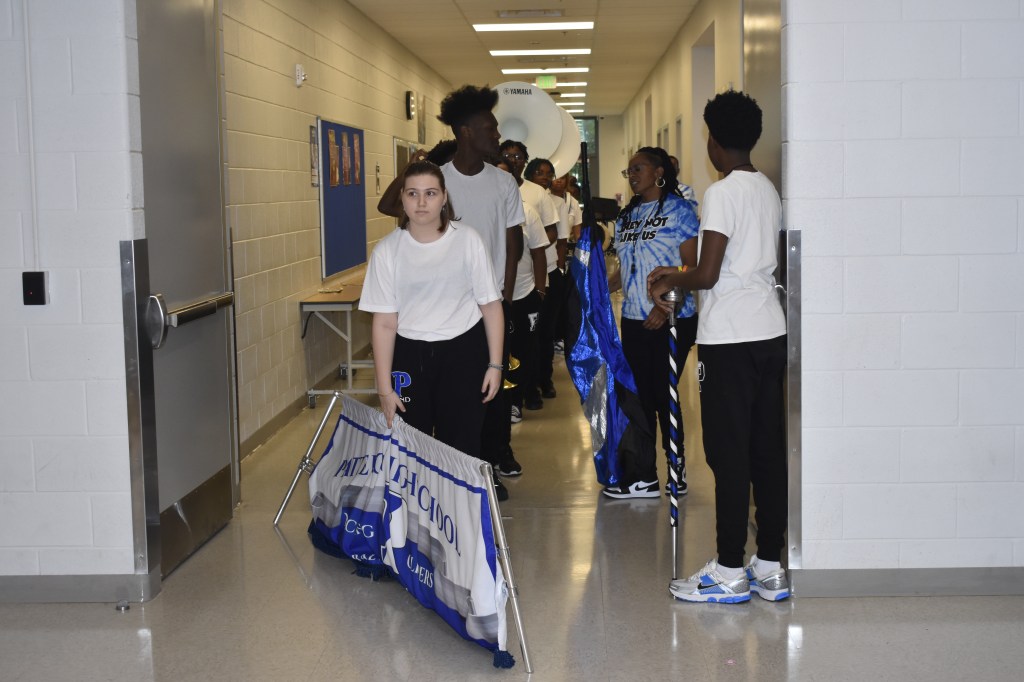
The Patterson band gets ready to perform at Back to School Night (Photo: Jamira Ellison)

by Mirian Maurizaca

We’re back to school! August 26 was the first day for students at Patterson High School. There are many events being planned to make this school year fun and memorable. There have also been achievements made already. 

Our attendance has increased since last year. “I am proud of our attendance rate,” said Principal Myrick.

“Attendance rate went up to 82%. Last year we had a 69% rate of attendance. Also Patterson High School was in the top 10 of high schools for growth and achievements.” 

Principal Myrick wants to add on to Patterson’s achievements from last school year.

“This year really focuses on academic achievement,” stated Principal Myrick. 

There are also new programs at Patterson High School. There is a program for families that want to learn English or Spanish that will happen after school. For the first semester there is only one class but next semester there will be two classes. Additionally, Patterson High also has dance class and an NGLA program for students to become certified interpreters. 

Principal Myrick has many ideas for this school year.

“I’m excited for this school year,” explained Principal Myrick.

One event from last year that will be returning is 405 Day. It will be a community event to invite family and friends to. There are many other events being planned as well, from Spirit Week to cultural celebrations, concerts, plays, and much more.

This school year promises to be a memorable year for all students. This year will bring us new achievements, more goals, and fun activities.

Patterson holds Senior Farewell ceremony

by Kylayah Davis

Patterson High School held its 2024 Senior Farewell ceremony on Thursday, May 5th. It was a night to remember, with speeches by administrators, cohort representatives, and underclassmen. Awards were presented for academic excellence, community service, and even surprise scholarships. 

Congratulations to the Class of 2024 Valedictorian, Bianca Cruz and Salutatorian, Makayla Hill, as well as the entire graduating class! The commencement ceremony will take place at Coppin University on June 11th at 4:45 PM.

Homework doesn’t work (OPINION)

by Wilfredo Portillo-Quinones

Being assigned homework after school for is often stressful for students. Being given work for HOME after coming back from school seems illogical. Spending seven hours a day studying and doing assignments is already a lot for most students.

Teachers seem to assign homework to students in order for them to learn more and understand topics they’re studying, but this seems lazy, if students are being taught this at school, why do they need to spend more time doing homework in order for them to learn or give teachers a better understanding of their skill level if they’re already giving that effort in school?

According to the Florida Department of Education, “Homework teaches students that they may have to do things—even if they don’t want to.” I think that is an example of misuse of time. If we genuinely want students to get into real world stuff, we should be doing it at school. There should be more said and done at school than at home. Putting a lot of stress on students will drain them mentally, driving them away from learning and education as a whole. It’s already enough for them to get up early and go to school and exhaust their brains. Giving them more work after school just seems exhausting and very unnecessary. Teachers should take time in class to see if their students are understanding lessons and not expect students to give them a review with homework.

To build character in students, teachers should be working hands on in order to understand them and see how they grasp most ideas. Some teachers should put more effort into understanding students individually, the same way they’d check our homework to see that improvement or understanding of where most students are at. A lot of teachers love to be hands-on with students in order to actually see where they are at in terms of learning and understanding the lessons they are currently learning and working on. If more teachers did this, it would help students feel better at school and feel more supported by their teachers, because a lot of the work students do nowadays is pretty much on computers and a lot of students aren’t really built for stuff like that. Most students would rather talk to another person or be taught with actual spoken words than with what a computer, textbook, or worksheet shows. This would improve education a lot more than homework and give more students helpful ideas and a better understanding of their current work.


Mental health awareness plays crucial role in schools

by Jasmine Goins

Mental health is a critical aspect of overall well-being, yet it is often overlooked in schools. With the increasing pressures and stressors that students face, it is essential to prioritize mental health awareness and support in educational settings.

According to English teacher Mr. Bey, “One of the main reasons why mental health awareness is important in schools is because it can help reduce the stigma surrounding mental illness. Many students may feel ashamed or embarrassed to seek help for their mental health issues due to the stigma associated with mental illness.”

Mr. Bey went on to say, “By promoting mental health awareness in schools, we can create a more supportive and understanding environment where students feel comfortable seeking help when needed… I think that mental health awareness in our school is low, I think that people are going through things, students losing lives or just struggling to come to class and they need guidance.”

Additionally, mental health awareness can help students develop important coping skills and resilience. By teaching students about mental health and how to manage stress and anxiety, we can empower them to take control of their mental well-being. This can lead to better academic performance, as students are better equipped to handle the challenges they face. Teachers and coaches are among the most influential people in a young person’s life. For this reason, it could be beneficial for teachers and coaches to have a more hands-on approach to making sure that students are mentally well.

Furthermore, mental health awareness can help identify students who may be struggling with mental health issues. Teachers and school staff are often the first to notice changes in a student’s behavior or mood. By educating them about the signs and symptoms of mental illness, we can ensure that students receive the support and resources they need to thrive.

“I think that we should have more mental health awareness-centered advisory periods, we should have circle time, therapy, but make it where anyone can attend, and just be briefly free.”, said Mr. Bey.

Mental health awareness in schools is crucial not only for students but also for educators and parents. It can help create a more inclusive and supportive environment where everyone feels comfortable discussing mental health issues and seeking help when needed.

“I think that mental health directly connects to someone’s confidence, and the more mentally well they are, the better they can do.”, Mr. Bey reflected.

Moreover, mental health awareness can also lead to the implementation of effective mental health programs and resources in schools. These programs can provide students with the tools and support they need to manage their mental well-being effectively. They can also help educate students about the importance of self-care and seeking help when needed.

Mental health awareness can also promote a positive school culture that values mental health and well-being. This can lead to increased student engagement and motivation, as students feel supported and valued by their school community.

Overall, mental health awareness in schools is essential for creating a supportive and inclusive environment where students can thrive academically, socially, and emotionally. It is crucial for educators, parents, and students to work together to prioritize mental health and well-being in educational settings.

Mr. Bey’s biggest piece of advice for anyone trying to improve their mental health awareness is, “They should find an outlet like playing sports, write down their issues, thoughts, and ideas and find at least one person to go to and talk to where they won’t feel judged.”

High School Choice: Why you should care about it as a student and why I think it should be gone 

By Jayzanay Blessett, Junior at Patterson High School and Diversity Chair of the Associated Student Congress of Baltimore City

Baltimore’s School Choice was established as a program in 2002. It determines whether or not you get accepted into the school you chose by considering your composite score and your academic performance during your Middle School years. If you do not get into the school you would like to go to, then you are typically placed in your zoned school or your other choices. Certain schools require special application requirements, such as Polytechnic Institute, Baltimore City College, etc. In this article, I will express my opinion on why I believe we should put an end to this and why, as a student, you should care.

My Story

As a middle school student you constantly hear your teachers drill thoughts into your brain like, “Go to Poly”, “Go to City”, or “Make sure you do the best you can so you can get accepted into Poly and/or City”. Hearing teachers consistently say that makes students feel pressured that they have to go to those said schools and if they don’t it’s bad or is not “acceptable”. Putting this kind of stress on 12-14 year old children is not healthy whatsoever. 

The idea that only those two schools you will give you the best education is a terrible idea. From a personal standpoint, my School Choice year was during the pandemic. My virtual school year was bad and I was struggling with many mental health problems just like every other student. I was so scared to miss the deadline for my School Choice and I was nervous that I was not going to get into the school that I wanted to, which was Baltimore City College. Once I got my results, I cried, because I got into one of the supposedly “worse’’ schools in the city, Patterson High. 

For the majority of my 7th grade year, I heard so many stories about why Patterson, Mervo, and honestly any school that was not Poly, City, Western, and or BSA was bad, so getting into a school that was not on my list was embarrassing for me because every time I would tell anyone about the school I went to/was going to, I was told I would be “too smart for that school’’ and that I need to transfer to get the education I deserve. 

The Issue

Understanding High School Choice from a student’s point of view, I will now give some reasons why I believe School Choice is an ineffective program and why the District needs to stop doing it. Baltimore’s School Choice creates equity issues, a hierarchy among schools and students, and transportation struggles.      

The Baltimore City school system has long had an equity issue. I feel as though School Choice will hinder us from solving this problem. When I took a look at Baltimore Polytechnic Institute’s website I noticed that they state, “Baltimore Polytechnic Institute (“Poly”) is a citywide magnet high school for Baltimore City Public Schools that emphasizes a rigorous college preparatory curriculum in the Science, Technology, Engineering, and Mathematics (STEM) fields. With a student body of more than 1,600 students and 85 teachers, Poly is committed to ensuring that all students have access to college and post-secondary opportunities.”

Viewing the part where is says “Poly is committed to ensuring that all students have access to college and post-secondary opportunities’’ threw me off because all schools in the city do this. You should not have to go all the way across the city because you only have maybe 2 schools that have a “rigorous college program”. Every school in Baltimore City should have equal robust classes dedicated to help them get into college. Being a Patterson student, we are not offered many of the classes that schools like City have, which makes it difficult to receive the education I need to compete with other students for college.

Having a program like High School Choice also creates a hierarchy between the students because you will get shamed for going to a school that’s not highly liked. It also creates an issue with transportation. If we focused on giving each school the same resources and opportunities, students would not need to transport themselves all the way across other parts of town to go to school. 

We could have school busses that take kids to school because no school would be better or worse than the others and students could just go to their zone school, but in the system that we currently have, we push all “high achieving’’ kids into one school and kind of just push out the other students. If you take a look at Baltimore County’s public school system, they are outperforming us because they don’t have something called “School Choice”. They have zoned schools with each school properly allocated equal resources and robust class courses. 

Taking Action

If students speak up on this issue a lot more, we could possibly make a change in some way. Imagine going to a school that has everything you need to be successful and pursue higher education without having to pick a school and maybe get rejected. Every single school in Baltimore need to have robust science, math, and English courses. If one school offers AP in Freshman year, then all schools need to that.

Yes, I understand that School Choice is an important tradition for Baltimore City, but the System is setting us up for failure and as a student, you should care about this too. As the student Chair of the Diversity Committee for Baltimore City Public Schools, I plan to advocate on the issue to the best of my ability.

Students prepare for new semester

By Kimberly Aguila-Torres

Patterson High School’s first two quarters are coming to an end already. Final exams are soon to start right when we students come back from Winter Break. Right now, teachers are wrapping up their final lesson for students before they head off for their Winter Break.

I asked several students if they were ready to start a new year with new classes.

”It’s whatever”, said one student. “I had gotten used to in my classes so it’s going to feel weird when we have our new classes.”

“It is gonna be a change for students.”, another student replied. “This is the first year that Patterson High School does this [semester schedule], but students will adapt to their new classes. Some will have the same lunch and some will change.”

I followed up my first question by asking these students if they like the classes they will be taking next semester.

One student responded, ”Nah, really I will be having geometry–and I am not great at math–and chemistry, which I think I properly will do not good.”

So far, there are students that like this new semester-based schedule and some that don’t and wished that they could just stay in the same classes throughout the whole school year. It’s going to be difficult for students once they come back from their break and have to take a lot of final exams for each class.

“I am feeling really sad because I wont be with the same people I was in class with.”, one student lamented when asked how they felt about the semester ending.

Hopefully students will enjoy their new classes and get used to their new schedules for next semester.

« Older Entries Recent Entries »