Category Archives: Education News

TAM program prepares students for teaching careers

by Jose I. Serpas Montoya
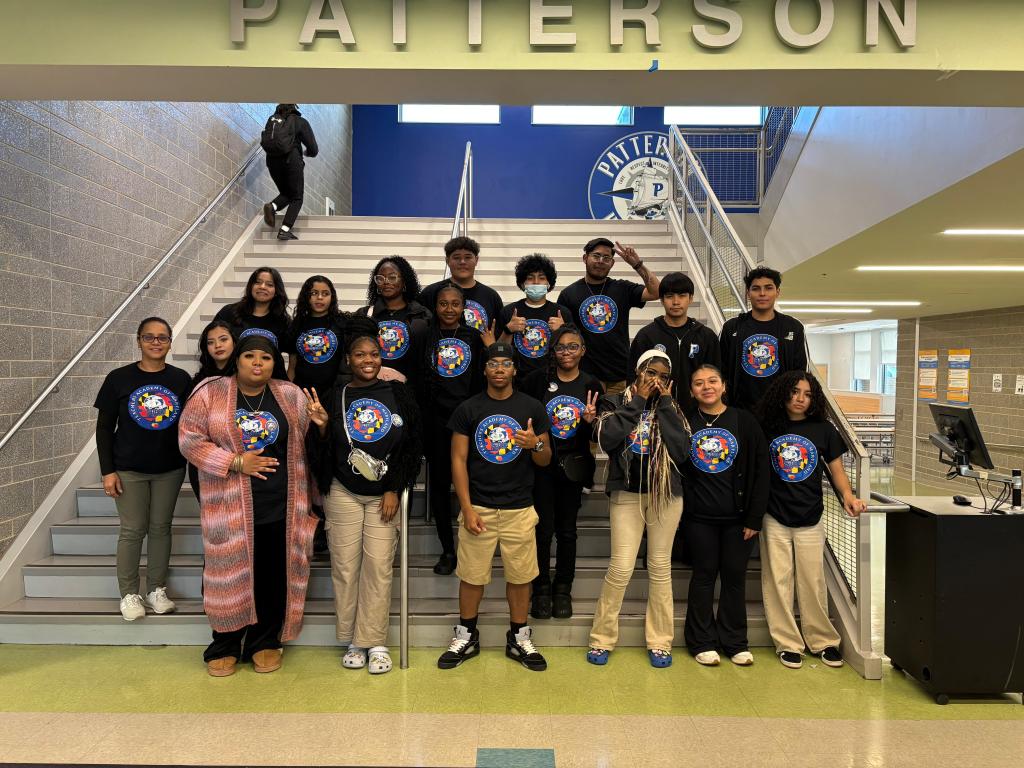
At Patterson High School, there is a special program called the Teacher Academy of Maryland (TAM), designed for students who want to learn more about the teaching career and the education system. This program begins in 10th grade and continues through 12th grade, guiding students throughout their high school journey. Through classes, projects, and real experiences, TAM prepares young people not only to become future teaching assistants but also to be leaders capable of making a difference in other people’s lives.

The class is led by Ms. Sánchez, who has been in charge of the program for the past two years. Under her leadership, students gain important knowledge about the teacher’s role—from how to manage a classroom from start to finish, to how to support student learning and create engaging strategies that motivate everyone. Ms. Sánchez doesn’t just teach theory; she encourages students to put their learning into practice, giving them tools that prepare them for real-life situations.

Day by day, students learn how to organize a classroom, help other students, apply teaching strategies, and design activities that make learning fun and interesting. In addition, the program has created a strong sense of community among its members. “TAM isn’t just a class—it’s like a family. We always support each other and care about one another,” says Jihaad Everett, a TAM student.

As students move forward in the program, they reach 12th grade with a special opportunity: to work as teaching assistants in different types of classrooms. This hands-on experience allows them to apply everything they have learned—helping with classroom management, preparing lesson plans, assisting small groups, and using various strategies such as technology, games, and creative activities that make learning more dynamic and enjoyable.

The TAM program also encourages strong connections with teachers who act as mentors, guiding students and sharing their professional experience. Educators like Ms. Pérez, Mr. Pernia, Ms. Edward, Ms. Bell, Ms. Moschelle, Ms. Archie, Ms. Masati, and Dr. Tucker have opened their classrooms to us, allowing us to work alongside them, trusting us, and helping us grow as future educators. This opportunity to learn directly from teachers makes a huge difference and inspires us to continue our journey with passion for teaching.

For many of us, TAM has been more than just a class—it has been a space for both academic and personal growth. Students not only prepare for their future careers but also develop essential skills such as leadership, responsibility, commitment, and empathy. “This program taught me that teaching is not only about giving lessons; it’s also about inspiring, listening, and supporting others,” shares Nelson Fonseca.

TAM is a life-changing experience. It shapes us as students, as future professionals, and as human beings. At Patterson High School, this program has proven that education is not just about sharing knowledge—it’s about building relationships, inspiring others, and leaving a positive impact that lasts over time.
Towson University trip leads to inspiration and learning

by Jose I. Serpas

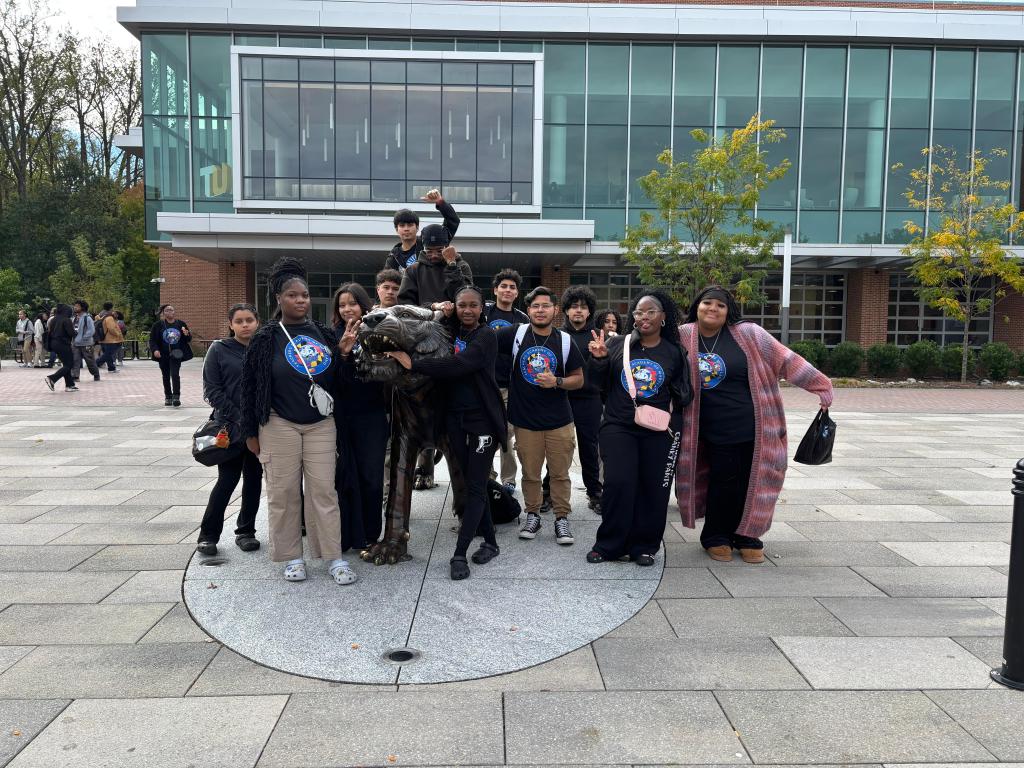
The 11th and 12th grade Teacher Academy of Maryland (TAM) students from Patterson High School went on a field trip to Towson University on October 15, 2025. The purpose of this trip was to visit the campus and attend a conference about education.

When we arrived, the university staff welcomed us and gave us a tour of the campus. We saw different buildings, classrooms, and student areas. Many of us were excited to imagine what it would be like to study there in the future.

The student who guided us around the campus was a very respectful and inspiring person. She explained the importance of education and talked about Towson University’s commitment to helping students stay on their path and become future educators. Her words made many of us think about our own goals.

Later, we attended several conferences where professors and college students talked about education, careers, and opportunities for the future. They inspired us to keep working hard and to think about our goals after high school.

Ms. Sánchez, the TAM teacher, said, “I am very proud of my students. This trip is important because it helps them see what college looks like in real life. Many of them are the first in their families to explore a university campus, and I feel happy watching them learn, ask questions, and think about their futures. I hope this experience gives them confidence and shows them that they can achieve their goals if they keep working hard.”

Nelson Fonseca, a 12th grade TAM student, said, “For me, this trip was very meaningful. Walking around the campus helped me understand what college life really is. I liked seeing the classrooms, the buildings, and the students. It made me think more seriously about what I want to study and what I want for my future. This visit motivated me to focus more on my graduation and to prepare myself for the next step after high school.”

The trip was a great experience for everyone. We learned more about college life and what it means to be a university student. It was a day full of learning, motivation, and dreams for the future.

School district implements new cell phone policy

by Genesis S. Machuca, Tiffany A. Martinez, & Jamaal McFadden

Baltimore City Public Schools will require students to keep their cell phones and other personal electronic devices powered off, put away, and secured throughout the school day beginning with the 2025–2026 school year. The policy applies to all students in the district and was approved by the Baltimore City Board of School Commissioners

Under the new rules, students may still bring phones to school, but they cannot use them from the time they arrive until dismissal unless permitted for specific educational or emergency reasons. City Schools officials say the policy is intended to reduce distractions, improve student focus, and support academic performance.

“This policy is designed to create a better learning environment by limiting disruptions and helping students stay engaged in class,” said a representative for Baltimore City Schools.

The policy not only covers cell phones but also tablets, smart watches, and wireless headphones. Devices must remain powered off and out of sight during instructional time, lunch, passing periods, and recess. Exceptions will be made for approved classroom activities, emergency communication, and circumstances approved by school administrators.

School district leaders encouraged families to prepare for the new rules and to communicate with their child’s school if necessary. While many parents and educators support the policy as a way to improve classroom engagement, some have raised questions about communication and access during non-instructional times.

The new policy reflects growing nationwide efforts by school systems to balance technology use with academic priorities.

Wellness Friday revitalizes students

by Akira Sumpter 

The staff of Patterson High School planned a special Wellness Friday, October 3, where students and staff could play stress-relieving games. On this shortened school day. students had the chance to sit in quiet rooms, do arts and crafts, or enjoy the airy outdoors.

The majority of students were outside near our baseball field basking in the sun or playing kickball, enjoying the fresh air and freedom. This day was like a middle school recess, only in high school–a time where everyone could get out of stuffy classrooms, artificial lighting, and uncomfortable chairs.

During these few hours of fun, teachers volunteered to be referees and supervise all the physical activities like soccer, basketball, and kickball. The others watched and smiled as kids had fun, which is something they don’t see often in a school setting.

Students were free of worry, pressure and finally able to interact with our peers without an authority figure demanding us to be robotic. “I wish we could do something like this every month”, said student Saniya Courtney. 

Mental health is very important in order to function throughout life effectively, so taking needed breaks should always be a top priority. Knowing when you need a positive outlet to release negative emotions helps you grow as a person and it strengthens your cognitive skills.

Since this event allowed all students to participate in fulfilling activities, the student enjoyment rate was at its most high for an activity. The days following this event were some of the calmest for teachers in this building, with few if any problems from students.

In the near future, there will be more school-wide activities like this to increase literacy rates, attendance, grades, and other things that this world needs. With this and many other successful events this school year, it is clear that the Clipper ship is sailing into a positive future.

School fights continue to be a problem at Patterson

by Ashley Sarmiento Rodriguez

Why do students fight in school? I’m a senior at Patterson High School and over the last few years I’ve seen many students get into fights around me. Some of my fellow students have even lost their lives because of school-related problems.

My 9th grade year was the first year Patterson’s new building was open. There were always many students having problems and they would constantly be fighting around the school with seemingly no consequences. I always wondered why the teachers and staff never called the parents of Patterson students who started fights and at least let parents know what the school where their children go to had going on, especially when there would be multiple very large fights going on school.

In December and January 2024, I posed that question to some of the school’s hall monitors and Climate staff. Ms. Enjoulek Jackson (AKA “New York”) said “We aren’t allowed to just call home and tell the students’ parents that there have been fights at school because they need permission from school boards to call parents and then if that was to happen it leads to parents being worried and rushing to come take their kids out of school over a situation that they will always have under control; Unless it involves a more serious situation–then they do call students’ homes.

I walked around the school interviewing Patterson staff/hall monitors and also our school police–Officer Torbit and Officer Jones–questions about these fights.

A few hall monitors such as Mr. Rivas told me students fight mostly over drama on social media and also problems which are easy to resolve but which some students don’t really like to resolve in easy ways. 

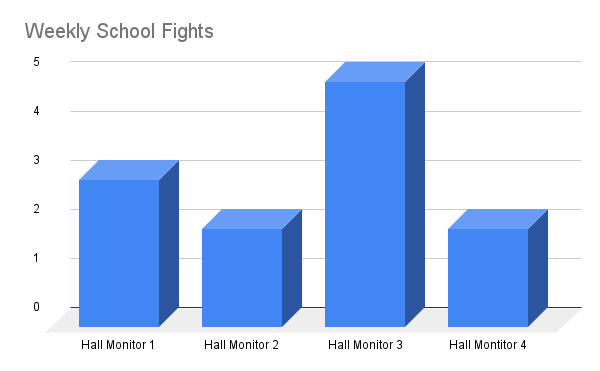
When asked how many fights the Patterson hall monitors had seen in the past month, most estimated the number at around 15-20 fights while others said about 3-5 fights. Some hall monitors like Mr. Walker haven’t seen many fights while others have seen fights break out more often in certain areas of the school.

Average number of fights per week witnessed by hall monitors in December 2024 (Source: Interviews with hall monitors)

Officer Jones said when someone gets into a fight at Patterson, she and or her partner would go to the location of the fight and stop it and figure out what happened and make sure everyone’s OK. Then the student is brought to the administrators and they figure out who was in the wrong and the guilty parties get suspended for 3-10 days depending on the way things escalated. 

Although school fights remain a serious problem at Patterson, a lot of progress has been made over the past few years. Three years ago, fights and problems at school were really bad and there was an uncountable amount of fights and dangerous activities going on, but by the time I entered 11th and 12th grade, the fights had most definitely calmed down and the school climate has continued to be calmer than it used to be. Yet even now, every other day there is a fight going on in school. 

What do school staff members do to prevent these fights and problems happening during school? According to Mr. Will, “After a fight we break it up, figure out what happened, then have a mediation group and make sure both parties resolve and agree to not fight again during school hours.”

At the end of the day I think Patterson High School is now changing for the better and there are far fewer fights than there used to be. The school is actually trying to prevent them and has put things in place to help achieve that goal. Patterson High School has long had a problem with fights that students keep causing. Although my research shows that it has gotten better over the years, it’s still an ongoing problem. I am hoping many students read this and realize that this is a problem in our school and maybe help stop or prevent a fight. At the end of the day, there are many other ways to resolve a problem or conflict.

How effective is Patterson’s uniform policy?

by Snit Kahsay and Mirian Maurizaca

Are uniforms effective at Patterson High School? Many students do not appreciate having to wear uniforms every day but some feel differently about them. To what extent do school uniforms make an impact and is that impact more positive or negative?

According to Principal Myrick, uniforms prevent students from getting picked on for not being able to afford fancy clothing. “…Some students can’t afford fancy clothes, so wearing uniforms prevents them from getting teased because everyone is on the same level when they are in uniforms”, stated Ms. Myrick. Patterson High School provides free uniforms so students don’t have to pay for their uniforms. However, free uniforms are only given out at the start of the school year. 

Uniforms could also be a part of safety. It can help identify students out of the building and inside, “…Because we have so many students so it helps us identify who’s in this school,“ not only does it help identify students but it represents our school pride “…uniforms show school pride it shows that you’re proud to go to this school,” stated Ms. Myrick. Additionally, Ms. Myrick said  “ Yes, I think it has an impact on their safety because it’s easier to identify students that don’t belong in the school  especially when it’s in the school area where people that don’t belong in the school are around the school property.

The Patterson Press conducted a survey of almost 100 students in late December 2024 to see how they felt about school uniforms. The results show that Patterson High School students have different thoughts and perspectives about school uniforms. 57.5% of students who responded to the survey said that uniforms were not important, but a significant minority disagreed.

Students expressed mixed opinions when responding to open-ended questions in the survey. “[The uniforms] are okay but I wished we had more options,” said one student. Since outfits come from creativity and inspiration, a common complaint was that uniforms do not allow students to express their individual style. One survey respondent said, “They take creativity from what you want to wear…”. Another said, “It doesn’t allow me to really express myself in my outfits.”

At Patterson high school the uniform is a black, blue, grey, or white t-shirt with the school logo on it and black or khaki pants. Also, each class has different colors: green and gold for the Class of 2025, maroon and gold for the Class of 2026, green and white for the Class of 2027, and red and white for the Class of 2028. Official class color T-shirts can be used as part of the school uniform.

Students get stopped at the entrance if they’re not wearing their uniforms. They get five chances before they can get detention for being out of uniform and the consequences depend on how many times they were caught without a uniform.

In conclusion, students have different opinions about uniforms. Based on what we have found out, we believe that uniforms might be effective in some ways such as preventing students from getting bullied for the way they dress and more but we think that students should have more options. Currently students are limited to khaki and black bottoms; we think that more colors should be added. The positive impacts that uniforms can have need to be carefully balanced against the negative impacts they can have on student self-expression and individual freedom.

Poster explaining school uniform policy
Class color T-shirts are an alternative to the standard uniform colors. (Photo: Snit Kahsay)
There are variations of the school uniform for students in certain programs and clubs, like this “Mentor” hoodie. (Photo: Snit Kahsay)

New school building’s lack of space impacts learning conditions

by Breon Thacker and Quaron Walker-Bey

Three years after the grand opening of the new Patterson High School building in 2021, students and teachers are struggling with a shortage of space, leading to a host of problems for the growing school population.

According to a 2015 report on the 21st Century Schools website, the old Patterson building took up 303,582 square feet. By contrast, the new building, which is shared with the Claremount School, was projected to be 267,771 feet total, including both schools. Teachers who remember the old building are glad to have the improvements in facilities and technology but are frustrated with the lack of space and the issues it creates.

“I like the new school building with the new technology, but at the old school building there was more room for students; teachers weren’t on top of each other”, reflects EMT instructor Mr. Casey. Mr. Casey thinks the 21st Century Building program could have planned the switch better. According to Mr. Casey, the building was originally designed for about 1,000 students and we are at or above about 1,300 now. The student population is overcrowded for the size of the building. Also, there is a bandwidth lag in the Wi-Fi system because so many students are on it at once. To compound the problem, there are not enough classrooms for the number of teachers in the building, forcing some teachers to share classrooms with other teachers whose curriculum or subjects are totally different from one another.

Some teachers have to move from classroom to classroom throughout the day, making it difficult to prepare for lessons. World History teacher Mr. O’Neal is one of these teachers. He says that some of the teachers here are very unsanitary, so he has to spend time cleaning up other after classes that aren’t his, and it can make it difficult to plan ahead of time for class. Mr. O’Neal has to switch classrooms every period that he teaches a class. Mr. O’Neal goes on to explain that he has 20-25 students per period and due to the small classroom sizes there is often not enough room for all his students to fit. Frequently kids may have to stand up for a whole class period.

Many staff members and and students share the opinion that the school should have been built larger, with more classrooms and offices and more space overall. Since the past can’t be changed, the question now is how to address this problem going forward. Should the school cap enrollment and try to lower the student population in future school years? Should school leaders seek funding for the building to be expanded? Should Claremount be relocated to a new site so that Patterson can utilize that section of the building? None of these potential solutions seem very viable in the present moment, but the problems caused by the lack of space at Patterson are becoming harder and harder to ignore. Something needs to be done about this issue or it will only get worse.

Breaking down school funding: Where does the money go?

by Wilfredo Portillo

Funding public education is a crucial responsibility shared across state, federal and local governments. But how exactly is this money distributed, and where does it go? Here’s a closer look at the intricacies of school funding and how it impacts teachers, students and programs.

Public schools receive their funding from three primary sources: state funding, federal funding and local government contribution. Each source plays a vital role in ensuring schools have the resources they need to function effectively.
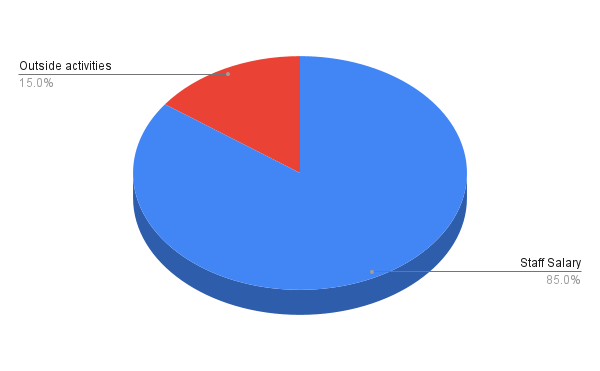
According to Patterson’s business manager, Mr. Cox, approximately 85% of school funding is allocated to paying the salaries of teachers and staff, along with health insurance and other related expenses. healthcare The remaining 15% is distributed across several categories. Some of it is spent on classroom materials and other necessities required to maintain daily operations, while the rest goes toward funding other priorities, including arts programs and extracurricular activities such as athletics, clubs, and field trips. These programs provide students with opportunities beyond academics, fostering personal growth and teamwork. The school district oversees the funding for school lunch programs, ensuring that students across different schools have access to meals.

Estimated Breakdown of 2024-2025 PHS School Budget (Source: Mr. Cox)


As schools prepare to receive additional funding later in the school year, there is a clear focus on addressing the pressing issues and improving student outcomes with key priorities being recruiting and retaining high quality diverse educators, supporting mental health initiatives for students, improving attendance rates, reducing dropouts, accelerating literacy and math achievements, and providing students with a well rounded education.

Based on the budget forum that was held in December 2024, there appear to be no major controversies surrounding the distribution of school funding. Most outside activities and extracurricular programs are funded equitably, with small percentages drawn from federal funding to support their cost. Additionally school districts and various agencies work collaboratively to manage and allocate these funds efficiently.

The distribution of school funding plays a pivotal role in shaping the quality of education and opportunities provided to students. While the majority of funds go towards staffing and essentials, efforts are being made to address evolving needs, such as mental health support and literacy improvement. With future priorities focused on equity, readiness and innovation, school funding remains a vital tool in preparing students for success.

Patterson holds language learning dinner

by Mirian Maurizaca

A language learning dinner took place at Patterson High School on November 14, 2024. There were two sessions for this event–the first one was for staff members at Patterson and the second session was for community members. This event was an opportunity for students in the Interpreting program to show off their language skills. 

There were three languages to learn: Spanish, Arabic, and Tigrinya. Students taught participants basic phrases in their language. Everyone had a chance to learn each language and many were enjoying it. There was also food which for many was the most exciting part of the event. The food reflected the diverse cultures of Patterson students, including pupusas from El Salvador, jollof rice and chicken from Nigeria, and falafel wraps from Syria.

Throughout the event, teachers, community members, and students were having conversations and learning each other’s languages. Everyone left with a packet with basic phrases so that they can keep practicing. 

AI presents new opportunities and new dangers for schools

by Wilfredo Portillo Quinones

Artificial intelligence (AI) is increasingly being integrated into education. The generative AI interactions that most students are most familiar with involve large language models like Chat GPT, which uses the internet to respond to questions users have and is capable of answering any sort of questions that would normally be asked on Google. A lot of tools have been implemented with AI in order to help students answer questions or understand classwork. It’s also used to help with teaching, which we see a lot now. AI is capable of teaching and helping students who struggle with regular learning. People have mixed feelings about this though. A lot of teachers are afraid of losing their jobs if AI gets too good and replaces them. There is also a concern that AI is negatively impacting learning because it can be used to cheat or take shortcuts instead of taking the time to develop academic skills. Is AI harming education or is it doing a good thing for us?

There are many platforms which are powered in part by AI, including Khan Academy and DreamBox, which adapt lessons to match individual students’ learning speeds and styles. For instance, a math app might adjust the difficulty of problems based on students’ past performances, ensuring they stay challenged but not overwhelmed. Hechingerreport.org states that, “Teachers save time by using AI tools that handle repetitive tasks like grading multiple choice questions, planning lessons, assessing students, grading homework, giving feedback and administrative paperwork.” However, they also say that it doesn’t mean AI is capable of replacing everything teachers do. AI could trim a lot of the work being done so teachers can focus more on helping students learn.

While AI has a lot to offer in this day and age, there are many concerns that we need to take into consideration. One major concern is that students might rely on AI tools or become very dependent on them for answers or learning. That might lead to students not being able to use cognitive skills, critical thinking skills or problem solving skills. If students use AI on homework or for test preparations they won’t be able to use these skills without AI. Another concern is how AI stores information and whether this information is secured, especially with information on many students. With the increase of AI tools people want to make sure their personal information is secure and not at risk of being breached by hackers who might take or use this information for harmful purposes. These concerns need to be taken seriously.

To avoid the misuse of AI or even cheating using AI, students need to be educated on responsible AI use and there should be restrictions on AI usage to safeguard students and to ensure academic honesty. Schools can’t avoid AI tools or AI in general, but responsibility should be taught while using AI.

« Older Entries