Category Archives: Government/Social Studies

Incarceration does not deter drug use, student survey suggests

by Nila Strong,

Edited by Ms. Kirsch’s Creative Writing class

This semester, our Creative Writing class received a visit from Ms. Kelly Burke, Patterson’s Sr. Rehabilitation Therapist through the Department of Community Psychiatry at Johns Hopkins Bayview Medical Center. She spoke with us about drugs and how they can affect our minds and bodies.

Her visit inspired us to look deeper into the issue, so we created an unscientific anonymous survey that asks questions about drug use and drug possession laws. For example, we asked questions like “Do you feel putting people in jail makes them stop using drugs?” We found that, of the almost 200 people we surveyed, 161 believed that putting people in jail does not make them stop using drugs. People wrote down their reasons for their opinions. Many said that they knew people who had gone to jail and had just as easy a time getting drugs in jail as on the streets. One person wrote, “We are doing this [putting people in jail] but I haven’t seen something change.”

Yet those surveyed, mostly Patterson students, did believe that many drugs are dangerous and that laws should be changed, not to make drugs more accessible, but to keep people safer.

We came up with the questions by having discussions about drugs and possession laws. We asked each other questions and we brainstormed, too. Creating and administering a survey was a great way to find out more about an important topic.

 

Darren Wilson’s acquittal was the wrong decision (OPINION)

By: Xavier Williams

Protests and riots broke out in Ferguson, Missouri after a  grand jury decided not to charge Darren Wilson with a crime on November 24th, 2014. Darren Wilson was a  Ferguson police officer who fatally shot an unarmed teen, Michael Brown, on August 9th.

When I found out that the jury had let Darren Wilson go, I was very upset, because what he did to Michael Brown was wrong and insane. I mean, how could the judge be so stupid to let that sick man go? It’s just not fair to the family of Michael Brown; Wilson doesn’t deserve to see another day free at all. Michael Brown was a very bright young man. He didn’t deserve to die like that; he had so much life ahead of him.

The judge had no guilty charges on Officer Wilson, so he decided to let him go. Its like history is repeating itself: it gets more and more dangerous for everyone in the United States of America, and it’s not fair. I believe that the grand jury should have charged him with murder because he killed a boy who was innocent with no intention of hurting anyone at all. He had his hands in the air and Wilson shot him multiple times.

The Michael Brown case is an example of  what goes on in other cities, including here in Baltimore, and how police officers get away with doing bad things to African-American people. This is not okay; it’s not okay because it’s racist and people should stand up against it.

Maasai Warriors Visit Patterson

Masai warriors perform a traditional dance in the media center (Photo: Laxmi Magar)

by Rama Goloco

There were Maasai warriors dancing at Patterson High School in the Media Center on November 12 . All of the dancers were men, but they looked like women because their traditional clothing resembled dresses. They came from a country in Africa called Kenya. The mountain district called Kirinyaga is where the Maasai live. They are a popular and traditional culture.

The dancers wore traditional red hunter’s clothing like great warriors. They carried shields, staffs and other items from their culture. They were singing, dancing and jumping.  When they jumped, they made a roaring sound with their voices. They really know how to jump all way up to the top!

Their visit was a precious thing because it helped the students in the US to know about different countries in Africa. That day a lot of the students enjoyed the performance. It was a fun day.


Patterson students join rally for immigration reform

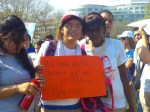
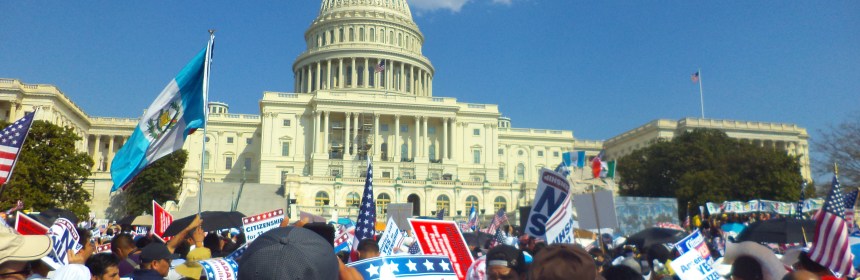
Patterson students join thousands of other demonstrators at a rally for immigration reform in front of the U.S. Capitol Building in Washington DC (Photo: Ms. Flores)

By Ms. Kelly Flores

Two buses full of Patterson students, faculty, and community members participated in a rally and march in support of immigration reform on the West Lawn of the Capitol Building in Washington D.C on April 10th, 2013. This was a nationwide movement crying out to urge Congress, who just returned to session, to address the issue of there being over 11 million undocumented immigrants in our country.

Cries of “¡Sí se puede!”  (Yes we can!)  and “Obama escucha–estamos en la lucha”  (Obama listen–we are in the fight!)  filled the air as the students and faculty from Patterson arrived onto the scene of over 100,000 people rallying together for the same cause. During the rally speakers such as Dolores Huerta and Congressman Luis Gutierrez passionately addressed the audience, urging them to keep pushing Congress and that this is the year for reform.

This was a fantastic real life learning opportunity for students to see government in action and the importance of people being an active participant and making their voice heard.

(Photos: Ms. Flores)

Black History Month exhibit showcases African art and much more

By Brennan Meeks

(Photo: Brennan Meeks, Patterson Press)

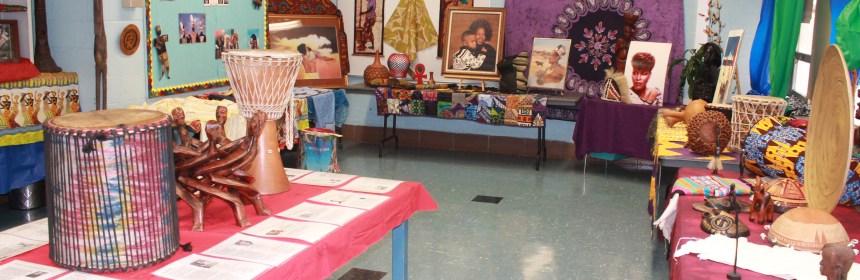
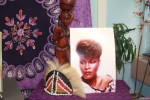
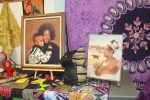
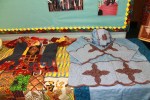
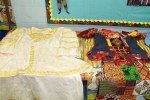
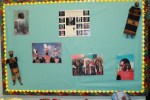
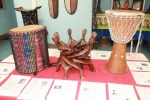
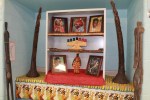
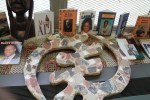
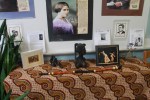
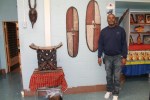
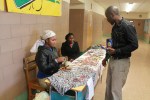
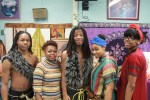
In honor of Black History Month, Patterson hosted an African/African American history exhibit in Room 162. Staff member Mr. Ricardo Jordan organized the exhibit.

The exhibit explored black history and culture over the years and featured portraits of black inventors, spiritual objects, sculptures and other artwork. The exhibit also included books written by famous African Americans.

The exhibit was open during homeroom and class times and some teachers took their classes down to visit it. Students who saw the exhibit were very interested in learning about African American history and different African cultures.

Government students present posters about the Egyptian Revolution

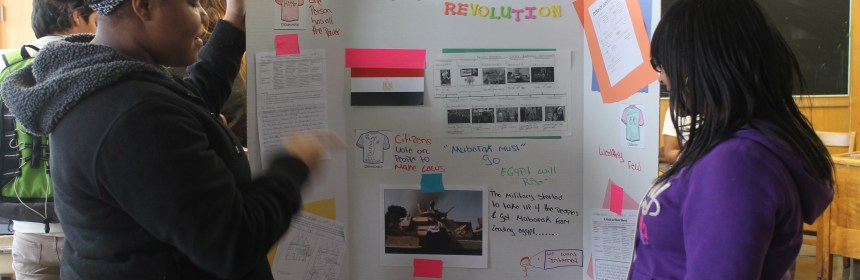
Students present their poster about the Egyptian Revolution (Photo: Brennan Meeks, Patterson Press)

By Brennan Meeks

Ms. McDermott’s Government class held a presentation about the Egyptian Revolution on February 11 ,2013 in the Skills USA room. Several other teachers, staff members and students were in attendance to witness the presentation. The class had been studying the revolution in Egypt for several weeks leading up to the presentation.

The presentation was divided into different groups. Each group had to present on a principle of democracy relating to a picture they had displayed on poster board. Each group talked about about how Mubarak, the government leader of Egypt until 2011, was a dictator. Mubarak had limited his people’s rights by using the force of the military to control the people. Mubarak had been in power in Egypt for many years and the people of Egypt were tired of his rule. Beginning in January 2011, the citizens of Egypt started protesting and rioting because they wanted him out of power. The class discussed what happened in the revolution.

“The revolution in Egypt happened two years ago. Egypt had an authoritarian government,” said Ms. McDermott. In the end, Mubarak’s government was overthrown by his own people. In February 2011, Mubarak was forced to leave the government.

“Egypt had been going through a lot of changes when he was dictator. Mubarak took away peoples’ rights and this led to  riots in Egypt.” explained students Kelvin and Xavier.

“[What happened in Egypt teaches us the importance of]  freedom of speech. Protest for your own rights and fight for freedom. [In Egypt,] they didn’t agree with the government because [Mubarak] treated the people badly,” said Regia Bell, another of Ms. McDermott’s students.

“President Mubarak had an authoritarian government, and he was powerful leader. He  didn’t allow any [free] press and he didn’t want people to know about what was going on Egypt,” offered students Breona and Malika.

By the end, each group had presented its principle of democracy and how it related to the Egyptian revolution. Everyone agreed that it was a very good discussion and they learned many new things from this project. As events in Egypt continue to make headlines, it is important that everyone understands what is at stake and is able  to appreciate the value of democracy. Ms. McDermott’s class has helped us to do just that.


(Photo: Brennan Meeks, Patterson Press)

(Photo: Brennan Meeks, Patterson Press)

Opinion: Women still face discrimination, stereotypes

By Qu’Chae Madison

Illustration by Elizabeth Christopher

Equality affects all of us, no matter what our race or gender we are.  Equality, to me, means treating everyone with respect, no matter the race, nationality, or gender of the other person.

In the olden days, many people in the world believed very strongly in stereotypical gender roles. A gender role is the standard role that a man or woman takes in society.  For example, men work hard and bring home the bacon, while women stay home, cook, clean, and take care of children.  But as the gender roles have blurred, more women are working while taking care of children, becoming CEO’s while going to school, and making a living for the family.  At the same time more men are taking on the role of “manny,” taking care of kids while the mothers are out of the home.

Equality is a very important thing to me because I believe in treating everyone fairly.  Equality is about treating people with respect. I don’t think women are being treated equally right now. For example, if a woman and a man are competing for a job as a business-person, I think the man would get the job nine times out of ten. I think some men believe women are weaker and naive so it is easier for some women to be dominated by men.

I do not think girls are being treated equally at Pattterson either.  For example, sometimes students are categorized based solely on gender and the stereotypical thinking might be: “Oh, just because she’s a girl, she can’t beat me”, or ,”Oh, she’s a girly-girl. She might break a nail.”

If you label and stereotype people, you automatically put them in a group and do not give them the chance to be known as individuals.  I think women are being mistreated sometimes because of how people see them.  For example, if you see someone who is quiet and who is always looking down, someone would immediately think they can step over them, because of the visual impression they make on others.  Equality is something that is very important to me, and I believe we need to stand up for it.

Election 2012

(Photo: CBSnews.com)

By Brennan Meeks

Election Day is on its way. If you are 18 or older, you can register to vote in the 2012 election. Election Day is on November 6,2012 for those who want to vote. In addition to choosing the next President, voters can also select their favorite candidates for state and local government and can vote on a number of ballot initiatives like approving new casinos and legalizing gay marriage in Maryland.

Recently, the candidates of the two major parties went head to head in a presidential debate. President Barack Obama, the Democratic candidate, wants to build schools in the nation to make sure students get their education. “Make young people and medicare stronger,” said Obama. The President wants to put a lot of money into schools and create new jobs.

Former Massachusetts Governor Mitt Romney is the Republican candidate. Romney says he doesn’t want to add more taxes. He wants the government to spend less money so that he can lower the taxes. Both candidates say they want to change the world and create jobs to help get people working. The next Presidential debate will be held on Tuesday, October 16th at 9:00 PM EST. You can watch the debate live on all of the major TV networks.

Recent Entries »