
Tag Archives: Technology

Dangers of technology should be taken seriously

by Amori Matthews

Some people believe that technology is the key to our growth or success. However, I believe that it causes us to be too dependent on it. Technology can be a good thing but I think it has caused more problems rather than simply making our lives easier. Many people want to talk about the growth and the good of technology but they don’t list all the problems that come along with using technology.

The University of the People article, “Society Is Too Dependent On Technology,” claims that it is about the negative effects but it doesn’t really go into detail, making it seem like not a big deal. The author states that “Technology can be a powerful tool when used correctly.” I believe they say this to downplay the negative effects and portray them as minor and easy to control. The article also uses innuendo by saying that technology use “can reduce face-to-face communication,” sort of hinting at social damage without arguing about the long-term consequences or effects. Additionally, when the author states, “studies show that technology affects how people think and behave”, the author does not cite any sources–trying to make the statement seem factual without any evidence to back it up.

UA Grantham’s “Technology: The Good, The Bad, The Ugly” kind of does the same thing. They also talk about some of the problems technology can cause but considers them as small, manageable, or unimportant. The author describes serious issues such as “privacy loss” and “cyber security threats” but refers to them as “challenges of the digital age”, minimizing the potential harm caused by these problems. This article also uses innuendo when the author states, “society is increasingly becoming more and more reliant on technology”, suggesting that we are too dependent but without fully going into detail about it. Furthermore, I think the author uses a lot of truth surrogates–for example, “Technology has transformed nearly every aspect of our modern life.” This claim has little to no evidence to back it up but people agree with it automatically without calling it into question.

Lastly, The United Nations article, “Impact Of Digital Technologies,” strongly supports technological advancements while limiting the discussions of its risks. While the article does mention unequal access to technology, it goes right back to the benefits, using innuendo, downplayers, and truth surrogates. The author downplays global inequalities by stating that “digital technologies are made to accelerate progress towards sustainable development”, basically treating them as secondary issues. The UN also uses innuendo when it claims that “countries that fail to adopt digital technologies are at risk of being left behind.” This statement suggests that if you don’t improve your technology or follow global trends you’re basically irresponsible. Finally, the author uses truth surrogates, stating that “digital technologies are transforming societies worldwide.” Even though this claim is broad and authoritative, it still lacks evidence as to how technology is transforming different societies worldwide.

In conclusion, while I still think technology is bad and causes more problems than good, many people and companies will have different opinions. While I still think people should talk more about the downsides and actually have studies to back up their claims or reasoning, I think people only see the good in technology since it makes everything easier to manage and do.
School district implements new cell phone policy

by Genesis S. Machuca, Tiffany A. Martinez, & Jamaal McFadden

Baltimore City Public Schools will require students to keep their cell phones and other personal electronic devices powered off, put away, and secured throughout the school day beginning with the 2025–2026 school year. The policy applies to all students in the district and was approved by the Baltimore City Board of School Commissioners

Under the new rules, students may still bring phones to school, but they cannot use them from the time they arrive until dismissal unless permitted for specific educational or emergency reasons. City Schools officials say the policy is intended to reduce distractions, improve student focus, and support academic performance.

“This policy is designed to create a better learning environment by limiting disruptions and helping students stay engaged in class,” said a representative for Baltimore City Schools.

The policy not only covers cell phones but also tablets, smart watches, and wireless headphones. Devices must remain powered off and out of sight during instructional time, lunch, passing periods, and recess. Exceptions will be made for approved classroom activities, emergency communication, and circumstances approved by school administrators.

School district leaders encouraged families to prepare for the new rules and to communicate with their child’s school if necessary. While many parents and educators support the policy as a way to improve classroom engagement, some have raised questions about communication and access during non-instructional times.

The new policy reflects growing nationwide efforts by school systems to balance technology use with academic priorities.

AI presents new opportunities and new dangers for schools

by Wilfredo Portillo Quinones

Artificial intelligence (AI) is increasingly being integrated into education. The generative AI interactions that most students are most familiar with involve large language models like Chat GPT, which uses the internet to respond to questions users have and is capable of answering any sort of questions that would normally be asked on Google. A lot of tools have been implemented with AI in order to help students answer questions or understand classwork. It’s also used to help with teaching, which we see a lot now. AI is capable of teaching and helping students who struggle with regular learning. People have mixed feelings about this though. A lot of teachers are afraid of losing their jobs if AI gets too good and replaces them. There is also a concern that AI is negatively impacting learning because it can be used to cheat or take shortcuts instead of taking the time to develop academic skills. Is AI harming education or is it doing a good thing for us?

There are many platforms which are powered in part by AI, including Khan Academy and DreamBox, which adapt lessons to match individual students’ learning speeds and styles. For instance, a math app might adjust the difficulty of problems based on students’ past performances, ensuring they stay challenged but not overwhelmed. Hechingerreport.org states that, “Teachers save time by using AI tools that handle repetitive tasks like grading multiple choice questions, planning lessons, assessing students, grading homework, giving feedback and administrative paperwork.” However, they also say that it doesn’t mean AI is capable of replacing everything teachers do. AI could trim a lot of the work being done so teachers can focus more on helping students learn.

While AI has a lot to offer in this day and age, there are many concerns that we need to take into consideration. One major concern is that students might rely on AI tools or become very dependent on them for answers or learning. That might lead to students not being able to use cognitive skills, critical thinking skills or problem solving skills. If students use AI on homework or for test preparations they won’t be able to use these skills without AI. Another concern is how AI stores information and whether this information is secured, especially with information on many students. With the increase of AI tools people want to make sure their personal information is secure and not at risk of being breached by hackers who might take or use this information for harmful purposes. These concerns need to be taken seriously.

To avoid the misuse of AI or even cheating using AI, students need to be educated on responsible AI use and there should be restrictions on AI usage to safeguard students and to ensure academic honesty. Schools can’t avoid AI tools or AI in general, but responsibility should be taught while using AI.

The pros and cons of social media

by Mirian Maurizaca

Photo: Shutterstock

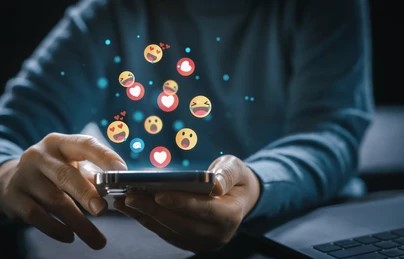
Social media can have both positive and negative impacts on high school students. On the positive side, it can help them stay connected with friends, access information quickly, and even find supportive communities. On the negative side, it can lead to distractions, cyberbullying, and privacy issues. It really depends on how it’s used and the guidelines set by parents and schools.

One reason why high school students might be better off without social media is because of the distractions it can cause. Social media can be a major distraction from schoolwork and studying. It’s easy to spend hours scrolling through feeds instead of focusing on homework or studying for exams.

Unfortunately, social media can also be a platform for bullying. Cyberbullying can have serious emotional effects on students. Also, constant exposure to unrealistic images and lifestyles on social media can lead to feelings of anxiety and depression. The pressure to get likes and followers can also contribute to the stress.

Another problem is sharing personal information on social media; it can lead to privacy concerns. Students might not fully understand the consequences of sharing too much information online. Social media can be addictive. Students might find it hard to disconnect, leading to too much use that can interfere with their daily lives and responsibilities. The use of social media, especially right before bed, can interfere with sleep patterns, leading to a lack of sleep which can affect your school life and overall health.

While there are risks, with proper guidance and responsible use, social media can offer benefits to high school students.

One reason why high school students might benefit from having social media is that social media allows students to stay in touch with friends and family, especially if they move or go to different schools. Interacting on social media can help students develop communication skills. They learn to express themselves, debate, and share ideas in a public setting. It can help maintain relationships and build new ones. Platforms like Instagram, TikTok, and YouTube allow students to express their creativity through photos, videos, and other content. This can be a great outlet for self-expression and even finding a career.

There are also educational resources on social media. Many educational pages and groups on social media platforms can provide valuable information, study tips, and resources. Students can join groups related to their interests or subjects they are studying. Social media can offer support groups for various issues, whether it’s school related stress, mental health, or personal interests. These networks can provide a community and support for those who need it.

Social media is a powerful tool for raising awareness about important issues. Students can become more informed about events happening around us and it helps them make their voices heard on issues they care about. Social media can open doors to opportunities that students might otherwise miss out on. 

It’s important to consider these factors and weigh the pros and cons when deciding whether high school students should have access to social media.