
Tag Archives: AP

Exploring identity, emotion, and imagination in AP Art sustained investigation
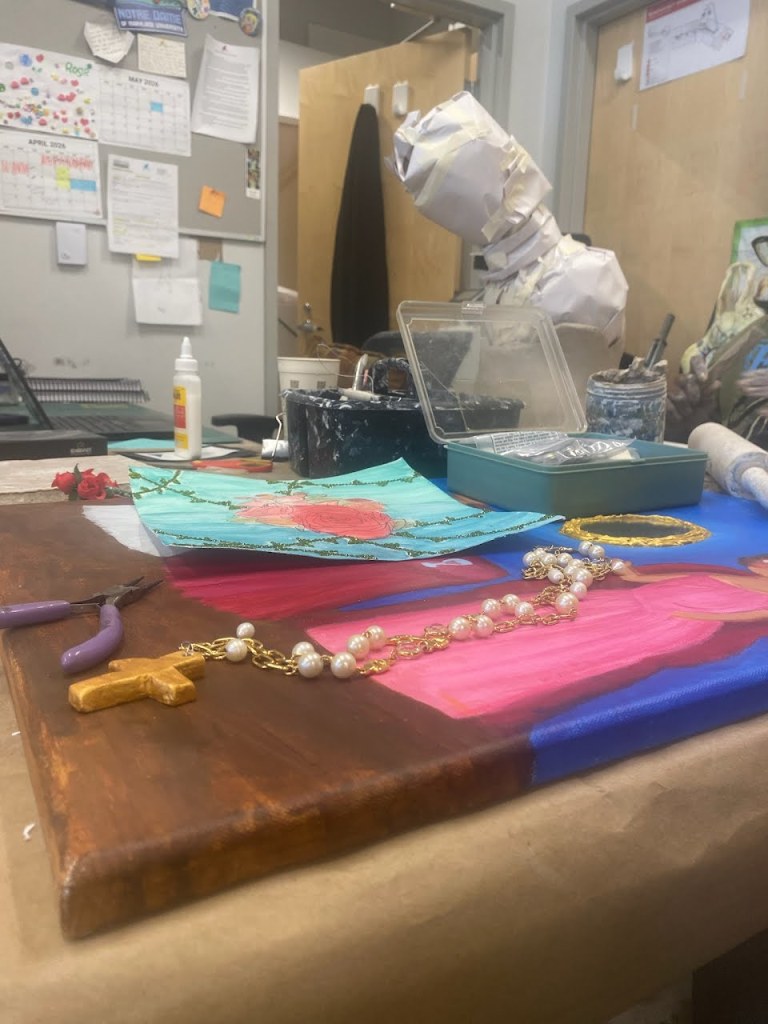
Photo: Akira Sumpter

By Saniyah Courtney

At Patterson High School, AP Art students led by Ms. Holter developed sustained investigations that explore personal details, creative ideas, and emotional expression through a variety of media and techniques. Each artist builds a portfolio of work that fits their chosen theme of choice while experimenting with different materials such as clay, painting, markers, and many other mediums to communicate meaning.

Jacoiya Roscoe’s sustained investigation in AP Art centers around surrealism, which is her second portfolio. She explores distorted realities and gives them a deeper meaning. She works with paint, markers, charcoal, and even colored pencils. One of her key artworks focuses on paranoia, showing how fear can alter perception and create a sense of mental unease.

Emily Gasca-Palma’s sustained investigation focuses on femininity, examining how identity and womanhood can be represented through art. She uses painting and sketches to explore emotions that connect to her theme. One of her artworks is a painting of a uterus shaped with flowers. She creates a highlight of balance and strength, which shows femininity as layered, personal, and shaped by experience.

Kaiya Patterson’s sustained investigation explores surrealism, horror, and fear, creating bizarre, unsettling visual narratives inspired by psychological tension and imagination. Working mainly in clay, she builds realistic sculptural forms while adding unexpected details to her artwork. Her artwork focuses on the contrast between realism and distortion, using horror-inspired themes to evoke emotion and challenge perception. This is also Kaiya’s second year of doing AP art. Even after all the challenges, she has managed to have extra work for her portfolio and is ready to get her life back after she graduates.

Kevin Valencia-Arzola’s sustained investigation focuses on Asian culture, drawing inspiration from tradition, identity, and telling a story without words. He works with both painting and ceramics, exploring cultural themes through different materials. One of his artworks involved breaking a plate that he had made of clay and fixing it with gold. This artwork represents Japanese culture by showing how broken items are fixed with gold in their culture.
AP psychology disorder presentations 

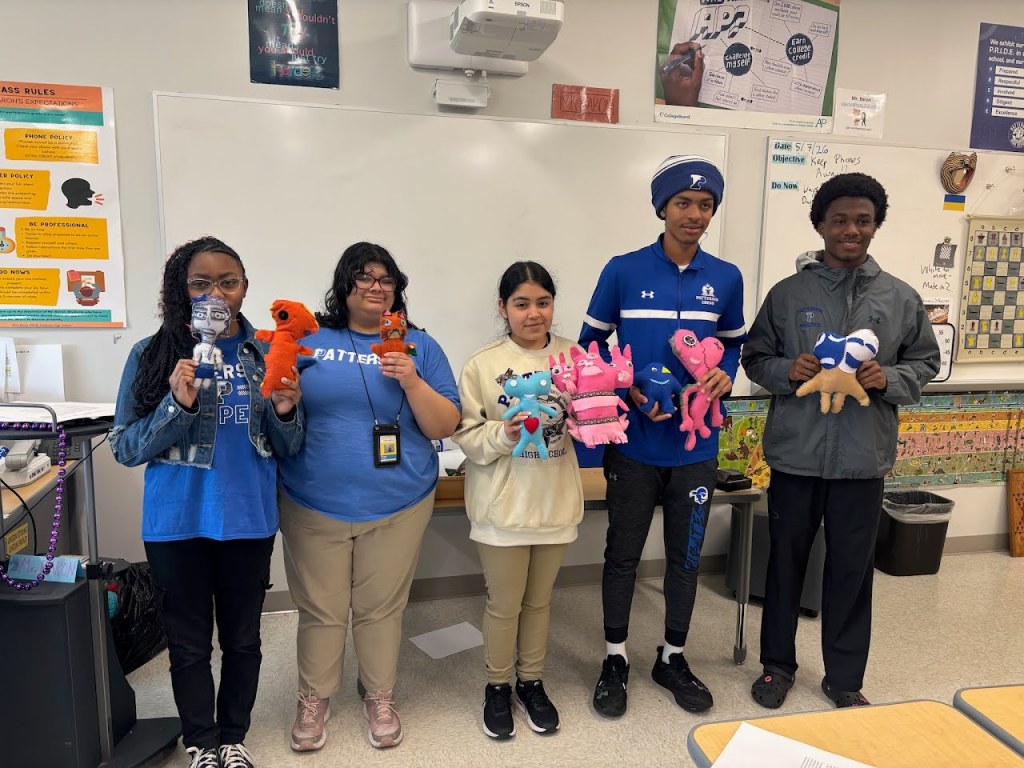
AP Psychology students show off their “ugly dolls”

By Saniyah Courtney

At Patterson High School, in our AP psychology class led by Mr. Baron, students researched, presented different mental health disorders, created ugly dolls with special powers, and guided notes to help the class better understand how the disorder could affect someone.

Taron Taylor presented on ADHD (Attention Deficit Hyperactivity Disorder), explaining the common symptoms like difficulty focusing and hyperactivity, and how it is treated. He also discussed medication options and possible side effects, and even used his own life examples to help the class understand both the benefits and challenges of treatment.

Jae’lynn Newby-Goode presented on cluster disorders, which focused on groups of personality disorders that are often categorized together. She explained ten different types of personality disorders and how medication can help manage symptoms, and how common it is for each gender. Jaalyn’s presentation helped show how complex personality disorders can be and how treatment often depends on the individual.

Zoe Harris talked about somatic symptom disorder, explaining how it is caused by a strong focus on physical symptoms that may not have a clear medical explanation. She discussed how stress and mental health can affect the body and explained ways people live with the disorder, and also used a celebrity as an example.

Marshall Mallory presented on bipolar disorder, explaining how it causes extreme mood swings between manic episodes. He also talked about the different types of bipolar and how it can be passed down through genetics, while also discussing how people manage the disorder through medication, therapy, and lifestyle changes to keep their moods more stable.

Roman Clark talked about OCD (Obsessive Compulsive Disorder), explaining how people experience unwanted thoughts and feel the need to perform certain actions repeatedly. He also shared myths about OCD, explaining how therapy can reduce these behaviors and improve daily life. 

Genesis Lagombra presented on dissociative disorders, going into detail about how they affect memory, identity, and awareness. She described how people may feel disconnected from themselves or from reality. She also discussed treatment options like therapy to help individuals regain a sense of stability.

Cesia Lopez Velasquez talked about eating disorders, explaining how they affect both mental and physical health. She discussed different types, the pressure that can contribute to them, and how treatment often includes therapy, medical support, and building a healthier relationship with food.

Sierra Skaggs presented on social anxiety disorder, explaining how it causes intense fear in social situations. She also discussed how it can affect communication and daily life, and she explained how therapy and coping strategies can help people feel more comfortable in social settings.

Along with these presentations, AP psychology students have also worked on a creative project where they created “ugly dolls” with superpowers to help the person with the disorder, allowing them to express themselves artistically while connecting their understanding of psychology to art.