Category Archives: Science

AI presents new opportunities and new dangers for schools

by Wilfredo Portillo Quinones

Artificial intelligence (AI) is increasingly being integrated into education. The generative AI interactions that most students are most familiar with involve large language models like Chat GPT, which uses the internet to respond to questions users have and is capable of answering any sort of questions that would normally be asked on Google. A lot of tools have been implemented with AI in order to help students answer questions or understand classwork. It’s also used to help with teaching, which we see a lot now. AI is capable of teaching and helping students who struggle with regular learning. People have mixed feelings about this though. A lot of teachers are afraid of losing their jobs if AI gets too good and replaces them. There is also a concern that AI is negatively impacting learning because it can be used to cheat or take shortcuts instead of taking the time to develop academic skills. Is AI harming education or is it doing a good thing for us?

There are many platforms which are powered in part by AI, including Khan Academy and DreamBox, which adapt lessons to match individual students’ learning speeds and styles. For instance, a math app might adjust the difficulty of problems based on students’ past performances, ensuring they stay challenged but not overwhelmed. Hechingerreport.org states that, “Teachers save time by using AI tools that handle repetitive tasks like grading multiple choice questions, planning lessons, assessing students, grading homework, giving feedback and administrative paperwork.” However, they also say that it doesn’t mean AI is capable of replacing everything teachers do. AI could trim a lot of the work being done so teachers can focus more on helping students learn.

While AI has a lot to offer in this day and age, there are many concerns that we need to take into consideration. One major concern is that students might rely on AI tools or become very dependent on them for answers or learning. That might lead to students not being able to use cognitive skills, critical thinking skills or problem solving skills. If students use AI on homework or for test preparations they won’t be able to use these skills without AI. Another concern is how AI stores information and whether this information is secured, especially with information on many students. With the increase of AI tools people want to make sure their personal information is secure and not at risk of being breached by hackers who might take or use this information for harmful purposes. These concerns need to be taken seriously.

To avoid the misuse of AI or even cheating using AI, students need to be educated on responsible AI use and there should be restrictions on AI usage to safeguard students and to ensure academic honesty. Schools can’t avoid AI tools or AI in general, but responsibility should be taught while using AI.

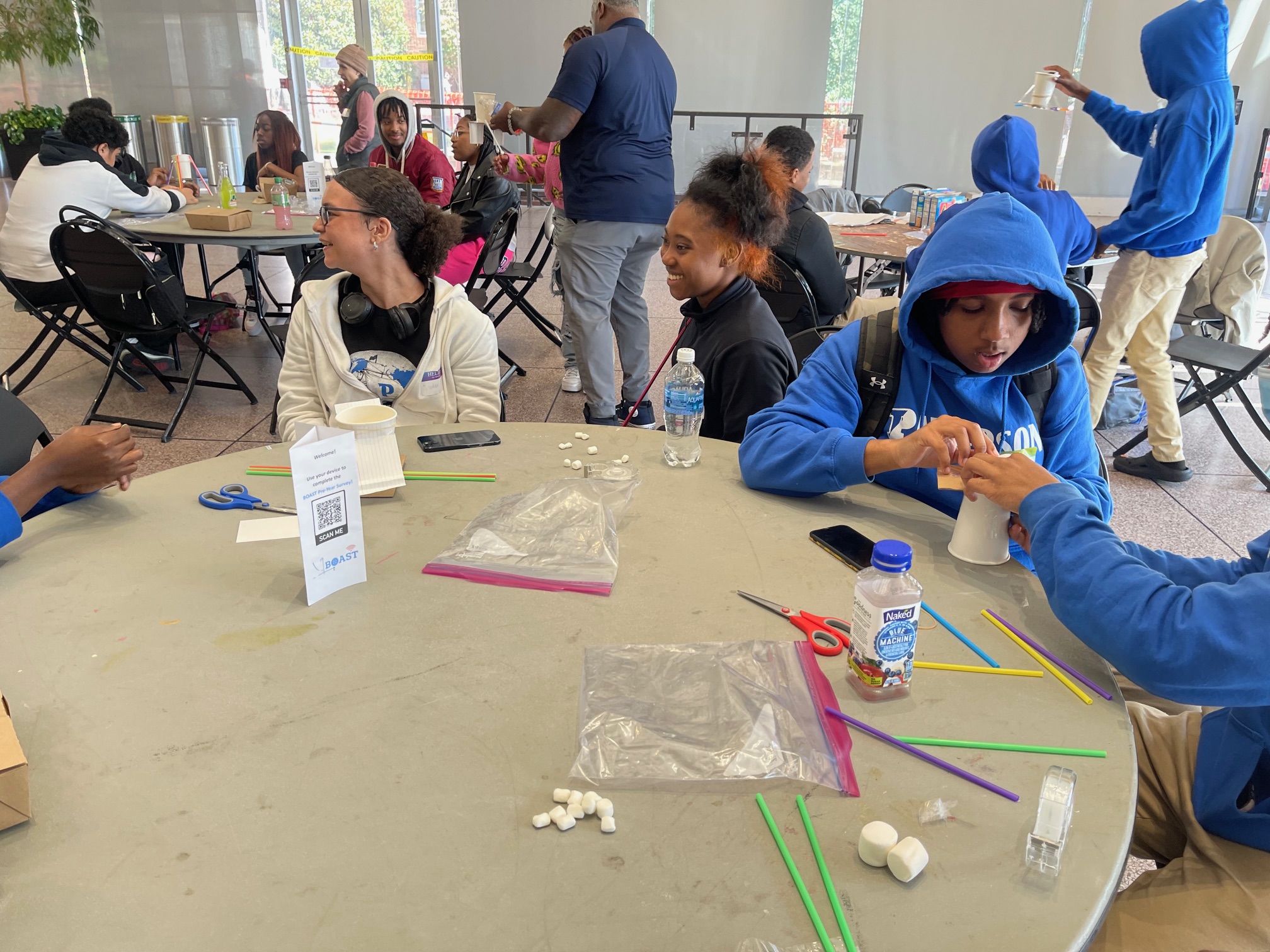
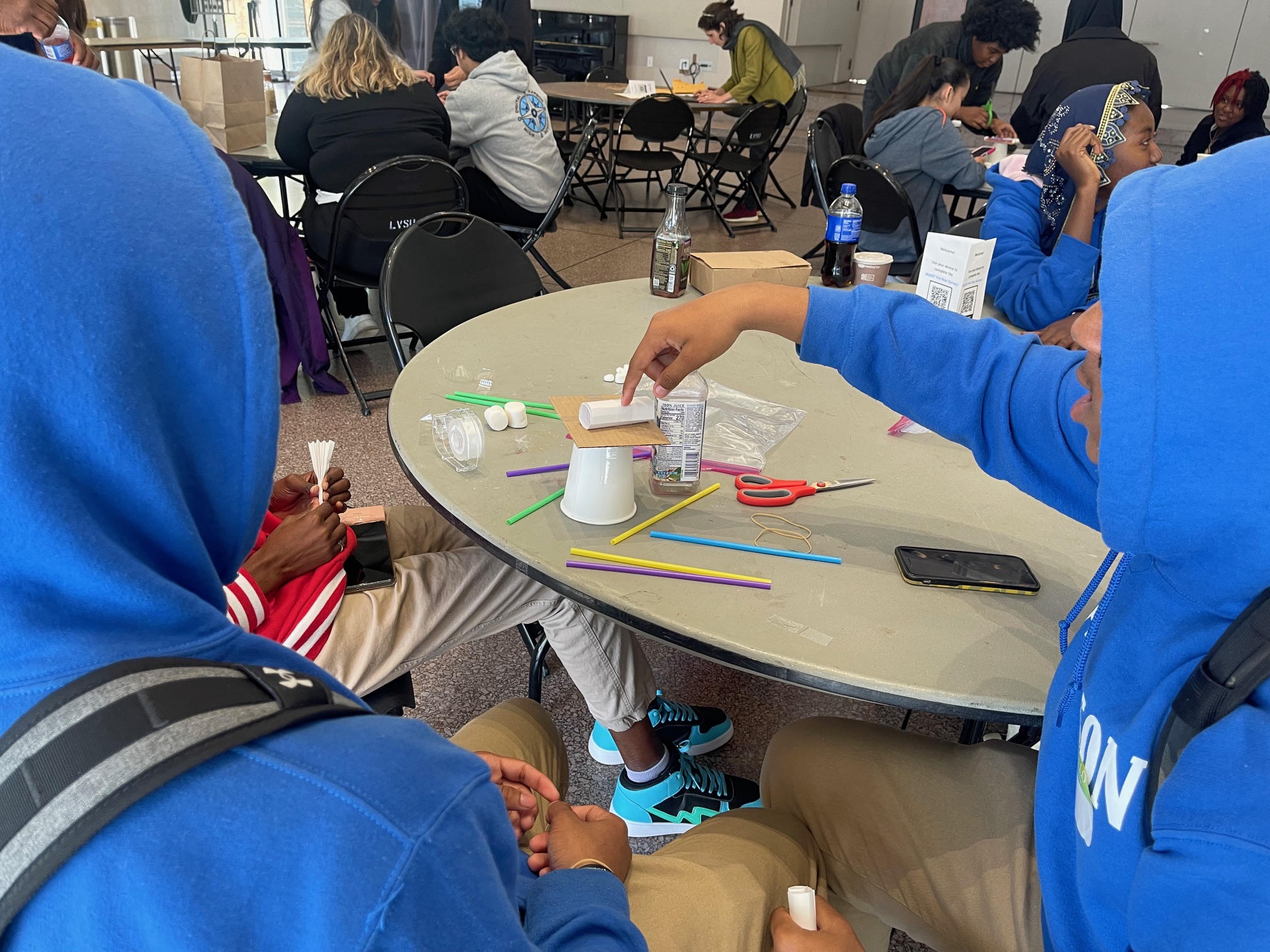
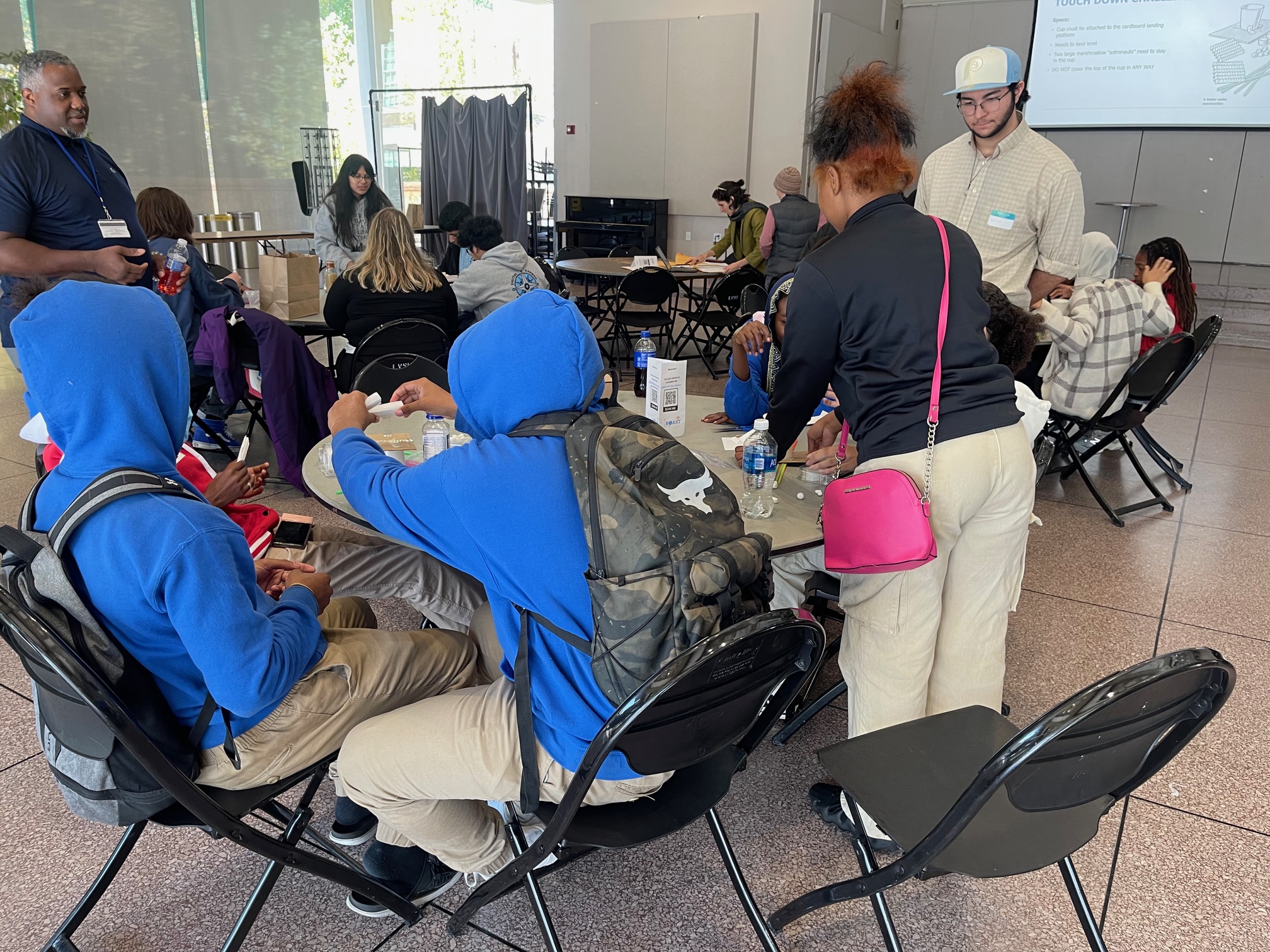
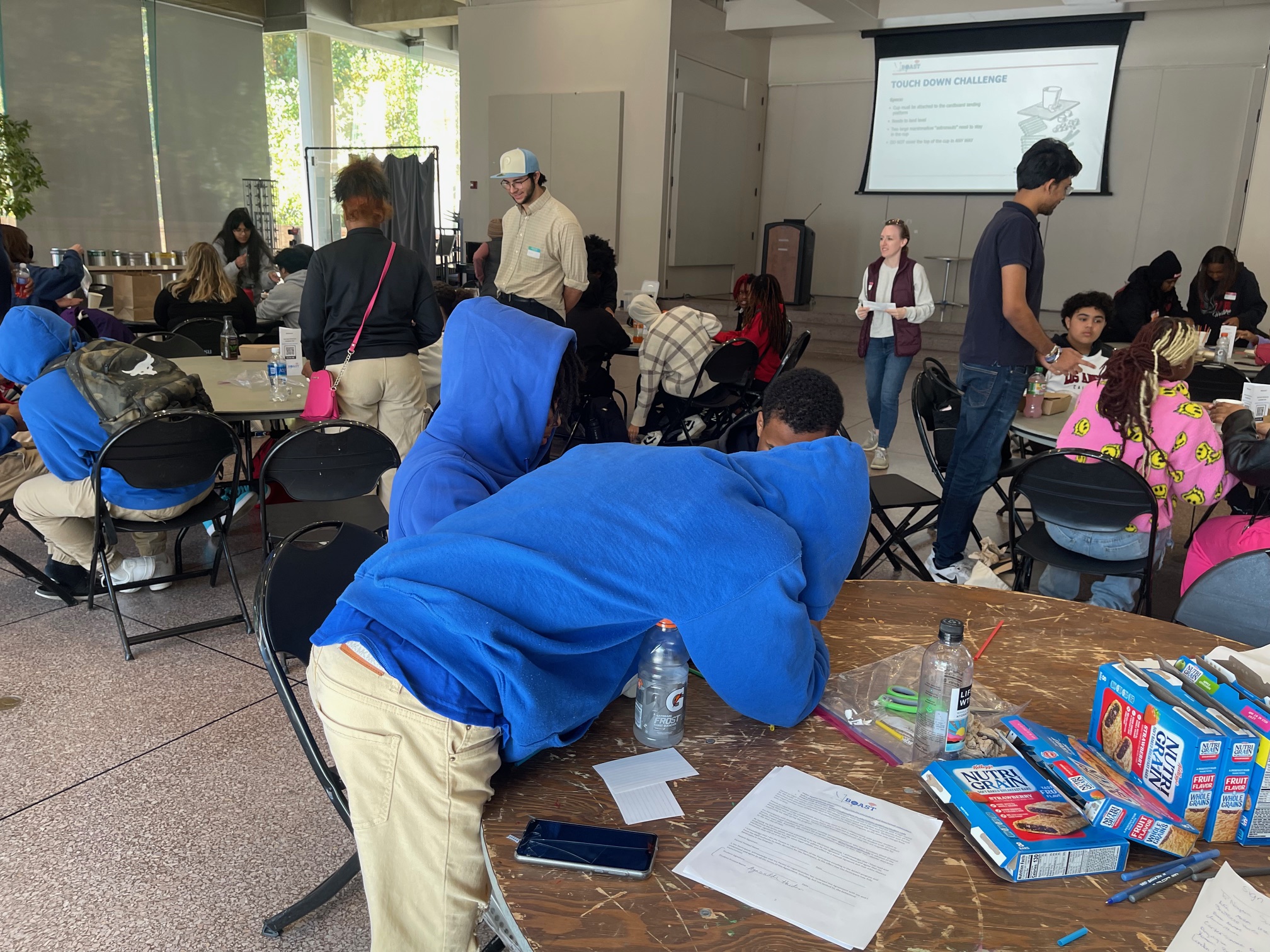
BOAST applies STEM skills to real life problems

by Kenneth Dorsey, BOAST Program Participant

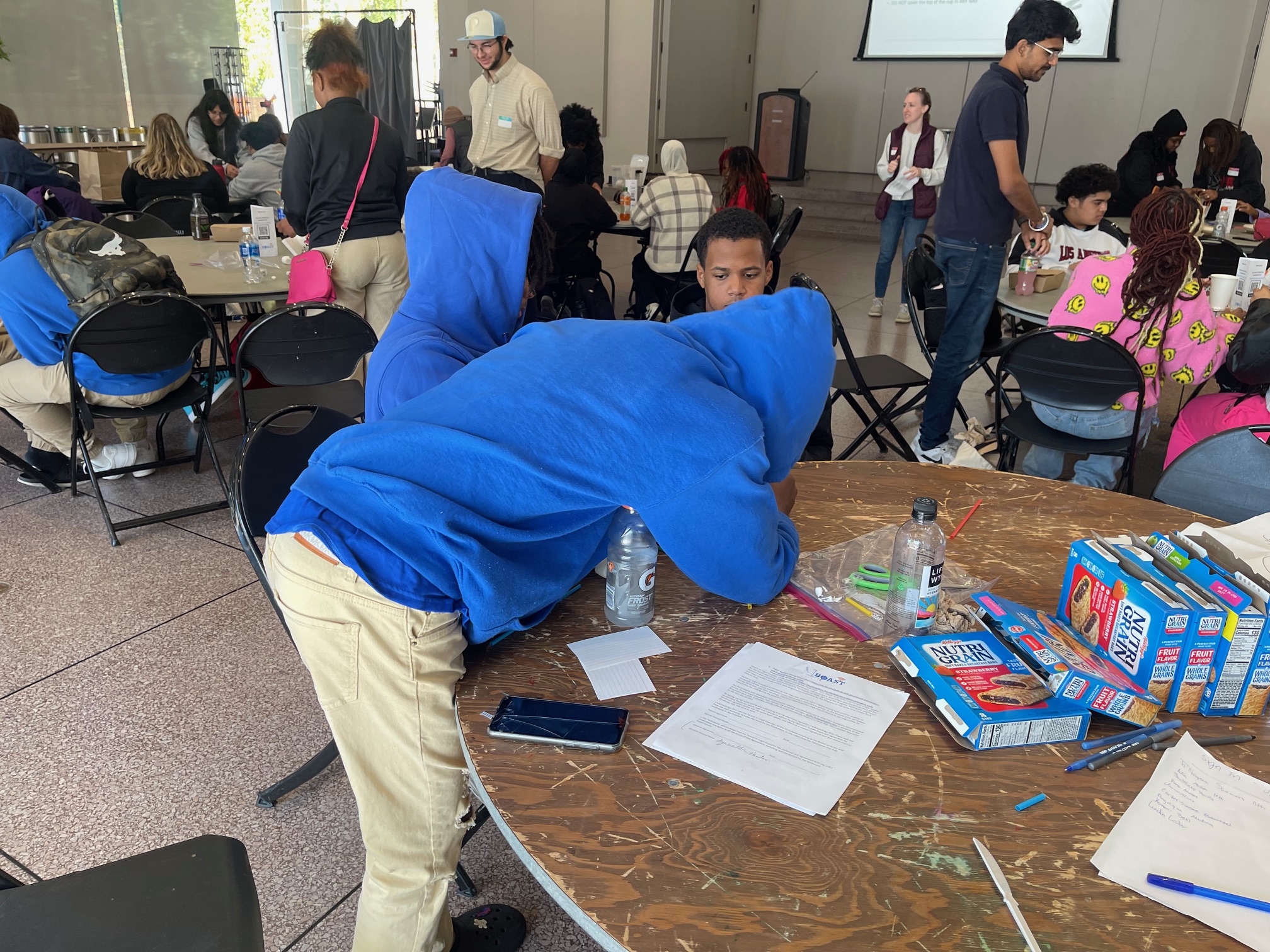
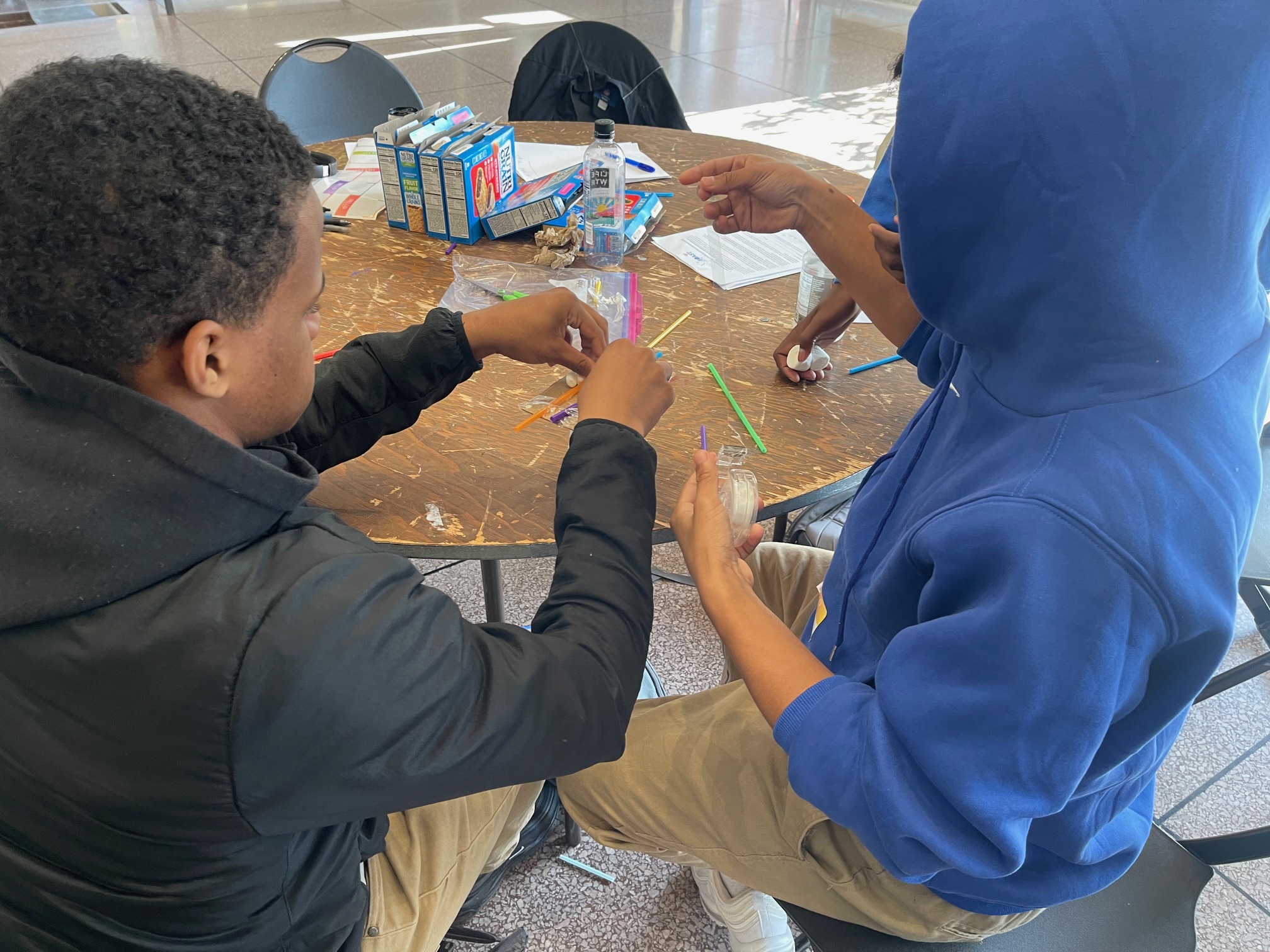
BOAST stands for Baltimore Online Algebra for Students in Technology. It is a free, after school program for students who are interested in STEM fields and careers and want to apply their Math skills to solving real world challenges. It is part of  a research study by Johns Hopkins.

Mr. Tiras is the in school representative for this program. Students in the BOAST program meet every Monday after school in Room 334. The program spans one school year, and students enrolled engage in many different engineering fields including:

  • Optical Engineering
  • Mechanical Engineering
  • Electrical Engineering
  • Biomedical engineering

This school year, BOAST went on two field trips to Johns Hopkins University. On the first trip, we went over an introduction of the program. This was where we got to meet our assigned Johns Hopkins representative–the person who guides us through the BOAST curriculum.

The Hopkins representative that Patterson students were assigned was named Mr. Kohlbatz. He not only connected with us on an academic level, but on a personal level as well. He felt more like a friend than a teacher. He shared information about his personal life and academic background with us. This encouraged us to be more engaged with the work.

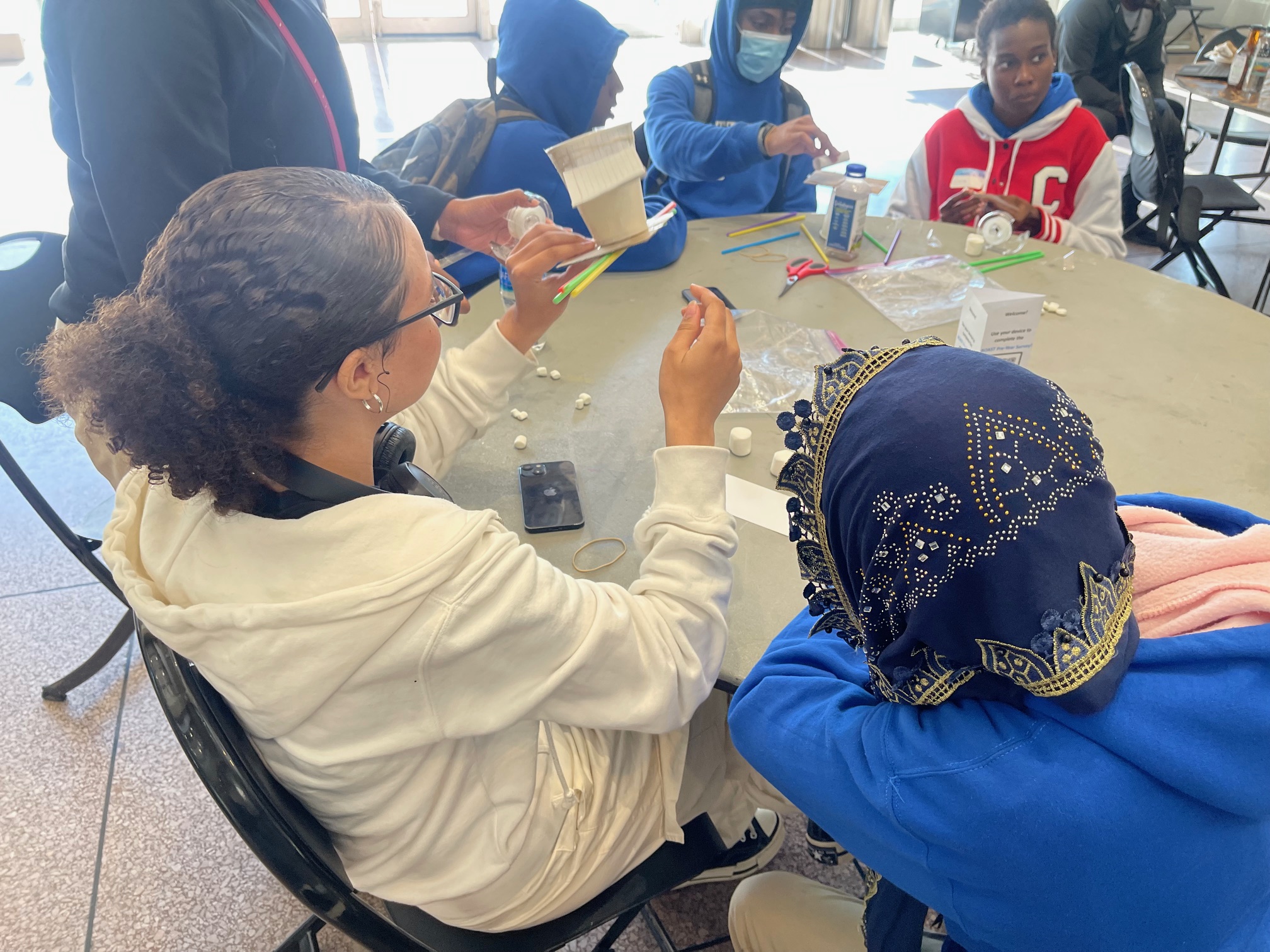
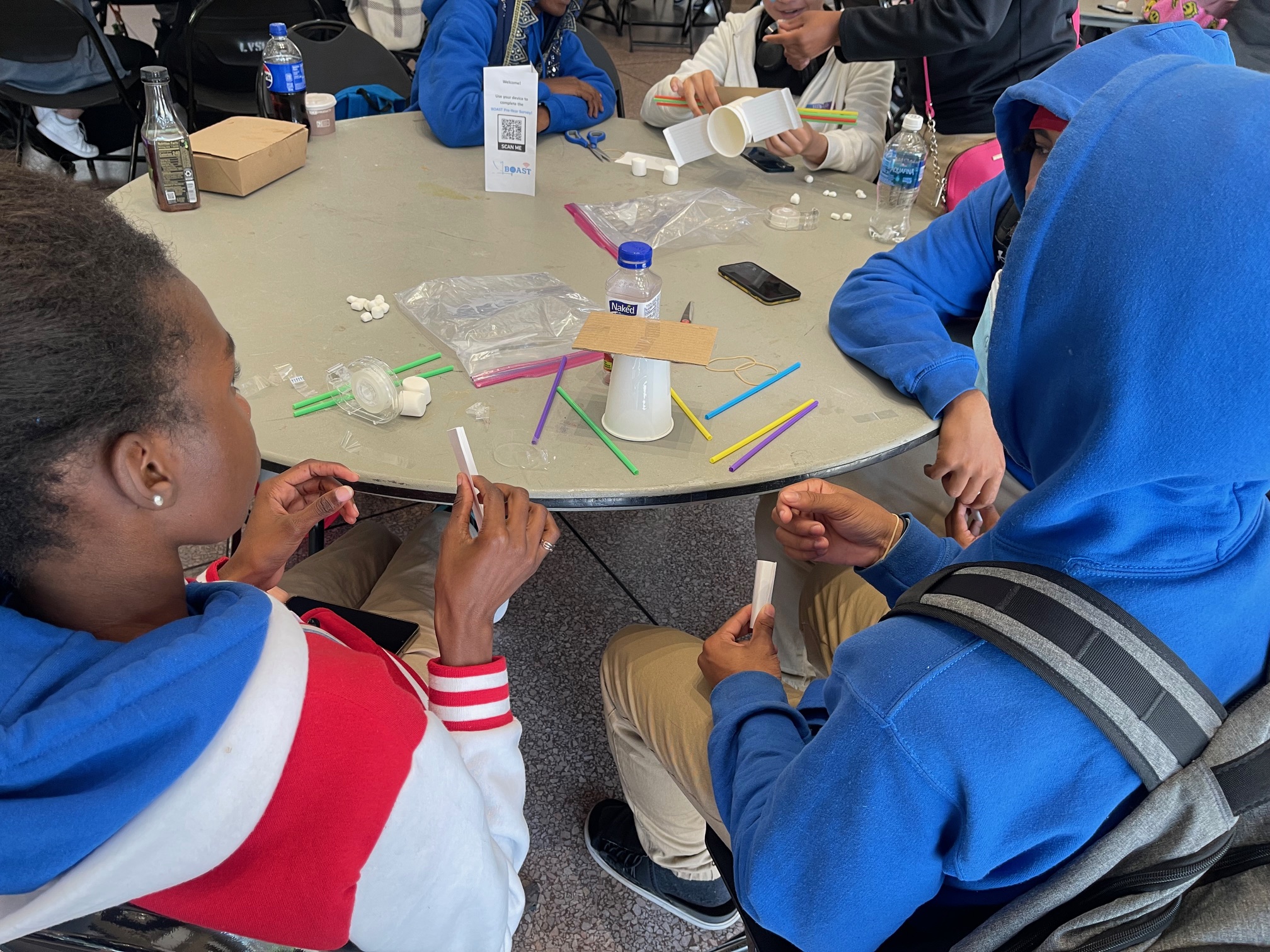
On the second trip, we met up back at the University and participated in a competition with the other BOAST teams. The focus of the competition was on acoustical engineering. The objective was to make a soundproofing box that could block specific decibel levels. Patterson didn’t win, but we tried our best.

The competition entailed 5 short stages or missions, which were made to be beginner friendly:

Mission 1: BOAST Introduction

¨You and your team of BOAST engineers are applying to be part of the Readiness Taskforce charged with protecting the Baltimore area from alien lifeforms. In your first Mission, familiarize yourselves with the platform used by the Taskforce. Then create an avatar to describe yourself and pitch your engineering team to the city officials looking to hire.¨

Mission 2: Technical Rescue

“The James Webb Space Telescope detects an asteroid leaving the Starfish Galaxy and heading towards Earth. As the asteroid moves closer to Earth, smaller meteoroids crash down in the Baltimore area, blocking the main roads entering the city. Use your knowledge of mechanical advantage and pulleys to design a pulley system that will allow crews to move the meteoroid debris and unblock the road.”

Mission 3: Machine Learning

“Just as things seem to be calming down, more space debris slams into a network of satellites used to gather data for weather forecasts! Using machine learning tools and the K-Nearest Neighbor technique develop a program that can accurately predict precipitation based on historical weather data collected by the National Oceanic and Atmospheric Association.”

Mission 4: Soundproofing

“The meteorites’ energy is causing high frequency sounds. To protect critical operations of Baltimore area institutions from the sound disruptions, city leaders call for engineering teams to develop a soundproofing device. A competition will determine the design implemented in the city. Jump into the research about sound waves and develop a soundproofing device prototype.¨ 

Mission 5: Business optimization

“Continued weather and public safety disruptions caused by the meteorites mean school is often remote, and students need the ability to learn from home and school. Your soundproofing prototype got the attention of an eccentric billionaire and she offers you a substantial grant to kickstart a business to provide at-home and classroom STEM lab kits. Make a business plan to show cost optimization and profitability predictions so you can receive the funding.”

If you’re looking to get into the engineering or medical fields, BOAST is a great option for you. It not only allows you to network with Johns Hopkins University (which is known for its engineering and medical accomplishments), but it also allows you to get a jump start in the world of engineering. Most importantly, upon completion of the program in May, they give you a college recommendation letter. So if you’re looking to go to college and want an extra credential on your resume, Join BOAST.

(Photos by Mr. Tiras)

Back to School Night brings smiles to Patterson faces

By Hailey Shifflett

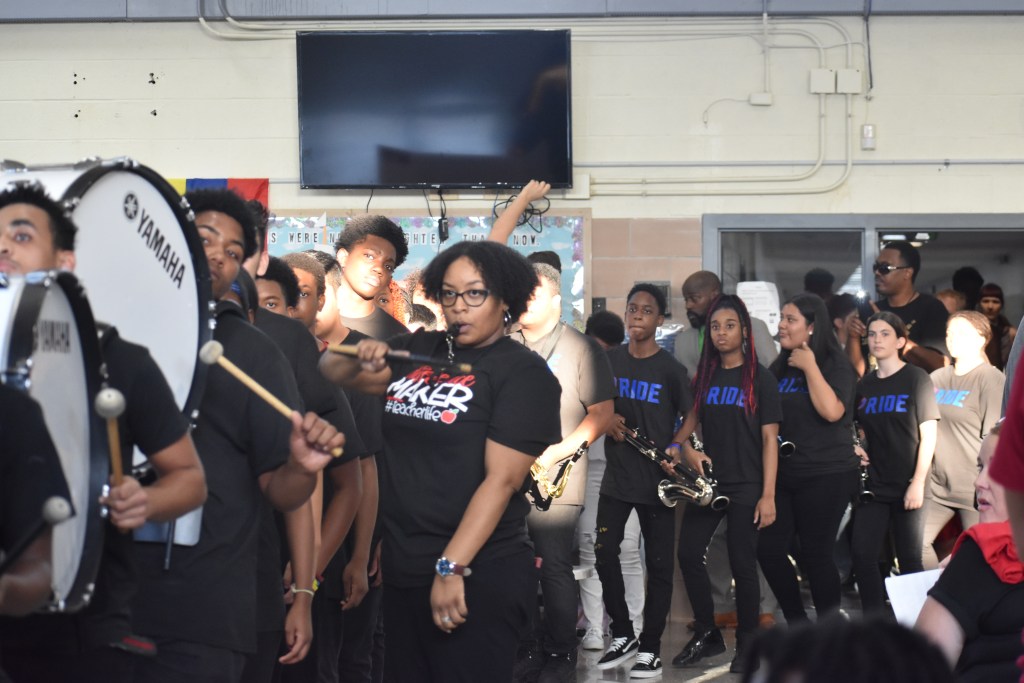
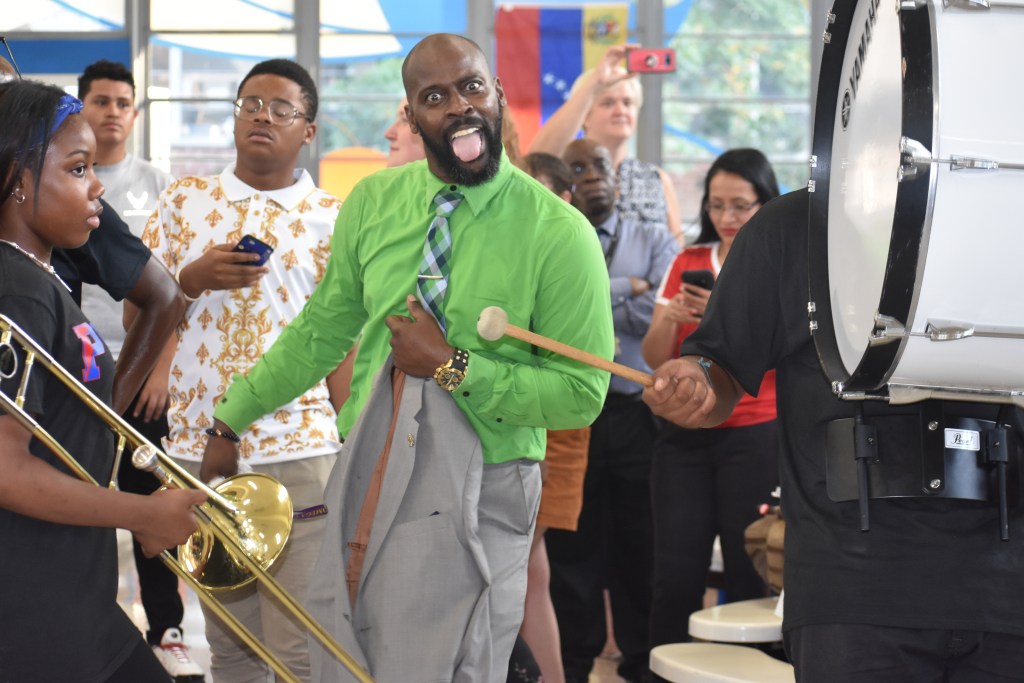
Ms. Williams and the band as they are walking in to perform at Back to School Night (Photo: Patterson Press)

Patterson High held its 9th annual Back to School Night and Community Fair on September 26th from 5-8 pm in the school cafeteria. There were many things to do and many more things to see. From belly dancers to our own marching band’s performance, Back to School Night was a fun time.

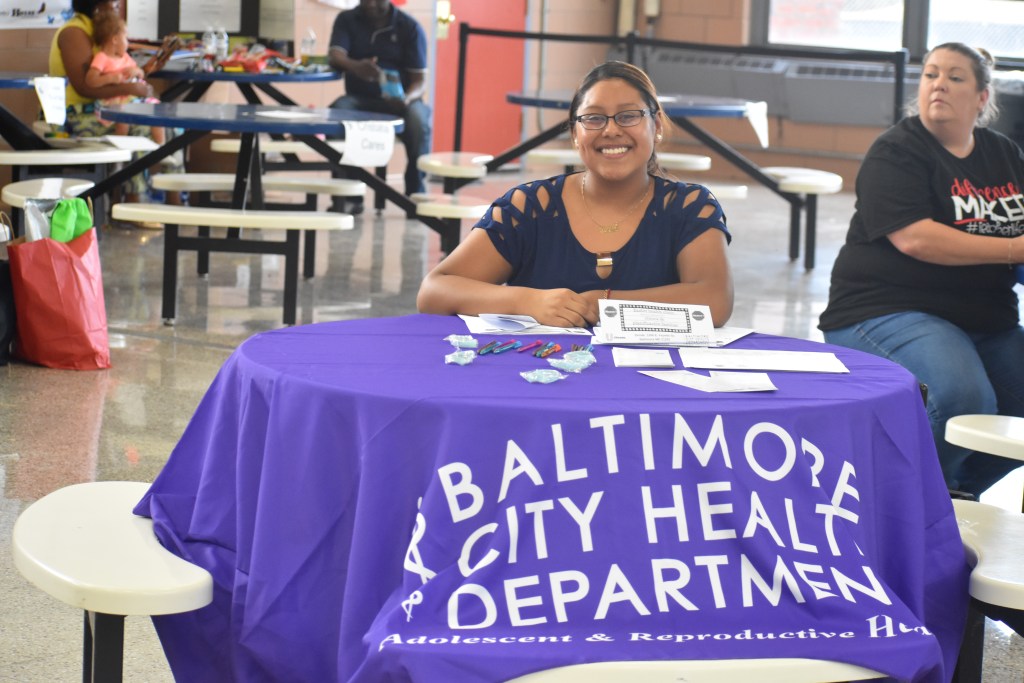
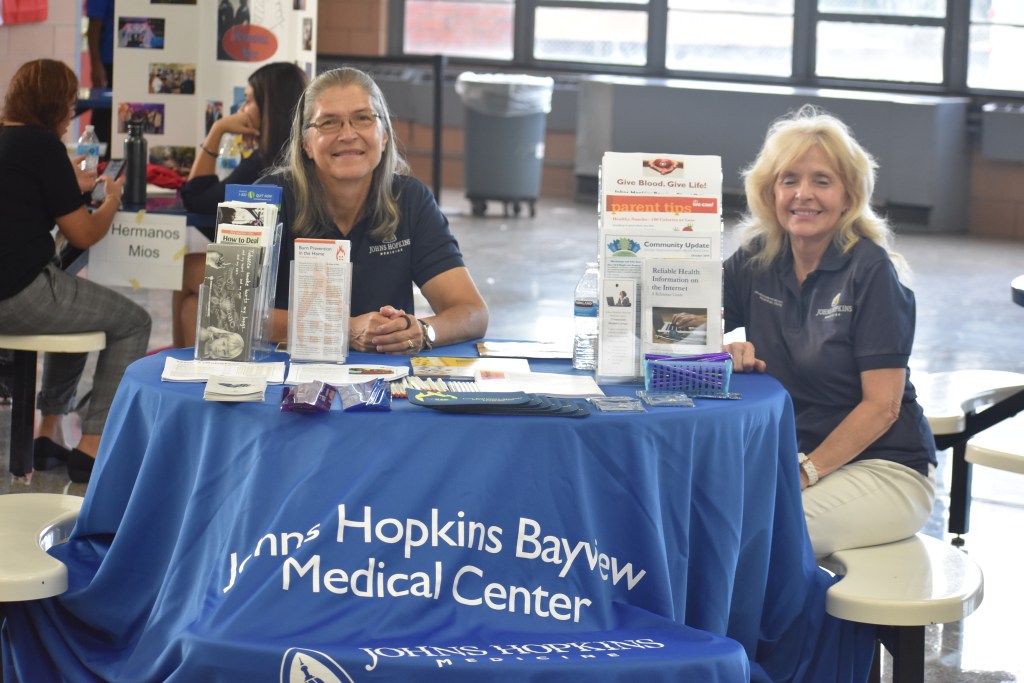
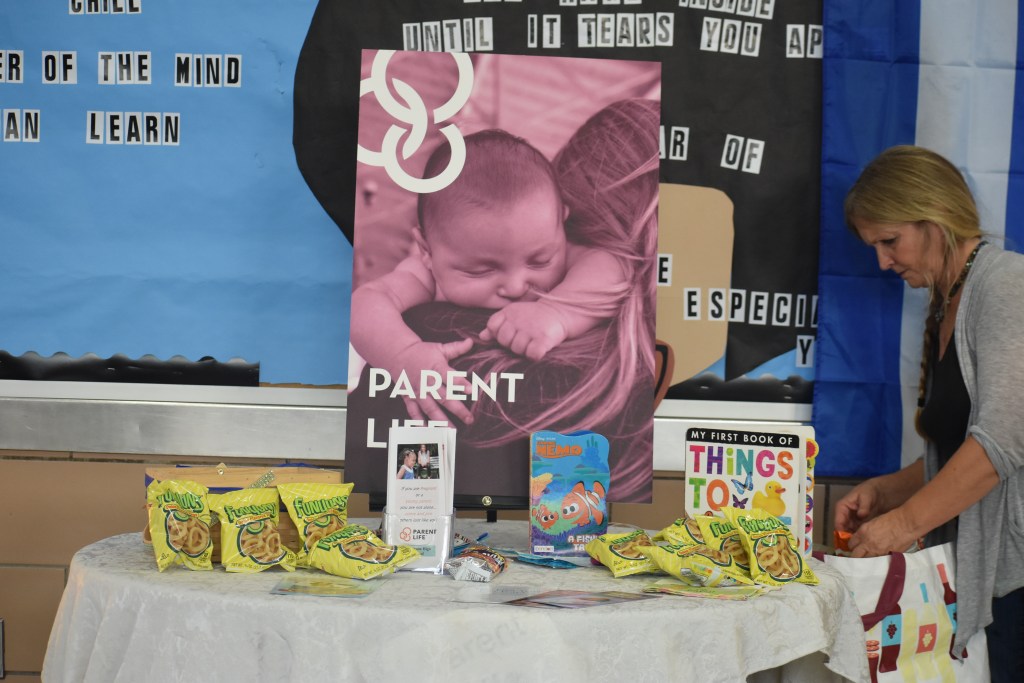
Patterson has multiple groups and clubs that you can participate in during or after school. Back to School Night introduced students and their families to the teachers and organizers that host many different clubs. There were many tables for clubs like Art Club, the Student Government Association, the Patterson Press, etc along with a number of other groups from the community. Everyone who attended enjoyed Back to School Night, including some parents.

Ms. Ciera Garner, mother of Destiny Garner, remarked, “I love this Back to School Night. It is a lot of fun and I love how they have music too. My favorite event so far is the band performance.”

Not only parents enjoyed it, but students did too. Moussa Bombwe, a tenth grader, felt that Back to School Night was “good.” His favorite table was Soccer Without Borders, one of the groups that were featured at the event.

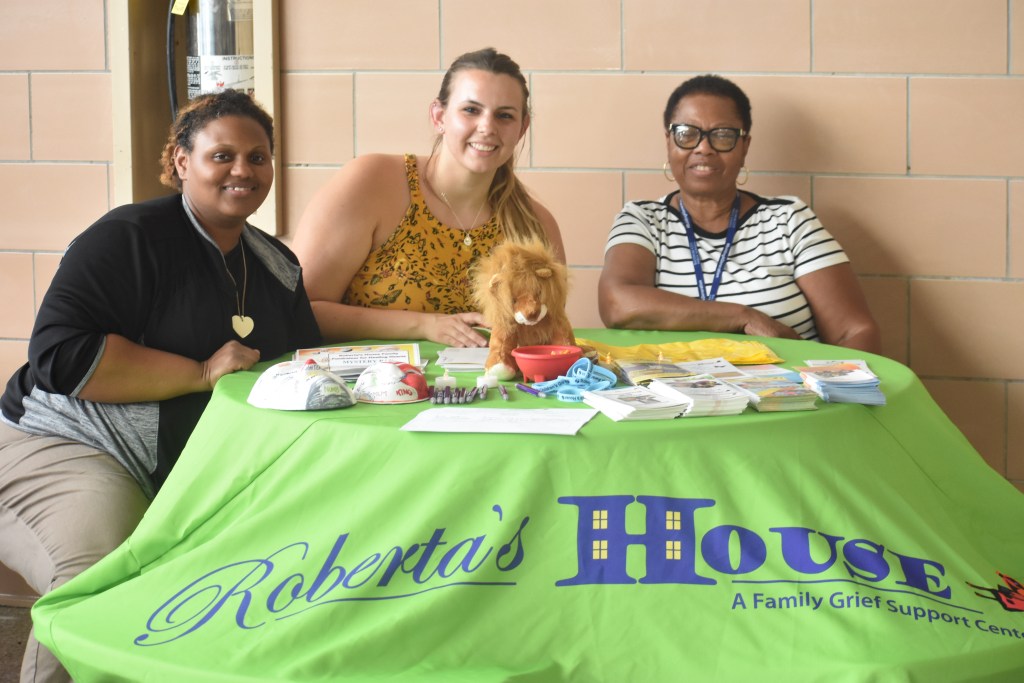
Some more clubs and groups at Patterson are SGA, run by Adam Sokolski, a social studies teacher, Roberta’s House, and Empowering Minds.
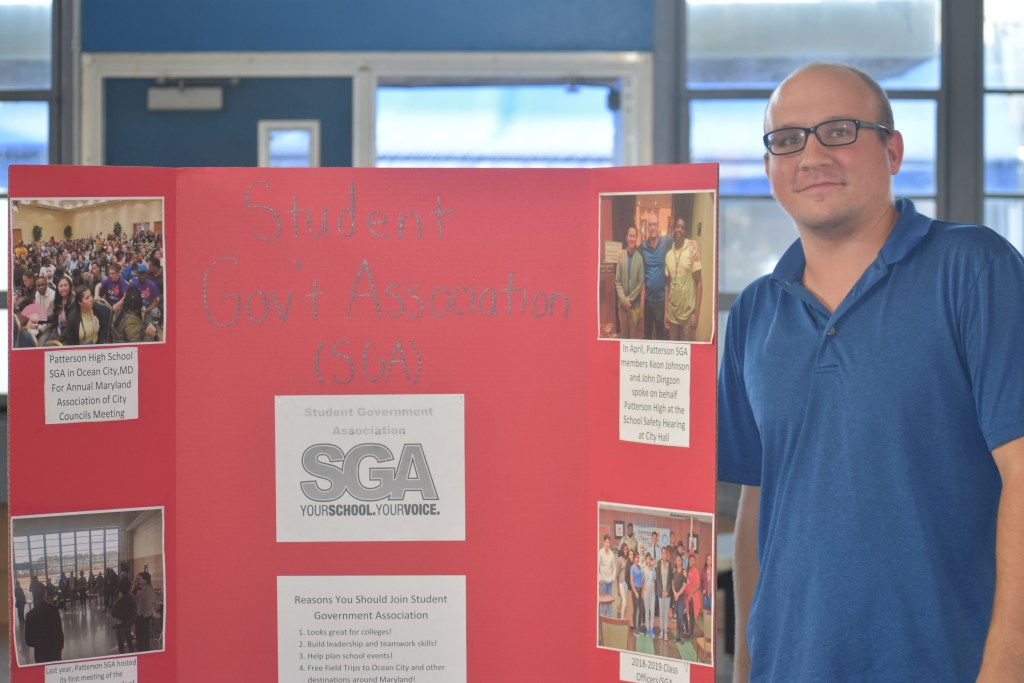
The SGA is the Student Government Association, The SGA’s goal is to teach student leadership, and to work with SGA all around Baltimore, and to work on teamwork skills. Also, in the past the SGA went to City Hall.

Roberta’s House is a family support group. They have multiple programs that help both parents and children for family loss (death, deportation, missing, etc.) Also, they help mothers with child loss (miscarriage, child died, etc.) They work here at Patterson and any student can join. Lastly, There is Empowering Minds. They are also a support group which has therapeutic counseling and talks to you about your problems, mental health, and many other things.

Mr Benton, Patterson’s principal, also shed light on what he thought about the Back to School Night. “I’m always excited about the Back to School Night. It doesn’t matter about the amount of people that come, but the smiles on their faces.”

His favorite event of the night was the band’s performance and the people enjoying the band’s performance as well. He’s appreciative for the adults that help out at Patterson and spend their own time with students to make new and exciting clubs. Mr. Benton loves all of the Back to School Nights because people showed up and had a good time and he is grateful for that.

Overall, Back to School Night was a good time. People had fun and enjoyed themselves. Some joined new clubs or met new people. Back to School Night was a way for the community to join together and forget, even for a second, the problems that might be going on in their lives. Their main focus was to just have a good time. And that is what Back to School Night is all about.

Our principal, Mr. Benton, showing that he is even having a good time (Photo: Patterson Press)

Ms. Ball makes engineering class fun and exciting

By Kayla Holeman

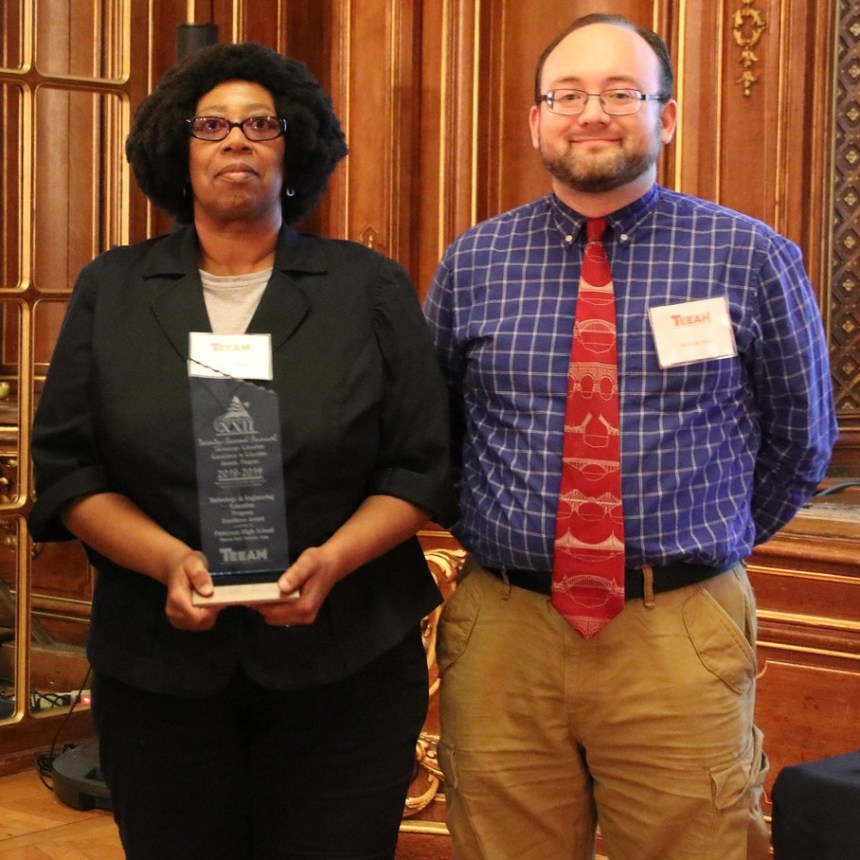
Ms. Ball and Mr. Yates won the Excellence Award at the Twenty-Second Annual Technology Education Excellence in Education Awards Program in February. (Photo: Ms. Ball/Mr. Yates)

We wanted to know more about engineering at Patterson High School and why should students take engineering classes so we interviewed the engineering teacher, Ms. Ball.

To me, engineering seems cool and fun. You learn a lot. I’m not even taking the class yet, but I will take it because I really like how it is. It seems interesting.

Engineering teacher Ms. Sharon Ball got inspired by luck because her recruiter from high school inspired her to get into engineering. She worked as an engineer on massive cruise ships and she loved it so she kept doing what she loves to do. Ms. Ball started working in the field of engineering 24 years ago.

In February, Ms. Ball and Mr. Yates received the Excellence Award at the Twenty-Second Annual Technology Education Excellence in Education Awards Program. Ms. Ball and her students have also won other prestigious awards over the last few years.

The engineering pathway has gone on a number of field trips, including visits to an engineering company, colleges, and a drum company. Ms. Ball loves to inspire students and to blow stuff up.

Ms. Ball’s advice is, “If you fall down to get back up.” I like this quote because you should never be scared to not get it right the first time. If you get it wrong, just keep trying; never give up. This is why I would like for engineering to be my pathway, because it’s just great in my opinion.

Ms. Ball seems like a nice, wonderful teacher and I can’t wait to have her and blow stuff up. If you have any questions about the engineering pathway at Patterson, then just go to Ms. Ball in 107, and she would be happy to answer anything you need about engineering. If you are into engineering, you should take this class because it seems pretty cool, going on trips and just learning new things. I would love to take this class next year. I can’t wait. It’s just going to be wonderful and if you are not sure what class to take but you want something like this, try it out because you are only going to know if you try.

Dante Wilds contributed to this article.

Remembering robotics coach, Kevin Boone

By John Dingzon

Mr. Kevin Boone, an engineering teacher and robotics coach from Digital Harbor High School, passed away in November 2018.

It was a very tragic of loss of one of the best engineering teachers in Maryland. Mr. Boone had been involved in the VEX robotics program since day one, when the program was first released here in Baltimore City.

Two of Mr. Boone’s former students for robotics at Digital Harbor High School, Peter and Isaiah, shared their feelings with the Patterson Press:  “We mourn for the loss of Mr. Boone, because he was like a father and a mentor to us and always looked after us. If he saw any errors, he would help and correct us.”

A lot of times Peter and Isaiah would stay after school or stay really late just to finish their robots and get ready for the Saturday competition and tournament.

Digital Harbor High School is currently postponing their participation in robotics competitions with other schools. It is unknown who is going to take Mr. Boone’s place as robotics coach.

Patterson engineering teacher Ms. Ball who was a close colleague and a friend of Mr. Boone. “I was devastated when I heard the news of his passing.”, Ms. Ball explained. “I had just seen him at the Digital Harbor High School VEX robotics competition on Saturday, and his passing was announced 4 days later on Wednesday. He was planning to visit Patterson to help my students with programming on the same day.”

Ms. Ball first met Mr. Boone in 2004 when our schools were competing in the first robotics competition.

The Baltimore City VEX Robotics Coordinator, Gino Tagaytay, held a special ceremony to honor the memory of Mr. Boone at the next VEX robotics competition at Patterson Park Public Charter School.

Personally, I first met Mr. Boone in 2015-2016. Ever since then, I have been working with him. Mr. Boone was an amazing engineering teacher. It is tragic losing someone like Mr. Boone who had been in the program since day one.

The only way we can honor Mr. Boone is to continue the competition all the way to the VEX Robotics tournament cup at Johns Hopkins University.

Mr. Boone helped Patterson teachers & students in all aspects of the VEX robotics program, from designing and building to programming and fundraising. He was always available to lend a helping hand.

We all started together back in 2004. He was one of the first teachers to engage in the VEX program and to offer workshops for new teachers interested in setting up a robotics program at their schools.

Prior to his retirement last year, he was teaching at Digital Harbor High School and served as the VEX Robotics Summer Training Instructor.

I’d like to think he and I were close professional colleagues. He was an incredible resource for Patterson High School. My students looked forward to working with him during the school year as well as the summer. He and I also hung out at “Beer & Bots” to learn about the latest “high-tech” gadgetry used for robotics. Talk about awesome–he even brought us donuts during the Saturday competitions.

Kevin Boone was an amazing person; kind; wonderful; generous (especially with his time). He was respected and admired by his peers, and quick to support his colleagues and his students. He will be greatly missed.

Amazon donates money to Patterson engineering department

By Moses Jeuronlon

The Patterson High School engineering department received a sum of $15,000 in support from Amazon on Friday, Nov. 30, 2018.

The students of the engineering pathway, Amazon staff, and a representative from the mayor’s office all gathered in Ms. Ball’s classroom to meet each other.

A representative from Amazon give a brief presentation on some of the things they do each and every day. He also talked about some of the opportunities and benefits Amazon has given him as well as some of the fun times he had working for them.

According to John Digzon, a member of the robotics club who participated in the Amazon event, “I am really relieved because with Amazon support we can buy more resources we need for projects”.

After the presentation, the group left Ms. Ball’s room and went to the robotics room where students presented the robots they have been working on. They also demonstrated some of the things their robots can do at the Vex robotics competition practice stage.

Building STEPS prepares students for college and careers

By Christian Pietrowski,

Building STEPS is a program that prepares students in Baltimore for college and careers with a focus on science and technology. I want to say thanks to everyone in Building STEPS and everyone that’s involved with the program. My journey through Building STEPS has been an experience of a lifetime, from climbing trees at Genesee Valley all the way to learning science, technology, and engineering and mathematics skills.

When I got the acceptance letter into Building STEPS at the end of my tenth grade year, I was so excited. I was excited because I knew I was going to get the help I needed to get into college. Believe it or not, before Building STEPS, I was shy and would not approach people for help and would not talk to people unless spoken to.  They made my confidence level go from zero to a hundred. Building STEPS has helped me overcome a lot of challenges. The main challenge I overcame was being put outside of my comfort zone. I learned how to talk to people I didn’t know, and learned how to appreciate working in groups instead of on my own.

Building STEPS has also helped me with the college process.  Without them, I probably would have pulled my hair out while I wrote my college applications.  They helped me write my college essays, which I didn’t think were good until my Building STEPS writing advisor helped me. I am extremely proud that I got accepted to more than one college. I would not have been able to do that without Building STEPS. Building STEPS has helped me get into colleges I would have never dreamed about being accepted to.

In the fall, I plan to attend Mount Saint Mary’s University. I am going to play college baseball and to study criminal justice so when I graduate college I can be in the FBI.

Building STEPS has taught me a valuable lesson in life, which is to never be afraid to leave your comfort zone and don’t be scared to ask for help if needed. Thanks to Building STEPS, I have made friendships with people that I know will last a lifetime.

Is keeping animals in zoos a good thing?

By Sartre Ndebaneza,

The San Diego Zoo contains animals from around the world, including this giant panda named Bai Yun. (Photo: Matthew Field)

The San Diego Zoo contains animals from around the world, including this giant panda named Bai Yun. (Photo: Matthew Field)

We are all familiar with taking a short walk in a park, visiting zoos, and even taking some food to feed those poor animals. How about giving your loved ones a visit to a Sea World show? How about protecting animals and providing them with good healthcare and feeding them? There are a lot of significant reasons to consider in order to keep these animals behind bars. But what is the purpose if we do all these things for our own interest?

It has been said that we need to protect the environment, but we still hear some leaders say that climate change is hoax. Big corporations polluted the air but noone can point fingers at them. Government agencies and private organizations seem to care about nature but many people do not. So why do we really keep animals in captivity?

First, people started the open parks for wild animals. Then, so sea animals were not left behind, people took them from their world in order to keep them in pools. Is pool water better than ocean water? Were the jungles where those zoo animals used to live worse than those little shelters people enclosed them in?

If you are a true world-saver think about this: An African elephant covers about 80 kilometers (around 50 miles) a day. Is there any comparison that we can make with these elephants locked in zoos? It is better to take care of animals and love them but why do we deny them the right to live naturally?

For instance, at the San Diego Zoo, trainers trained animals, including dolphins, to do tricks. Trainers make animals do tricks by rewarding them with food. It sounds good but this is a technique to change animals’ psychology, and when animals act differently trainers call it rebelling or bad behavior. We know that when those animals lived in jungles or in oceans they ate when they were hungry, not when they did tricks. And they got food by hunting, not by being fed by people’s hands. What would you do if you found out someone was changing your lifestyle in a way you don’t like?

There may sometimes be good reasons to keep animals in captivity, such as helping endangered species to breed, but most of the time wild animals are better off in their natural environment, not locked up for our entertainment.

Building over nature

By Marina Siebor,

For the longest time, we have been polluting the earth by making factories, littering and releasing toxic fumes into the air, which is harmful to humans and the earth.

Even when you think you’re doing the world some good by recycling, you still can’t escape the fact that your everyday uses are polluting the earth and nature around you. In the USA, littering is illegal. If a cop sees you in the act, you can receive a fine up to $500 and receive up to a year in jail.

All in all, we should stop littering because it’s bad for us and it’s bad for the earth.


Psychology with Mr. Baron

pw-2016-02-05-allen-brain

Photo: Physicsworld.com

By Jessica Branch,

Psychology is the scientific study of the human mind and its functions, especially those affecting behavior in a given context. A Psychology class is being taught here at Patterson High School by Mr. Baron in room 216. Throughout the course, students learn the basic fundamentals of Psychology while digging deeper into the brain.

One of the most popular projects Mr. Baron has done with the class is called the ESP Project. ESP stands for Extrasensory Perception. ESP or Esper, also called sixth sense, includes reception of information not gained through the recognized physical senses but sensed with the mind. The project was a test to show students that some people may have the talent to read other people’s minds and to tell them things about themselves that they couldn’t have possibly known. It was also a well-liked project in the class because it was out of the ordinary.

« Older Entries