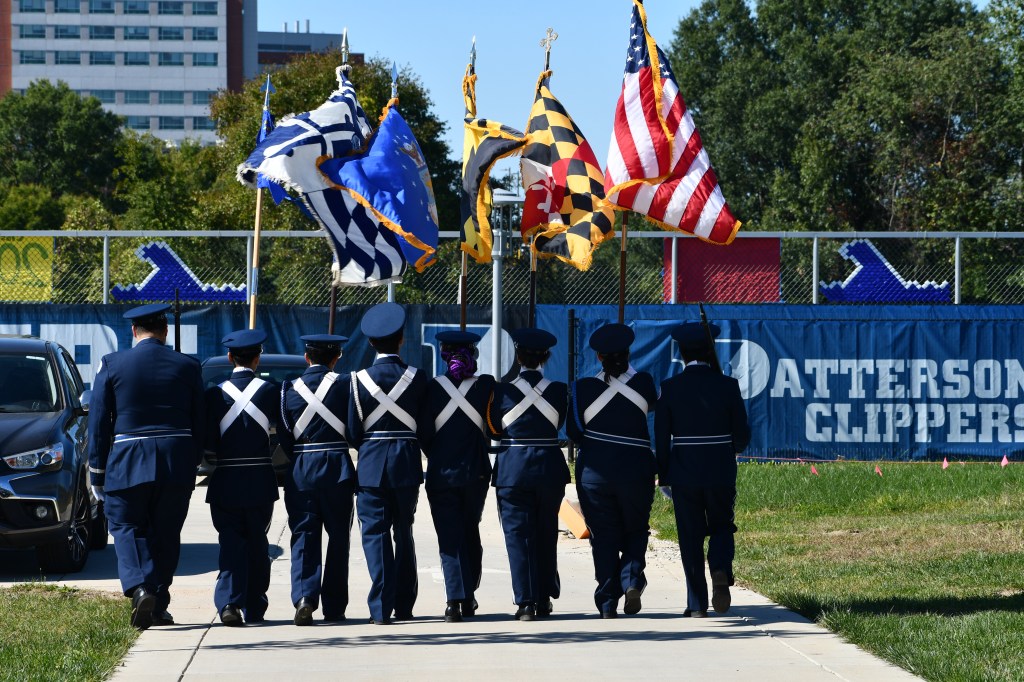
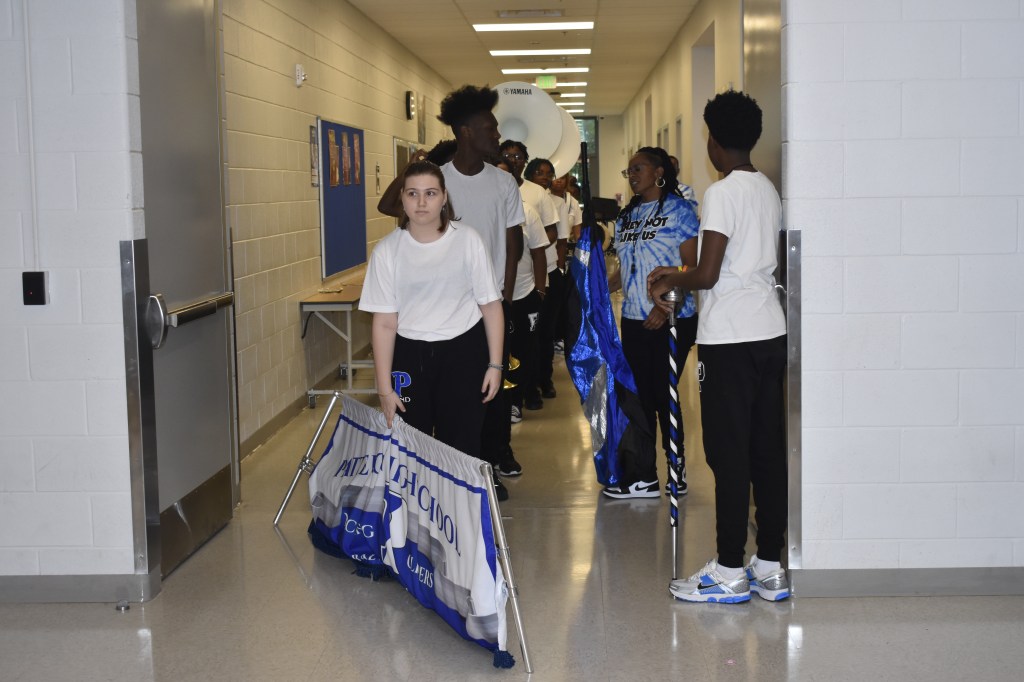
JROTC Color Guard marches to Patterson pep rally (Photo: Patterson Press)
by Snit Kahsay
JROTC is a youth program that gives students the opportunity to acquire basic military knowledge and leadership abilities. This program is related to the Armed Forces but doesn’t force students to join anything after high school.
The teacher, Lt. Col. Bill A York, has been in the program for six years now. The part of teaching that he loves the most is “the part that teaches leadership. The reason I like to teach that is because I see a lot of technical issues going on with children at home and to help improve their communication, decision making skills and not give up on themselves.”
This program can help kids feel more confident about public speaking due to the way they do their attendance and their way of communication and leadership. JROTC is one of the most popular pathways in Patterson High School, with more students joining every day. Some students were initially placed in the JROTC pathway without signing up for it but later came to appreciate it.
“I didn’t choose it, actually.”, explained Commander Alison Licona-Pacheco. “They gave it to me and I really liked how they organized the program and got cadets involved in everything. That’s why I liked it and that is how I got my position in leadership.”
This program is mostly known for its unique way of teaching students to act like responsible adults and how to handle stressful things. This program includes uniforms that students must wear. On Thursdays, cadets must wear either their blues or OCPs (Operational Camouflage Pattern). On Fridays, cadets wear sweats because they do exercises on those days.
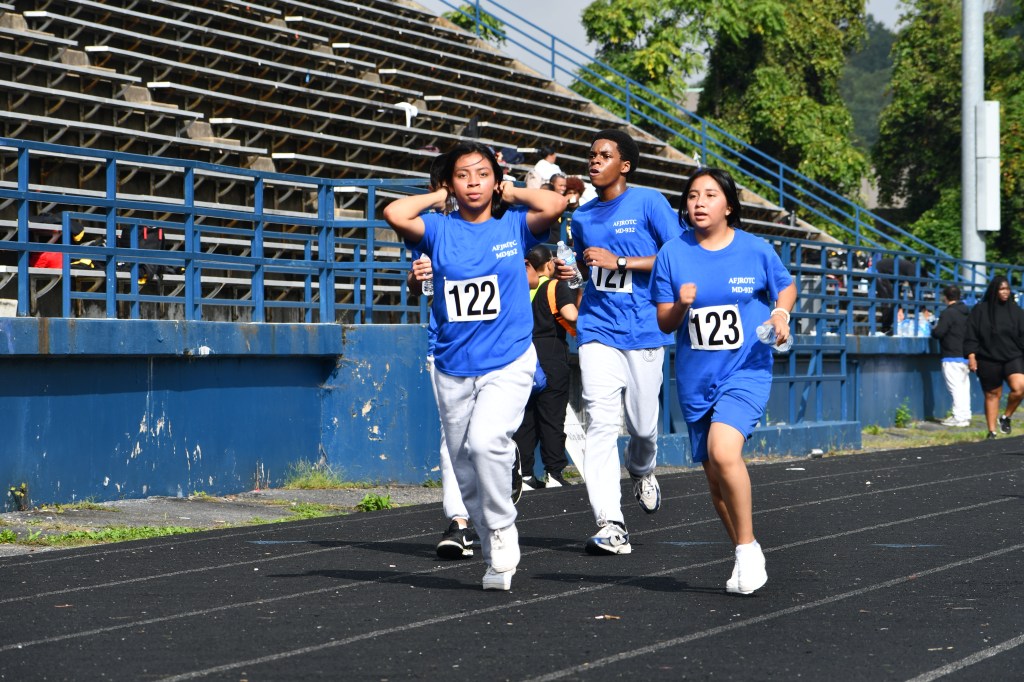
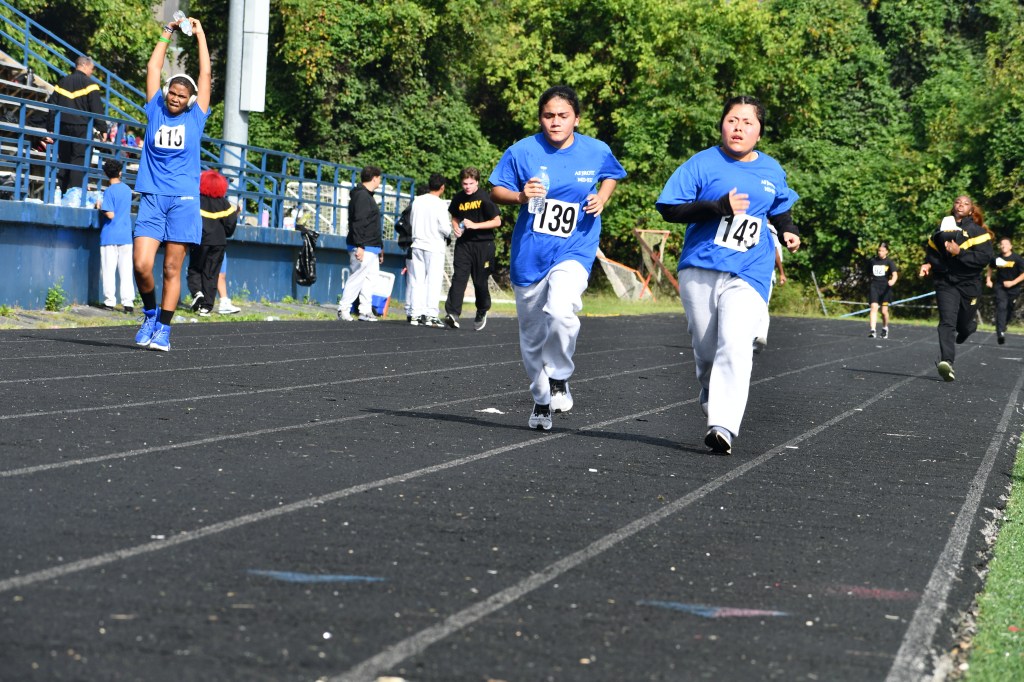
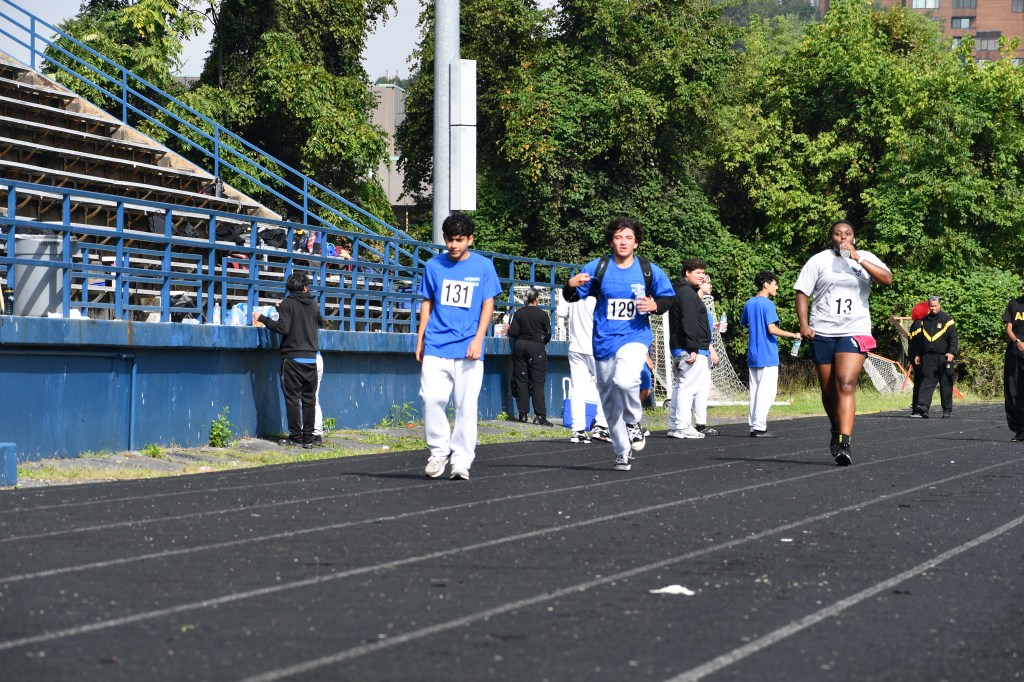
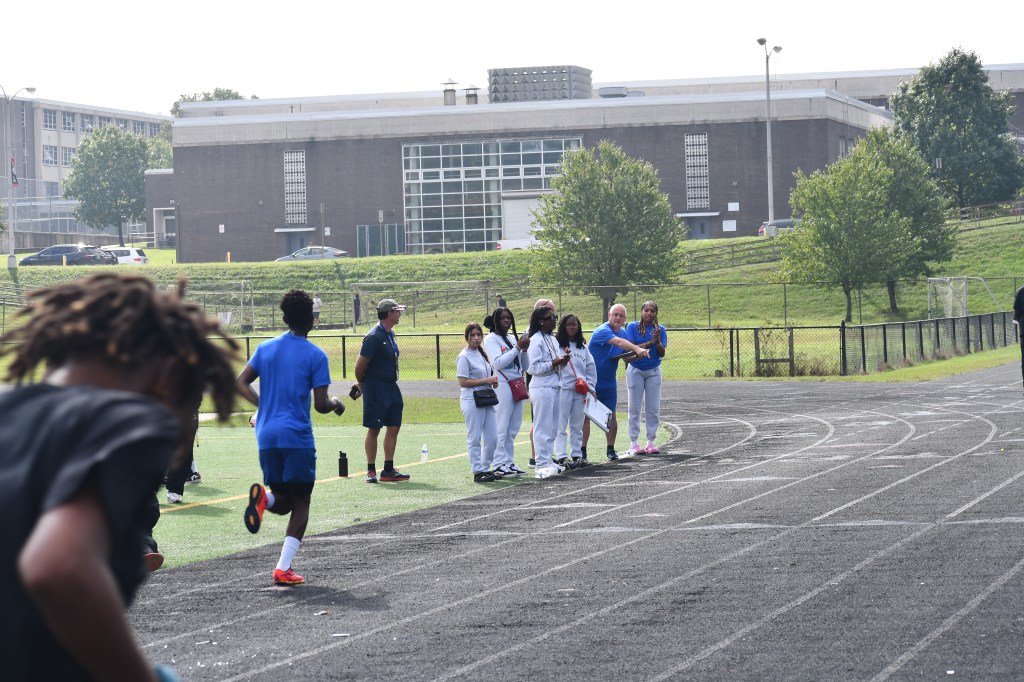
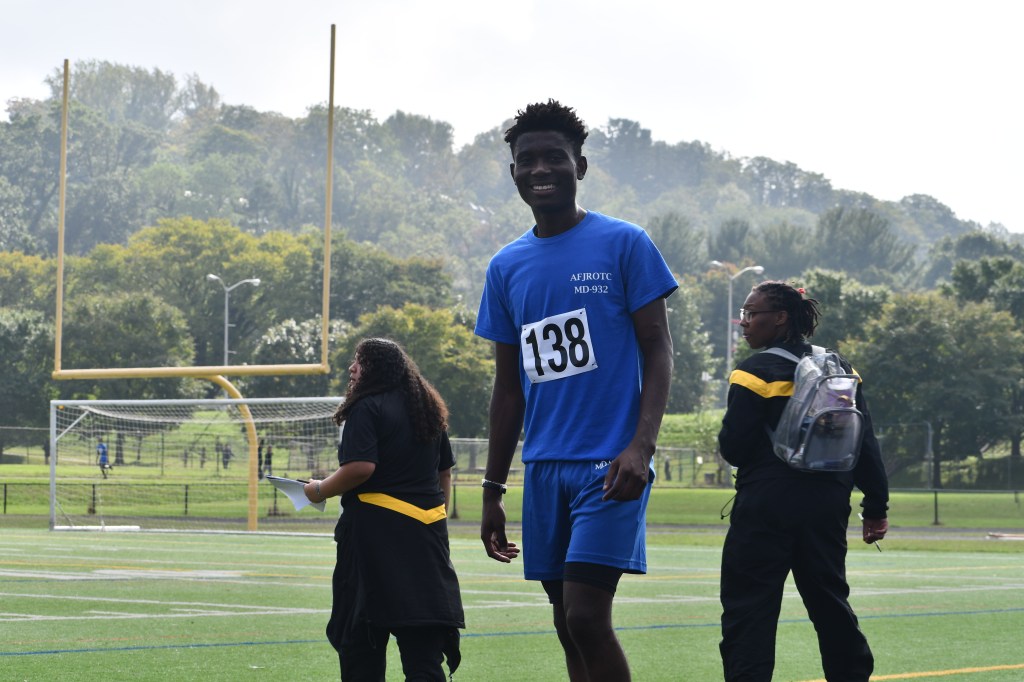
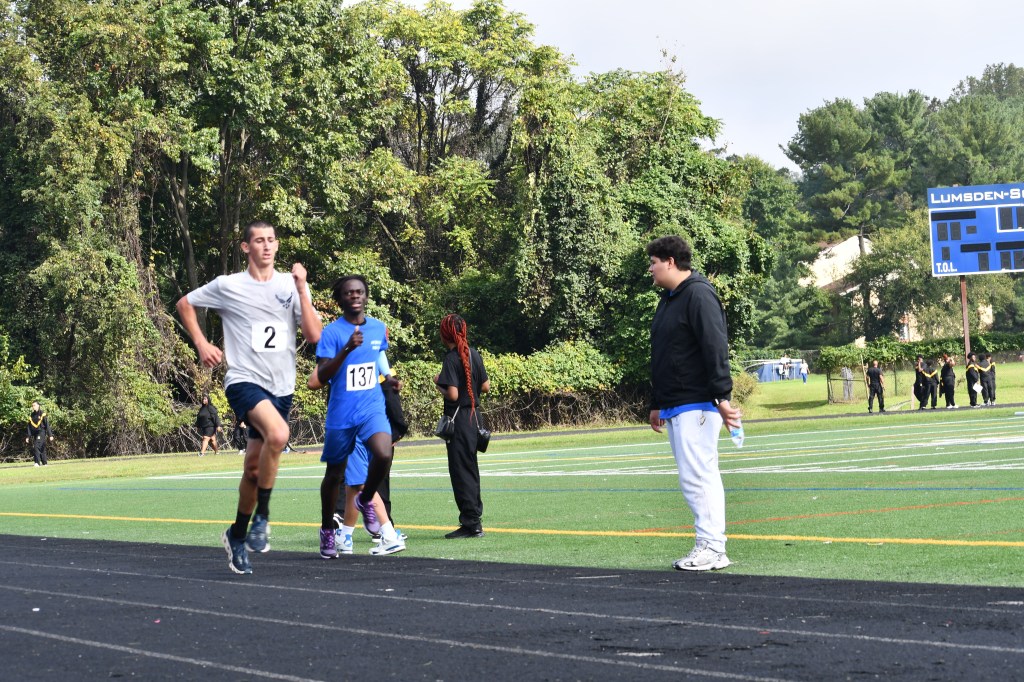
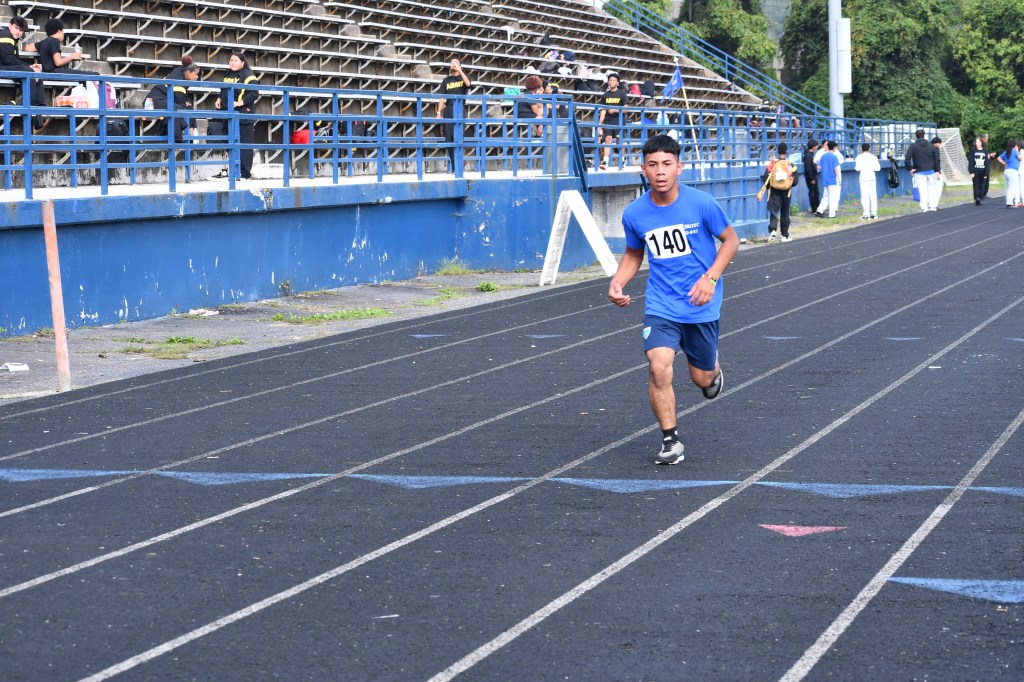
JROTC organized a citywide 5K run on October 3 at Baltimore Polytechnic Institute (Poly) that any cadet (JROTC student) could participate in. The Patterson High School JROTC finished in 2nd place overall.
Teen drug abuse is a growing concern as many teens are experimenting with substances like alcohol, cannabis (weed), and prescription drugs. While some teens are driven toward drug abuse by peer pressure, others use drugs as a coping mechanism. Many teens nowadays experience high levels of stress due to family issues, emotional issues, school, etc. Many don’t have the opportunity to speak to someone or find healthy outlets for their feelings, and this leads them to look for other ways to deal with these emotions, which in turn can lead to teens to drugs as a way to cope with everything.
Drugs can have serious long-term consequences. Drug abuse can interfere with brain development, and lead to legal problems. It can also affect the relationships people have around them; it can cause damage to family relationships, friendships, and more. It can even lead to death. According to U.S. News & World Report, an average of 22 U.S teens die each week because of drug use.
There are many ways that we can help teens that are struggling with these issues, and help prevent it from happening more. Preventing teen drug abuse requires education, communication, comprehension, and support. Parents, schools, and communities can help prevent teen drug use. Building strong relations with teens can make it easier for them to ask for help before their problem becomes unmanageable.
Patterson guidance counselor Mr. Hawkins expresses how it all starts at home. “Parents make it seem okay. It makes the teens think it is okay.”, Mr. Hawkins explains.
According to Mr. Hawkins, drug abuse is a very widespread problem. “It is a very high usage amongst those who use drugs; it’s more prevalent than people assume.”
He advises students to seek help and seek change in order to overcome struggles like this. “My advice is to admit you have a problem.”, states Mr. Hawkins. “Students who don’t realize they have an addiction do not want the help.”
Speaking to trusted adults can allow a teen to feel open enough to speak about these issues. “Change your environment with power[ful] supporting people and surround yourself with the right people to restrain from drug use.”, Hawkins advises.
Many teens and adults dealing with drug addiction suffer in silence, but being that support system for someone can go a long way toward helping them break free from their addiction.
Pro-Choice demonstration from 2018 (Photo: Paul Becker – Wikimedia Commons)
by Ashley Sarmiento Rodriguez
Abortion–let’s talk about it. Abortions are a choice all women in Maryland have if they get pregnant and they don’t want to keep it. Abortions are given in two ways: a pill you take or a surgery. Some types of abortion can’t be performed after a certain amount of time of the fetus being formed.
In my opinion, it’s good that women have ways to at least choose whether or not to have a kid because there are a lot of woman who get pregnant without planning and don’t really have stable income or homes to give to a baby so they do what they know is best and get an abortion.
I understand that many people are strongly against abortion and say women should keep their babies, but at the end of the day, the people with all those opinions aren’t actually the one who will be having to take responsibility for these babies, so they honestly shouldn’t have a say in the decision of any woman who chooses to have an abortion. Also, no woman should be shamed or looked down on because they had an abortion. It should be an option for all pregnant woman and nobody–especially no man–should even think they have a say in what a woman can do with her own body.
A woman’s right to choose used to be protected by the U.S. Supreme Court decision in Roe v. Wade, but in 2022 that ruling was overturned, giving state governments the power to ban abortions. I’ve been researching this issue and I’ve seen that there are a lot of states where abortions are banned or heavily restricted, such as Alabama, Arkansas, Idaho, Indiana, Kentucky, Louisiana, Tennessee, Missouri, etc. I find that so upsetting that all these places have banned something so many woman need. Why keep producing more humans to be raised by people who aren’t ready to be responsible for taking care of a kid or kids? It’s just better to at least have a solution for women who know they can’t raise a child and for women to have a say in what they want.
Next Generation Language Access (NGLA) is a training program for students at Patterson High School who want to become professional interpreters.
Since there are many people that have limited English proficiency in Baltimore, there is a shortage in access to interpretation services. Currently NGLA is partnering with 3 different high schools: Patterson High School, Benjamin Franklin High School, and Digital Harbor High School. The program started at Patterson in 2023. They did their pilot program last year and now there are five students who are certified to work as community interpreters.
NGLA’s mission is to train high school students to become professional interpreters to reduce language barriers in Baltimore City and also provide a career opportunity after graduation for first and second generation immigrant high school students.
“The reason we focus on high school students is…there is research showing that students that are first or second generation immigrants that are 18 and older are more likely to fall into poverty than students that are not first or second generation”, shared NGLA Founding Director Omari Jeremiah.
“We want to solve two problems by providing meaningful employment opportunities for high school graduates that are first or second generation immigrants in the United States.”
Aside from providing a career path for immigrant youths, Mr. Jeremiah’s other goal is “reducing language barriers so that everyone, regardless of their language that they speak, is able to receive the services they need to thrive in Baltimore City.”
Students join the program for a variety of reasons.
“I want to learn how to interpret”, said Jesler Caledron. “I’ve never liked any class like this class because I participate a lot.” Calderon hopes to find work as an interpreter after he earns his certification.
“I want to have better communication in Baltimore City”, explained Raymond Alabi. While he’s looking forward to earning his certificate and getting paid to interpret, he has also made some personal connections through the program. “I feel good to have new friends”, Alabi said.
Zeinab Al-Ali is hopeful that the program is going to help her when applying for college. She also believes that her interpreter training will help her family. “ I feel this class is going to help me in the future because I have to interpret for my parents so I can know what to say and how to do it.”
Although Next Generation Language Access is currently only operating in a few schools, the program has plans to expand.
“We are always growing and evolving. There is a huge need for interpreters throughout the country, not just Baltimore City”, said Mr. Jeremiah. “We are excited to see how things continue to evolve.”
Mental health is something we all deal with every day, whether we realize it or not. Have you ever found yourself just lying in bed, struggling to get up in the morning, even when you know you have to? Or maybe you’ve questioned how you’re really feeling but can’t quite put it into words? This is something a lot of teens today go through. We don’t always understand our mental health, and it can be hard to figure out what’s really going on.
Experts have been talking about this for years, and it’s still a major issue. The American Academy of Pediatrics declared a national emergency in youth mental health a couple of years ago, and the struggle is still real for so many teens. There are warning signs, and a lot of people understand what mental health challenges look like, but for parents and friends, it’s important to really try to understand what someone might be going through. Anxiety and depression are real problems that teens deal with every day. And the only way to help is to be open to talking and really listening.
Another huge part of this problem is the impact of social media. We’re constantly online, scrolling through Instagram, TikTok, Snapchat, etc., and it’s almost impossible not to compare ourselves to what we see. Whether it’s how we look, how successful we seem, or what kind of life we’re living, there’s always pressure to measure up to what others are putting on display. And most of the time, that’s just the highlight reel—it’s not real life. But it can make us feel like we’re not enough, which can lead to anxiety and depression. Finding a balance between online life and real life is important to protecting our mental health.
Sometimes, we reach a point where talking to friends or family isn’t enough. That’s when reaching out for professional help can really make a difference. Counselors and therapists are trained to help us make sense of what we’re going through. They offer a safe space where we can talk without feeling judged, and they can help us figure out better ways to cope. If things start to feel overwhelming, seeking out professional help could be the best step toward feeling better. Therapy is nothing to be ashamed of—it’s a tool to help us navigate life when things get tough.
If you don’t have access to a licensed therapist outside of school or you don’t know where to start, you can talk to Ms. Gaither, Patterson’s school psychologist, or to to one of the school counselors, social workers, and other mental health practitioners.
A new art club at Patterson is making art for charity.
“There are a lot of students who like art”, said Ms. Marchewka, one of the art teachers at the school.
She would like to use that interest in art to do something positive for the community. She decided to start a new club this new school year for students to create their own individual art and to sell it to raise money for charitable organizations.
Ms. Marchewka has participated in art for charity projects outside of Patterson, so she wanted to bring her experiences to our school this year. Ms. Marchewka loved leading these clubs, so she brought the concept to Patterson so other students can experience it as well.
“I thought it would be a great opportunity to bring that experience to Patterson.”, said Ms. Marchewka.
Ms. Marchewka sent out a Google Form to staff members so they can order commissions of custom artwork. Students will receive service learning hours for their work.
“Currently we are working on a variety of posters and signs for folks.”
Any students who are not working on a commission are making paintings to sell at the Winter Concert and the Spring Arts festival. These paintings will be available for anyone to purchase.
Ms. Marchewka will let the students decide what they want to do with the money and which charities they want it to go to.
“The students will actually decide that,” she explained.
Ms. Marchewka doesn’t know what the charities will spend the money on, because it’s their choice.
“It depends on the charity itself.”, she stated.
After students create original works of art, they will sell their artwork and Ms. Marchewka will be donating that money to any charity that the students in the club choose.
The Art for Charity club meets during Advisory. Currently Ms. Marchewka does not plan to add more students to the club.
“However, if I hear student interest in that, I would consider it for sure.”
The Patterson band gets ready to perform at Back to School Night (Photo: Jamira Ellison)
by MirianMaurizaca
We’re back to school! August 26 was the first day for students at Patterson High School. There are many events being planned to make this school year fun and memorable. There have also been achievements made already.
Our attendance has increased since last year. “I am proud of our attendance rate,” said Principal Myrick.
“Attendance rate went up to 82%. Last year we had a 69% rate of attendance. Also Patterson High School was in the top 10 of high schools for growth and achievements.”
Principal Myrick wants to add on to Patterson’s achievements from last school year.
“This year really focuses on academic achievement,” stated Principal Myrick.
There are also new programs at Patterson High School. There is a program for families that want to learn English or Spanish that will happen after school. For the first semester there is only one class but next semester there will be two classes. Additionally, Patterson High also has dance class and an NGLA program for students to become certified interpreters.
Principal Myrick has many ideas for this school year.
“I’m excited for this school year,” explained Principal Myrick.
One event from last year that will be returning is 405 Day. It will be a community event to invite family and friends to. There are many other events being planned as well, from Spirit Week to cultural celebrations, concerts, plays, and much more.
This school year promises to be a memorable year for all students. This year will bring us new achievements, more goals, and fun activities.
Editor’s Note: What follows are reflections from two graduating seniors who participated in Patterson’s Teacher Academy of Maryland (TAM) CTE Pathway. We were not able to include these in the May 2024 print edition of the Patterson Press but we present them to you here:
In the program, I learned many things. I progressed in my learning skills and people skills. Before, I was quiet, not really an interactive person, but the program helped me out of my comfort zone to succeed further in everyday life. This program expands my education to have a positive effect on my life. It showed me very important lessons. The T.A.M. program teaches you how to be a teacher and the ways to be a successful one. Being with my mentor (Mr. Baron) was a great experience. He let me in on key things when teaching and he helped me to really interact with students as if I was a teacher. This let me see a different perspective. Enjoy the T.A.M. pathway–It will be a great experience! -Iyanna Jenkins – Internship TAM program, Cohort 2024
My experience being at the pathway Teacher Academy of Maryland has been wonderful. I have learned very nice things and I have also overcome some of my fears in grade ten. I learned all the wonderful things about child development. Throughout this year I have overcome one of my biggest fears, which is to be speaking in front of people I don’t know. The most difficult thing is learning how to teach like a professional, but Ms. Sanchez has helped me and she has has also given me the example of how to do it at the same time. Just like my mentor: he has been patient with me and I have learned a lot in his class because his class is in Spanish, my first language, and I feel good learning too. And of course I am going to recommend this pathway to my friends because it is very nice to learn so many things. -Nesly Oliva, Cohort 2024
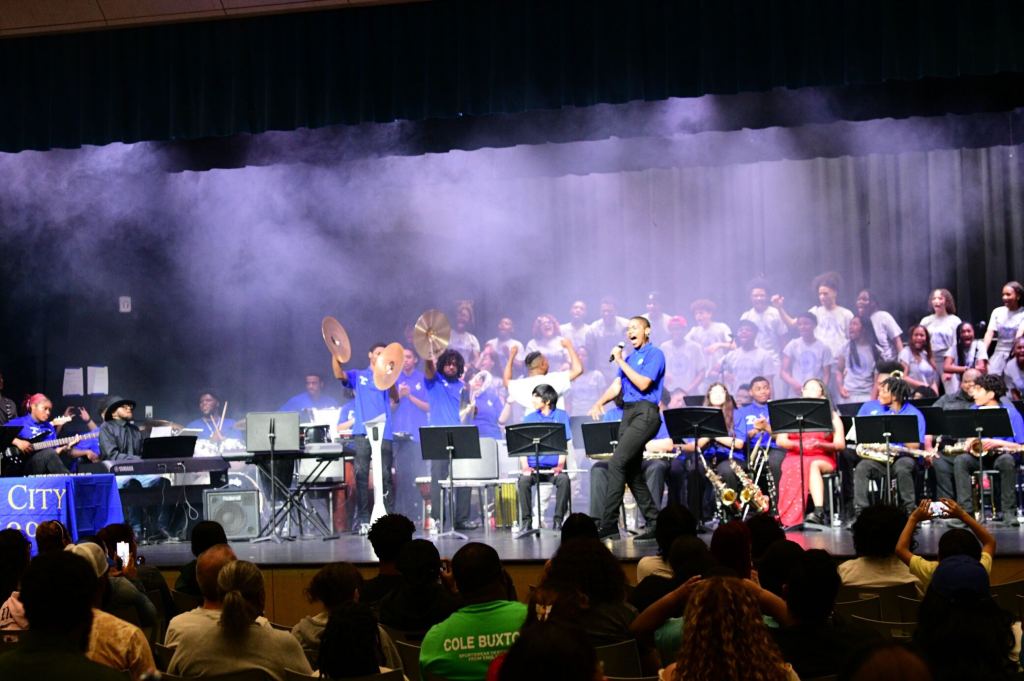
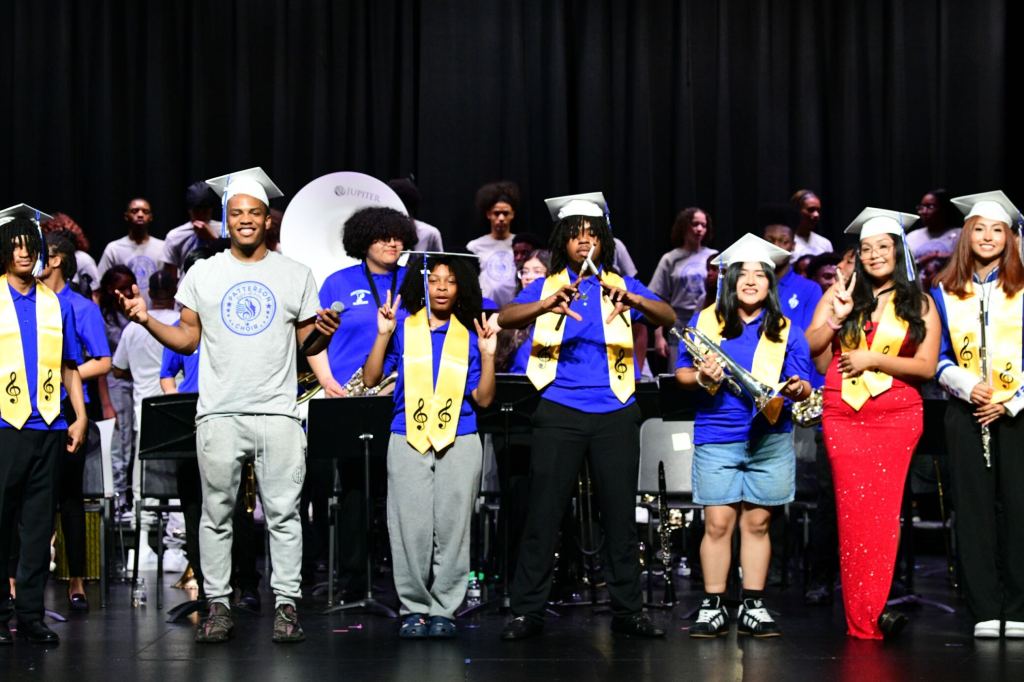
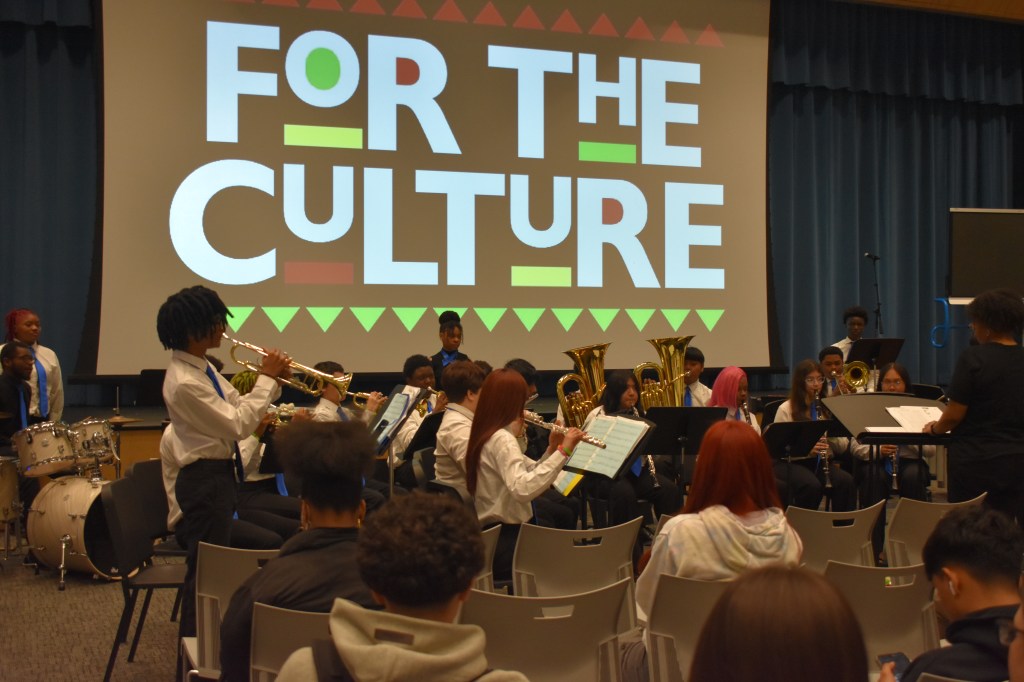
Patterson High School offers a plethora of different CTE pathways and clubs. Among them is our school’s band. The and is split into two sections: the marching band, which is mobile and performs at parades and sporting events, and the concert band, which wears formal attire and performs at indoor events. Both sections of Patterson High School’s band have participated in many great events this school year, such as the Mayor’s Parade, the Winter Concert, the School Choice Fair, the St. James Parade, and the Springs Art Show. Additionally, Patterson has added a new musical group this school year: the choir. Although the choir is separate from the band, they frequently collaborate and perform together.
Music teacher and band director Ms. Williams has reflected on her opinions of the band, what they have accomplished, the hardships they faced, and the efforts that went into preparing the students for the many events they did this year.
“One of the things that we’re working on is them coming up with a set list right before the performance to see if they can execute that. They don’t like it but it forces them to bring their ‘A’ game.”, Ms. Williams said.
As a small band, they lack the numbers of performers that some other schools have, so Ms. Williams has to make sure they can play to the best of their ability through practice and testing them with a set list. There also struggles that come with having few staff members to help.
“Sometimes I have to focus on the woodwinds to make sure they sound right, to the neglect of the percussion, which is why I asked Terrance [Whitaker] to come, so he can pay a little bit more attention to them.”
With only Ms. Williams and Mr. Whitaker on staff, they have to split their time to try make sure everyone can get equal attention and improve their abilities. Yet despite these challenges, everyone in the band still performs well. For most students, joining the band has helped them a lot.
“[Ms. Williams] helps me a lot, helps me be outside my comfort zone, which helps me gain that confidence. She’s an amazing teacher.”, said Kailani Becker.
Becker is a band member who plays the flute. In the beginning, she used to be shy, but after a while being around her peers and the teacher it helped her as a person to become confident socially.
Kylayah Davis, the editor in chief of the Patterson Press, also plays in the band as a trumpet player. She expressed how band changed her as a person.
“ I can open myself to a lot more things… and the effort I put into band expanded to other areas.”
Band has helped Davis become capable of putting the same amount of effort into other things she is interested in, which help her apply herself more, changing her as a person and expanding her capabilities.
As this program continues to grow, the experience will hopefully help others to also be a part of something bigger than themselves. As for Patterson, this current iteration of the band didn’t start until 2015, after many years of not having a fully functional band.
“Patterson didn’t have a band program for decades. Until I got here in 2015 is when we started…And it’s a slow build.”, Ms. Williams said.
There are many things Ms. Williams would like to add to the band to get more help, such as having coaching staff for each part of the band, including woodwinds, brass, percussion, flags, etc., and getting more instruments and equipment. But a big barrier to getting those upgrades is obtaining the funds to pay for them. Ms. Williams has been trying to get more funding for the band. Meanwhile, the school administration has been expanding the music program in other ways. This school year, Patterson hired a choir teacher, Mr. Fowler, who has already made a huge impact in terms of what kinds of performances the school can do now that we have both a band and a choir. Next year school leaders aim to add a dance teacher to the staff as well. Together, Ms. Williams and the rest of the Patterson performing arts staff will explore the possibilities of what our talented students can do for next year’s performances and for years to come as the band and the performing arts program as a whole becomes better and better.
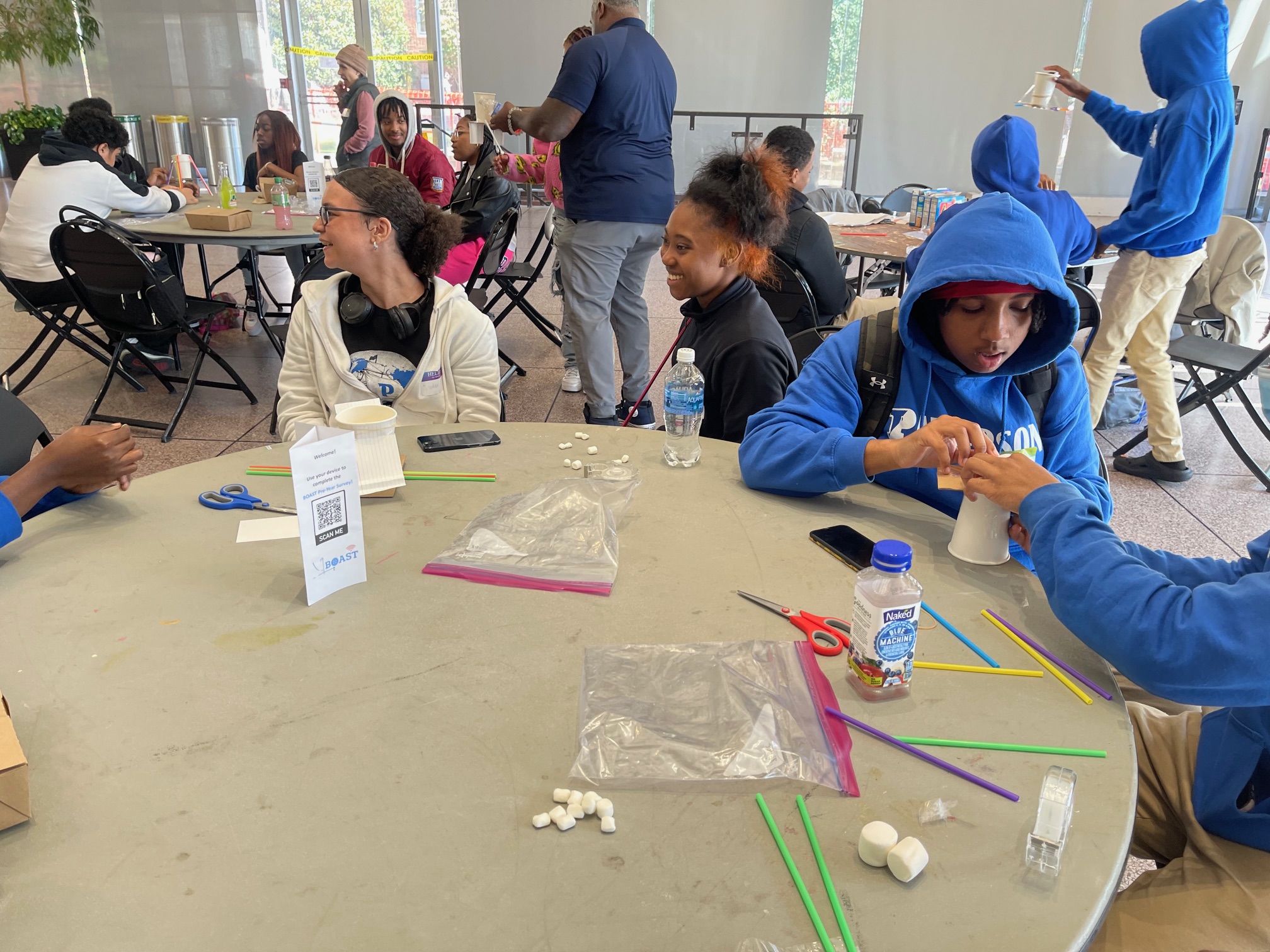
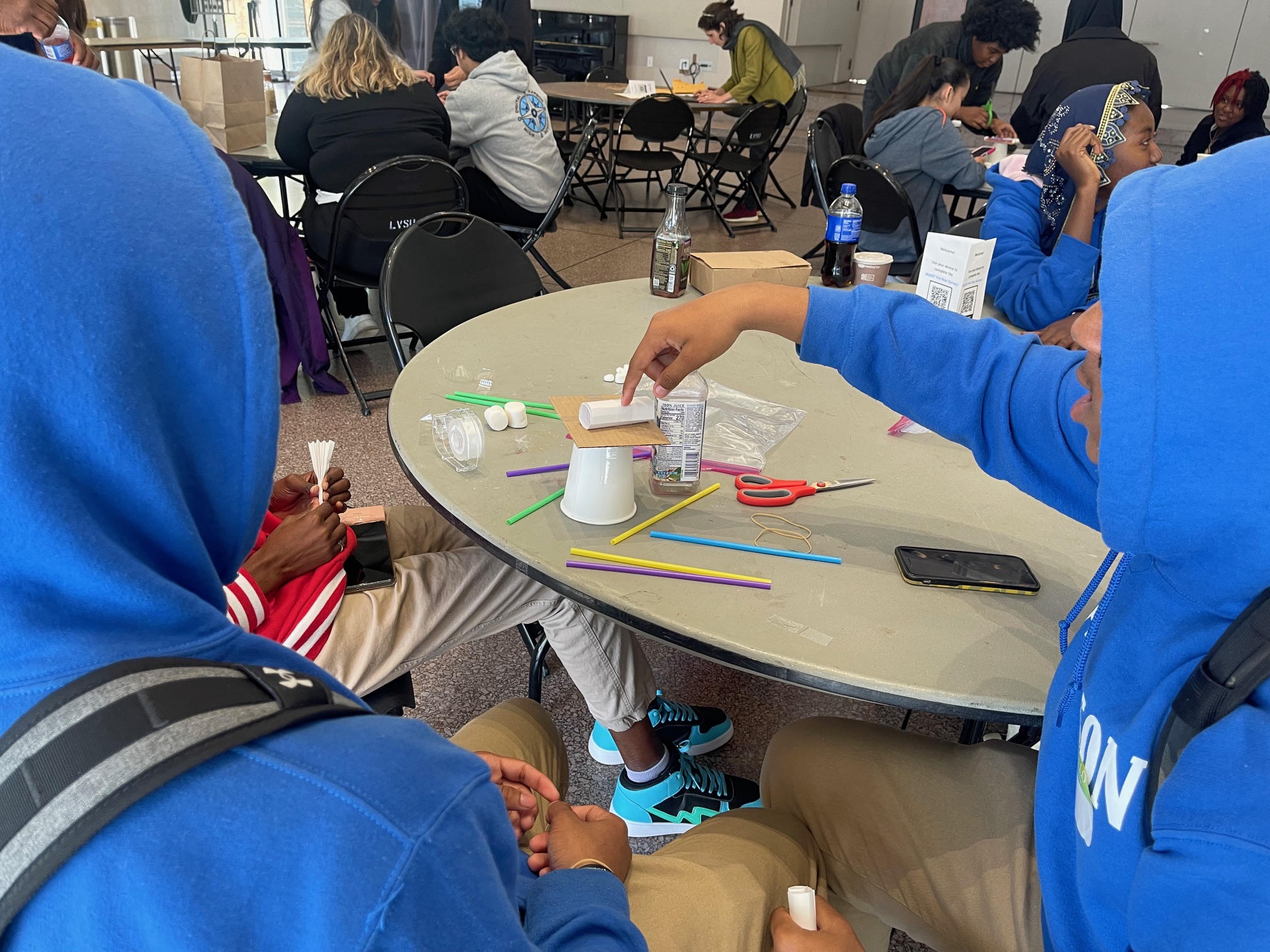
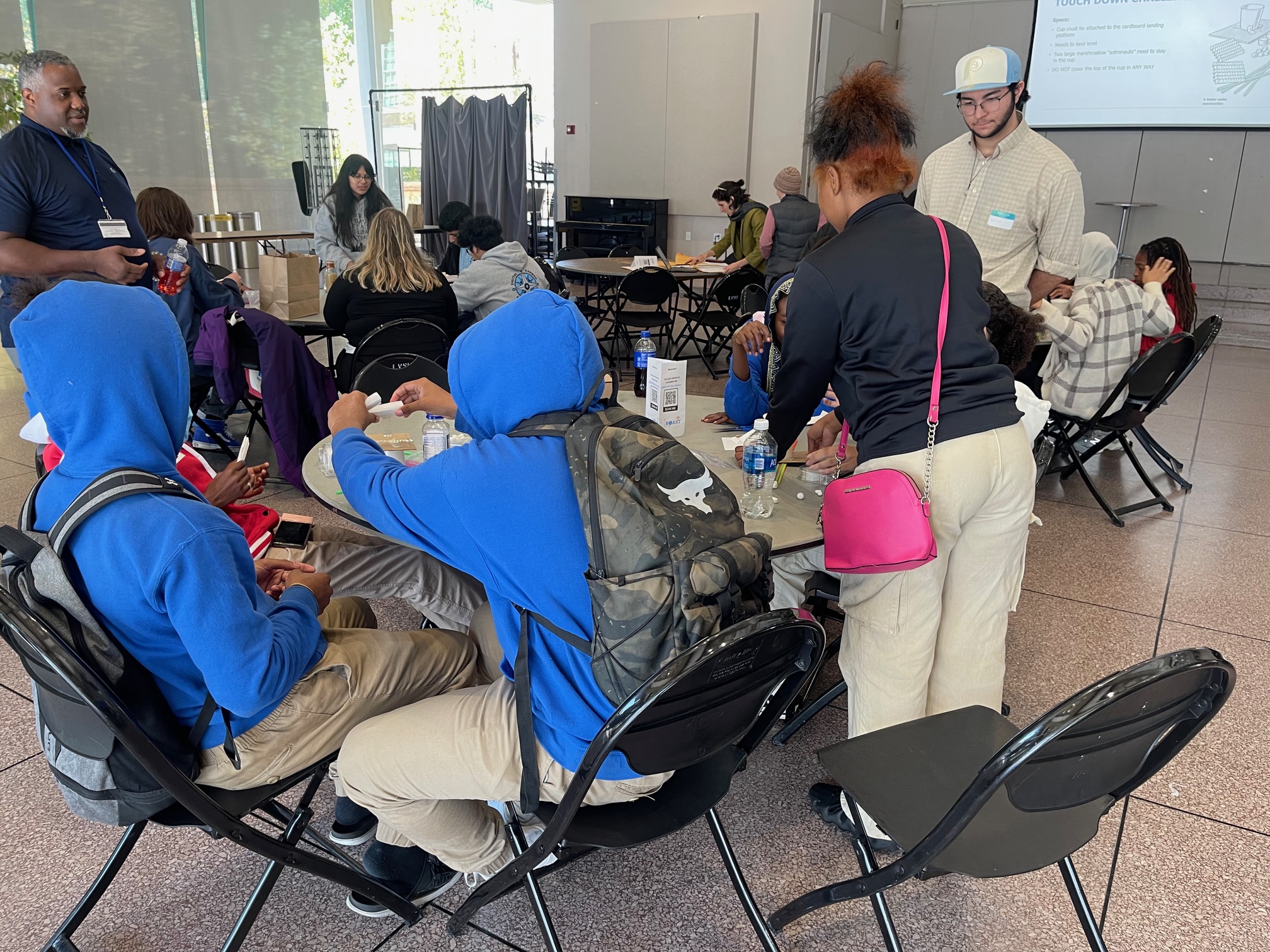
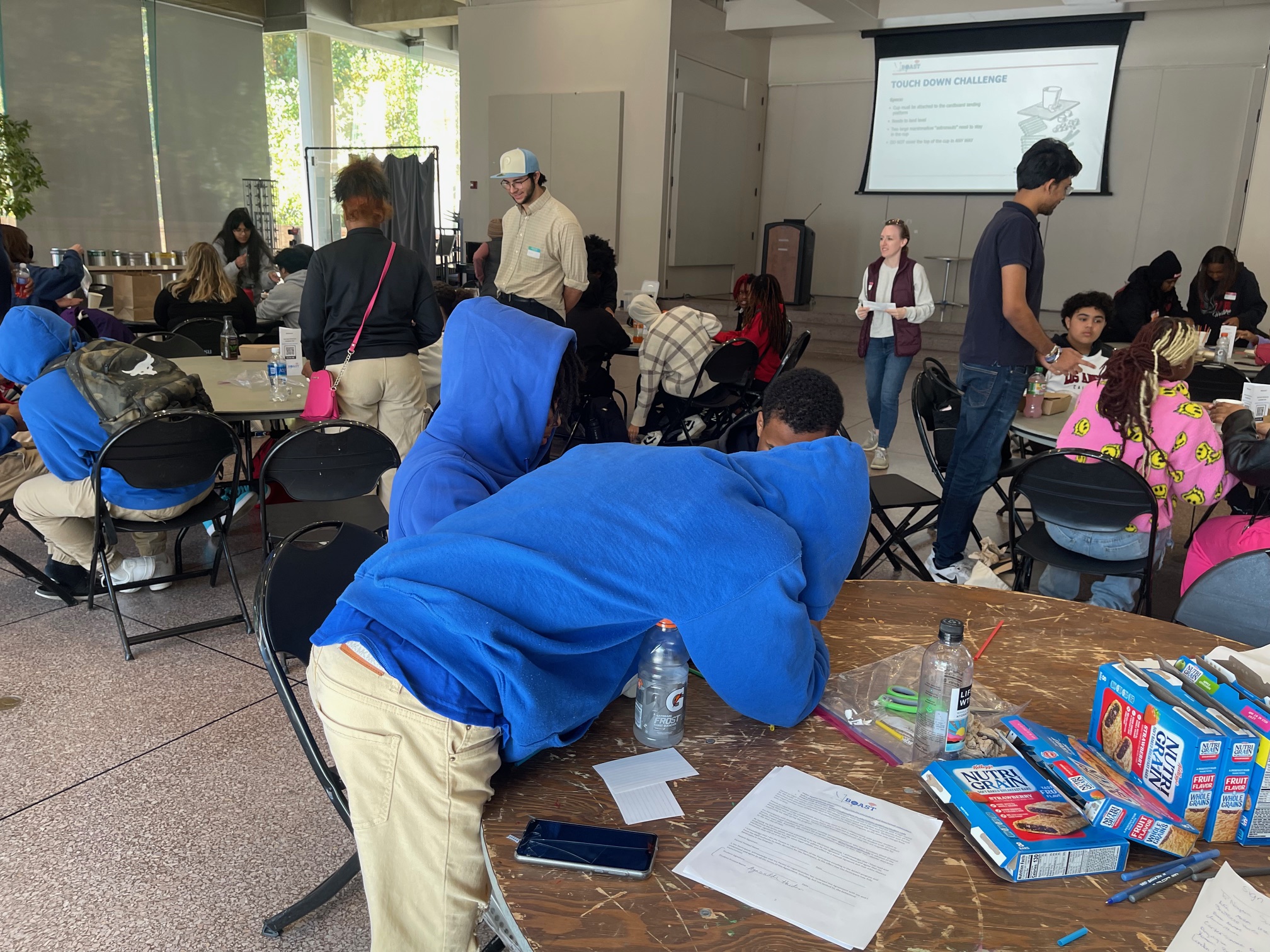
(Photo by Mr. Antoine)(Photo by Mr. Antoine)(Photo by Patterson Press)
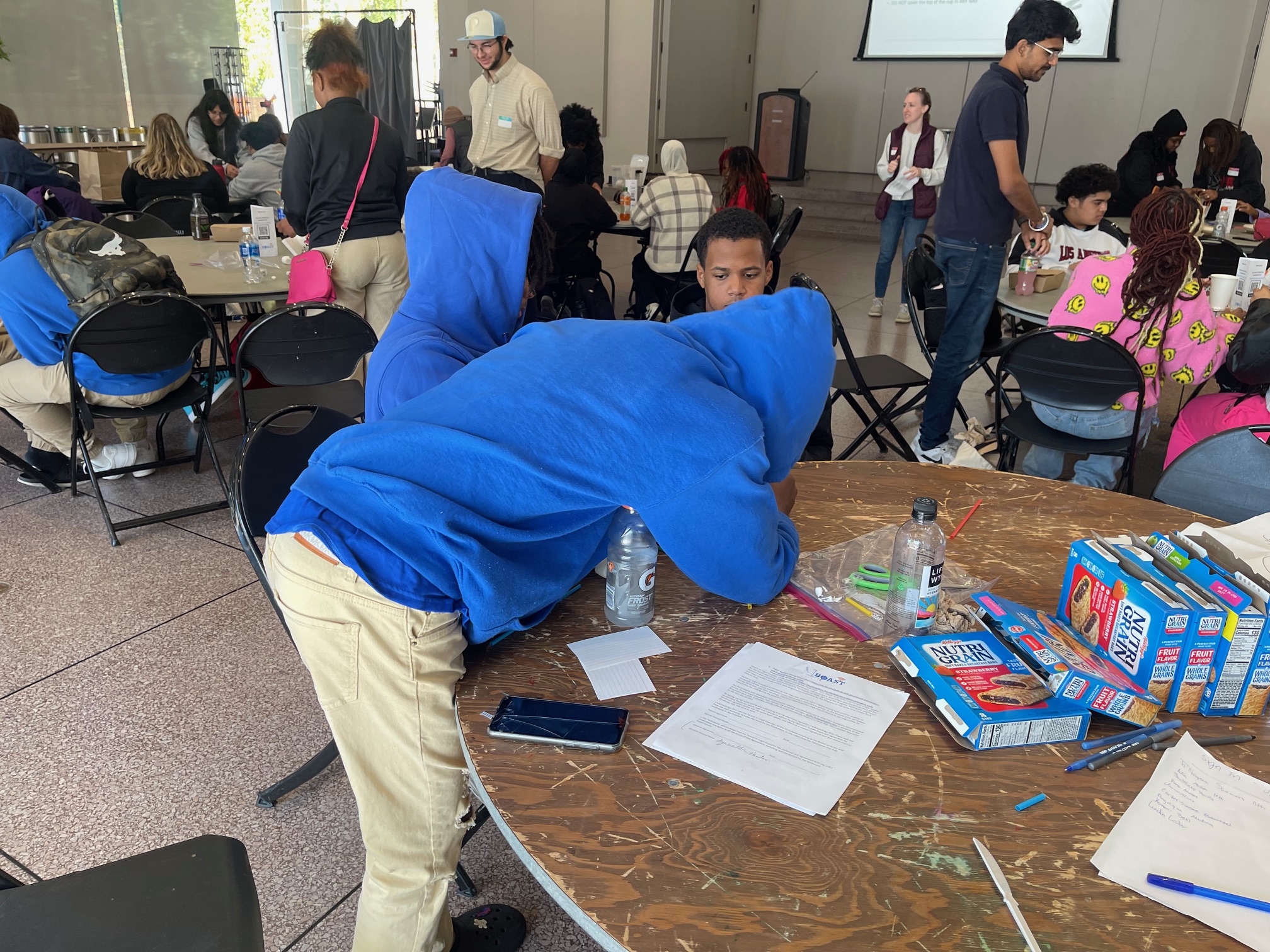
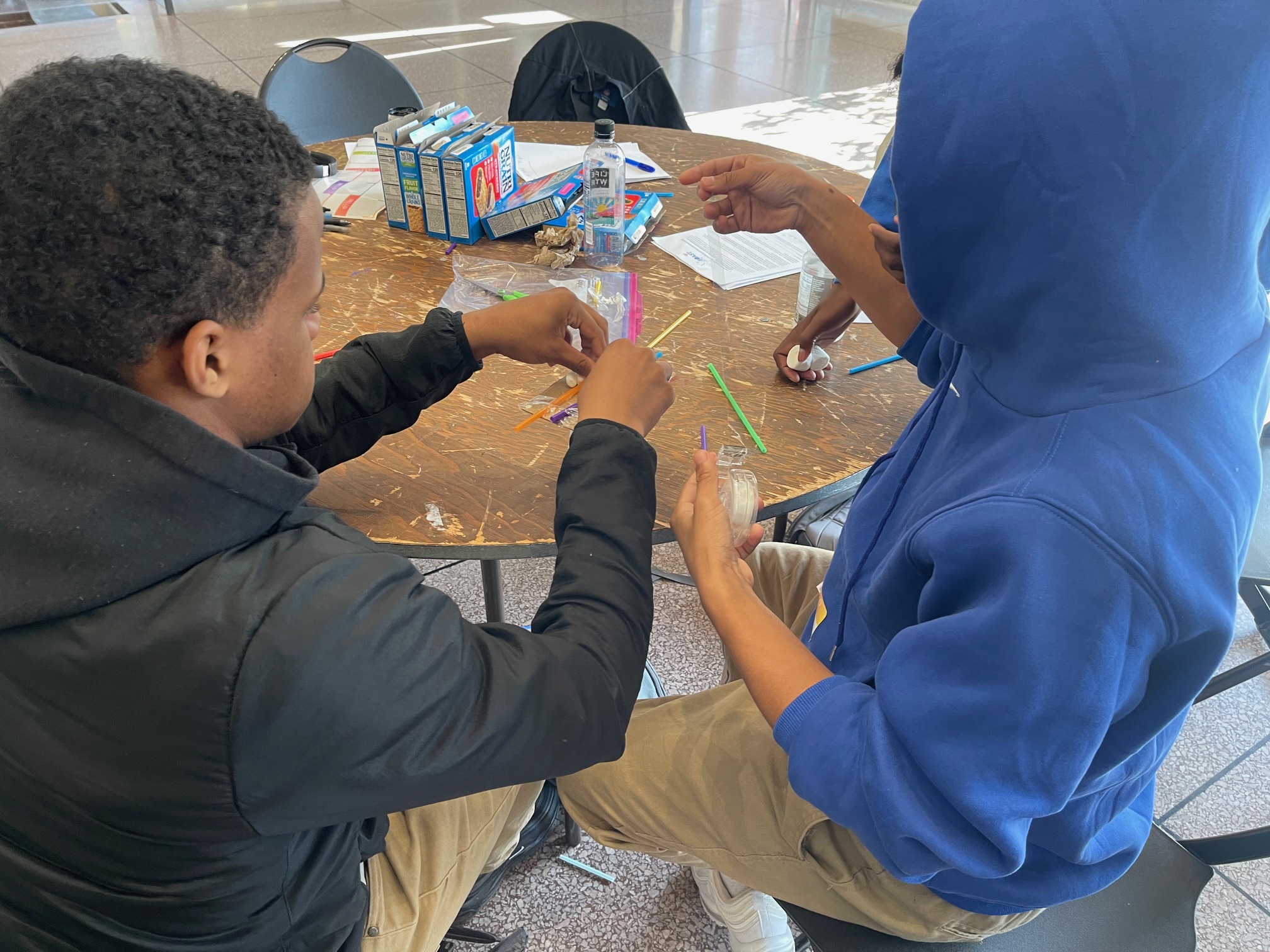
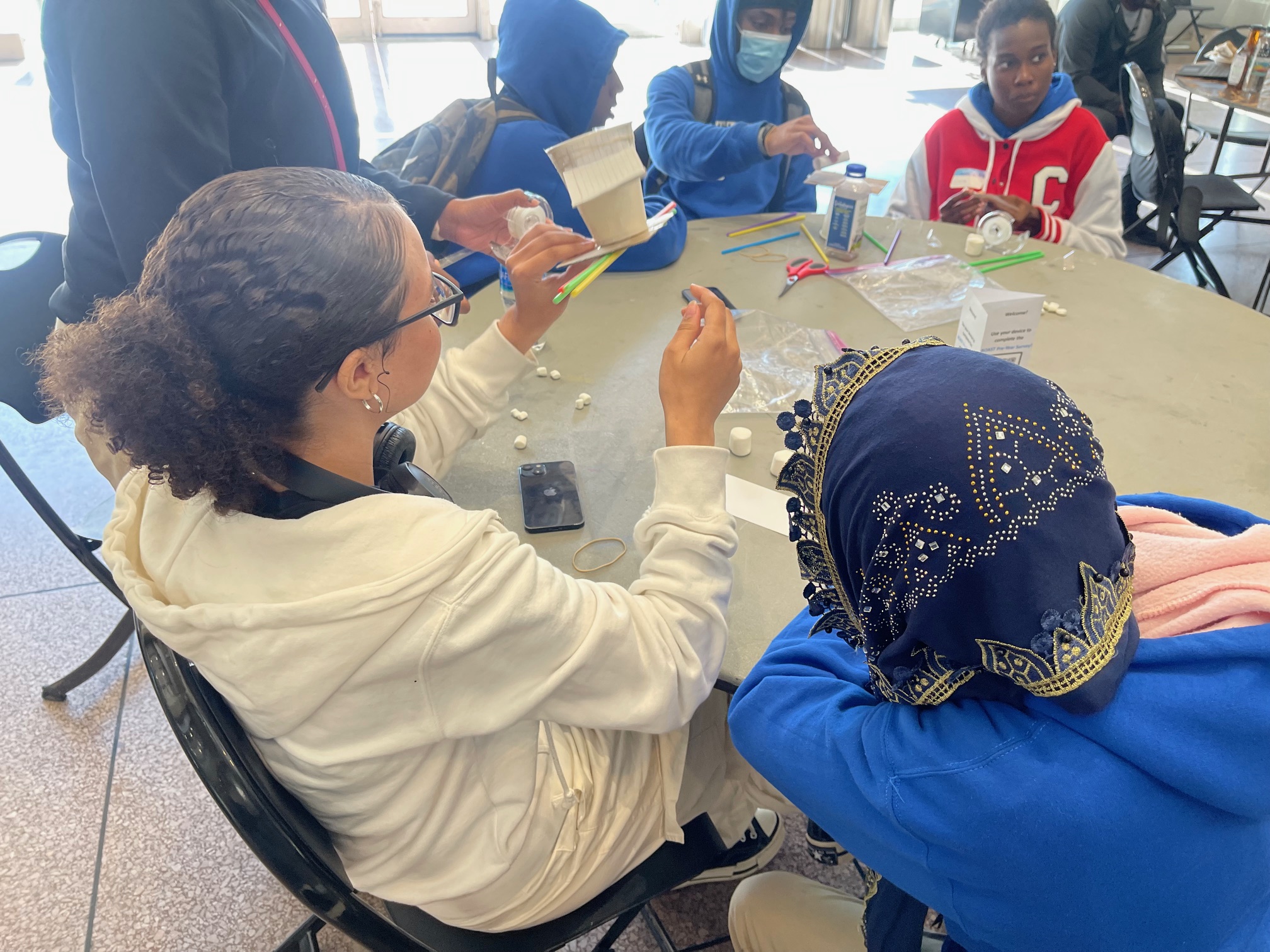
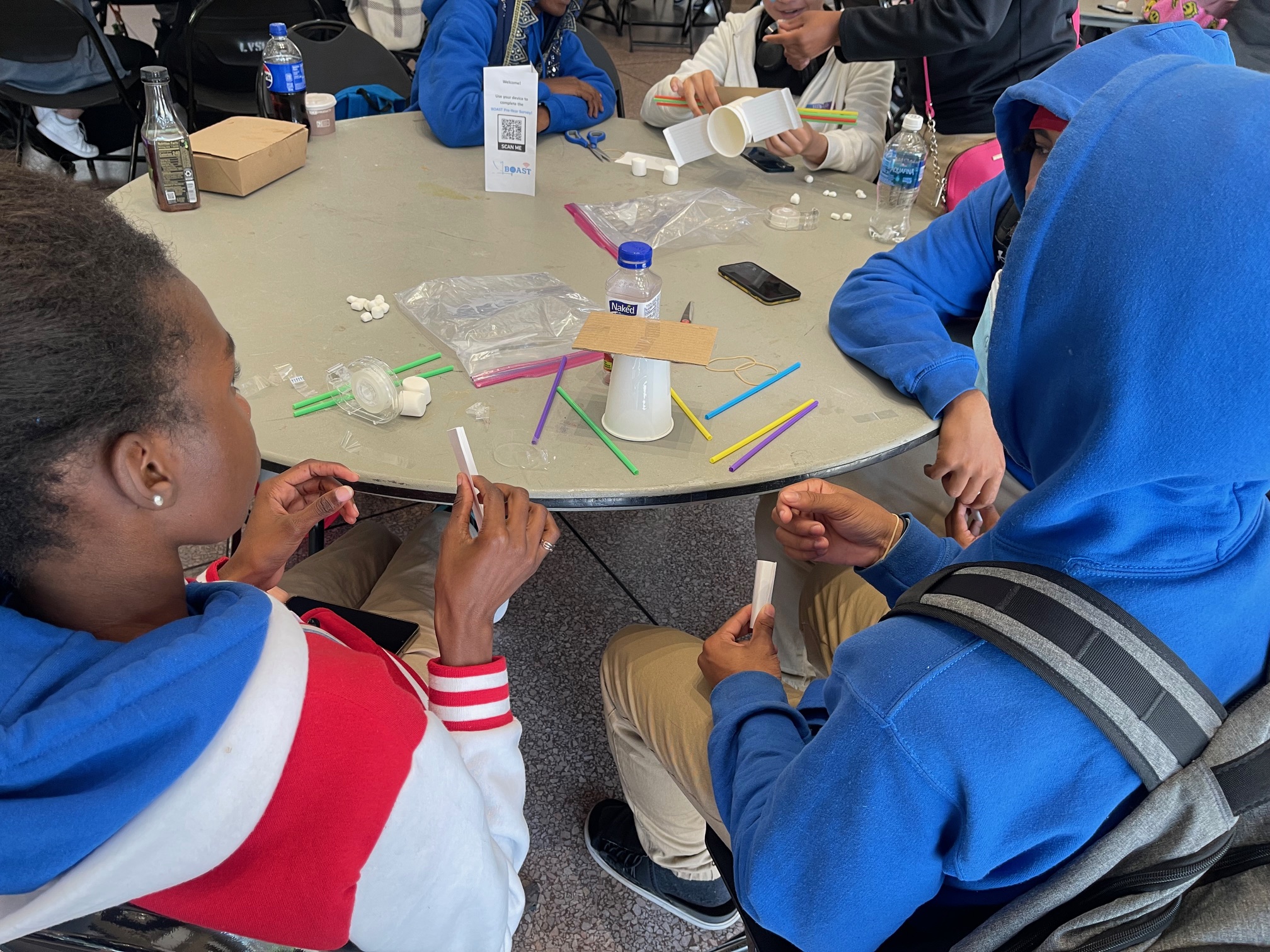
BOAST stands for Baltimore Online Algebra for Students in Technology. It is a free, after school program for students who are interested in STEM fields and careers and want to apply their Math skills to solving real world challenges. It is part of a research study by Johns Hopkins.
Mr. Tiras is the in school representative for this program. Students in the BOAST program meet every Monday after school in Room 334. The program spans one school year, and students enrolled engage in many different engineering fields including:
Optical Engineering
Mechanical Engineering
Electrical Engineering
Biomedical engineering
This school year, BOAST went on two field trips to Johns Hopkins University. On the first trip, we went over an introduction of the program. This was where we got to meet our assigned Johns Hopkins representative–the person who guides us through the BOAST curriculum.
The Hopkins representative that Patterson students were assigned was named Mr. Kohlbatz. He not only connected with us on an academic level, but on a personal level as well. He felt more like a friend than a teacher. He shared information about his personal life and academic background with us. This encouraged us to be more engaged with the work.
On the second trip, we met up back at the University and participated in a competition with the other BOAST teams. The focus of the competition was on acoustical engineering. The objective was to make a soundproofing box that could block specific decibel levels. Patterson didn’t win, but we tried our best.
The competition entailed 5 short stages or missions, which were made to be beginner friendly:
Mission 1: BOAST Introduction
¨You and your team of BOAST engineers are applying to be part of the Readiness Taskforce charged with protecting the Baltimore area from alien lifeforms. In your first Mission, familiarize yourselves with the platform used by the Taskforce. Then create an avatar to describe yourself and pitch your engineering team to the city officials looking to hire.¨
Mission 2: Technical Rescue
“The James Webb Space Telescope detects an asteroid leaving the Starfish Galaxy and heading towards Earth. As the asteroid moves closer to Earth, smaller meteoroids crash down in the Baltimore area, blocking the main roads entering the city. Use your knowledge of mechanical advantage and pulleys to design a pulley system that will allow crews to move the meteoroid debris and unblock the road.”
Mission 3: Machine Learning
“Just as things seem to be calming down, more space debris slams into a network of satellites used to gather data for weather forecasts! Using machine learning tools and the K-Nearest Neighbor technique develop a program that can accurately predict precipitation based on historical weather data collected by the National Oceanic and Atmospheric Association.”
Mission 4: Soundproofing
“The meteorites’ energy is causing high frequency sounds. To protect critical operations of Baltimore area institutions from the sound disruptions, city leaders call for engineering teams to develop a soundproofing device. A competition will determine the design implemented in the city. Jump into the research about sound waves and develop a soundproofing device prototype.¨
Mission 5: Business optimization
“Continued weather and public safety disruptions caused by the meteorites mean school is often remote, and students need the ability to learn from home and school. Your soundproofing prototype got the attention of an eccentric billionaire and she offers you a substantial grant to kickstart a business to provide at-home and classroom STEM lab kits. Make a business plan to show cost optimization and profitability predictions so you can receive the funding.”
If you’re looking to get into the engineering or medical fields, BOAST is a great option for you. It not only allows you to network with Johns Hopkins University (which is known for its engineering and medical accomplishments), but it also allows you to get a jump start in the world of engineering. Most importantly, upon completion of the program in May, they give you a college recommendation letter. So if you’re looking to go to college and want an extra credential on your resume, Join BOAST.














 pattersonpress.org