Category Archives: CTE

EMT pathway provides career opportunities

Photo: Baltimore City Public Schools

by Breon Thacker

One of the many career pathways students can choose at Patterson High School is the Emergency Medical Technician (EMT) pathway.

“I enjoy giving students the opportunity to have a good career”, said Mr. Casey, the EMT teacher.

Mr. Casey has been teaching EMT classes for 13 years now. His main focus is to help students gain opportunities to do what he loves to do.

The Patterson EMT program has been around for 10+ years. The program trains and teaches cadets (students) things that happen in the field and in real life situations. 

The Program provides great opportunities for students when they get out of high school, such as getting a job right after graduation.

“When you get out of high school, you can become EMTs or you can go to community college.”, explained Mr. Casey.

There are opportunities for students to volunteer in the summertime at their local firehouses, providing them with different work experiences.

The EMT program is a great option for students who want to go into the field as an emergency healthcare provider or have the drive to help others and want to be a difference maker.

JROTC teaches students how to be leaders

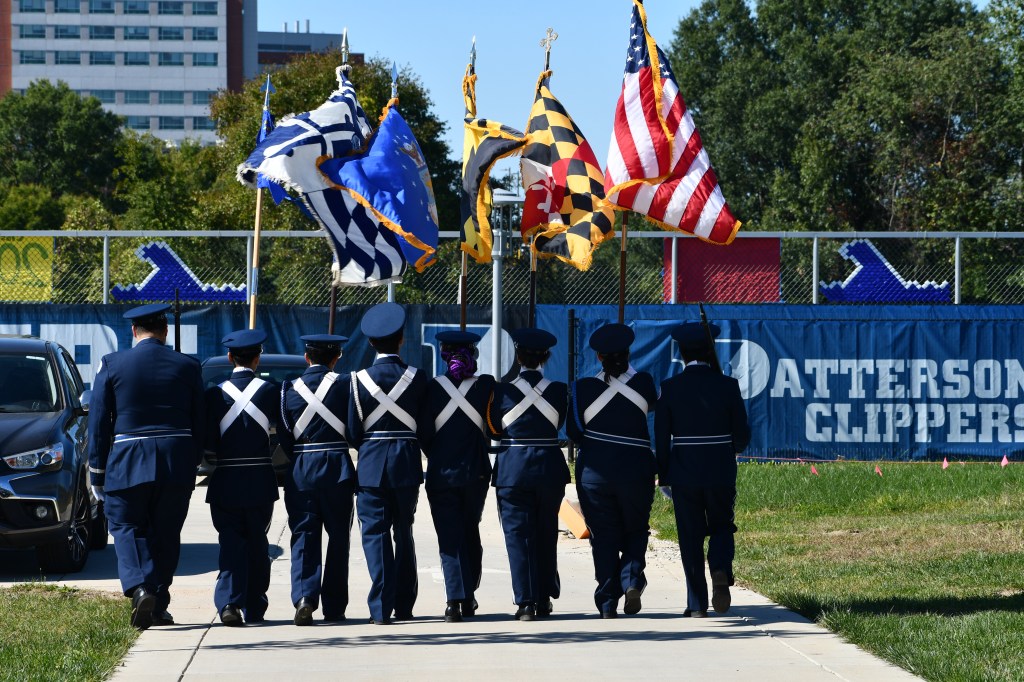
JROTC Color Guard marches to Patterson pep rally (Photo: Patterson Press)

by Snit Kahsay

JROTC is a youth program that gives students the opportunity to acquire basic military knowledge and leadership abilities. This program is related to the Armed Forces but doesn’t force students to join anything after high school.

The teacher, Lt. Col. Bill A York, has been in the program for six years now. The part of teaching that he loves the most is “the part that teaches leadership. The reason I like to teach that is because I see a lot of technical issues going on with children at home and to help improve their communication, decision making skills and not give up on themselves.” 

This program can help kids feel more confident about public speaking due to the way they do their attendance and their way of communication and leadership. JROTC is one of the most popular pathways in Patterson High School, with more students joining every day. Some students were initially placed in the JROTC pathway without signing up for it but later came to appreciate it.

“I didn’t choose it, actually.”, explained Commander Alison Licona-Pacheco. “They gave it to me and I really liked how they organized the program and got cadets involved in everything. That’s why I liked it and that is how I got my position in leadership.”

This program is mostly known for  its unique way of teaching students to act like responsible adults and how to handle stressful things. This program includes uniforms that students must wear. On Thursdays, cadets must wear either their blues or OCPs (Operational Camouflage Pattern). On Fridays, cadets wear sweats because they do exercises on those days. 

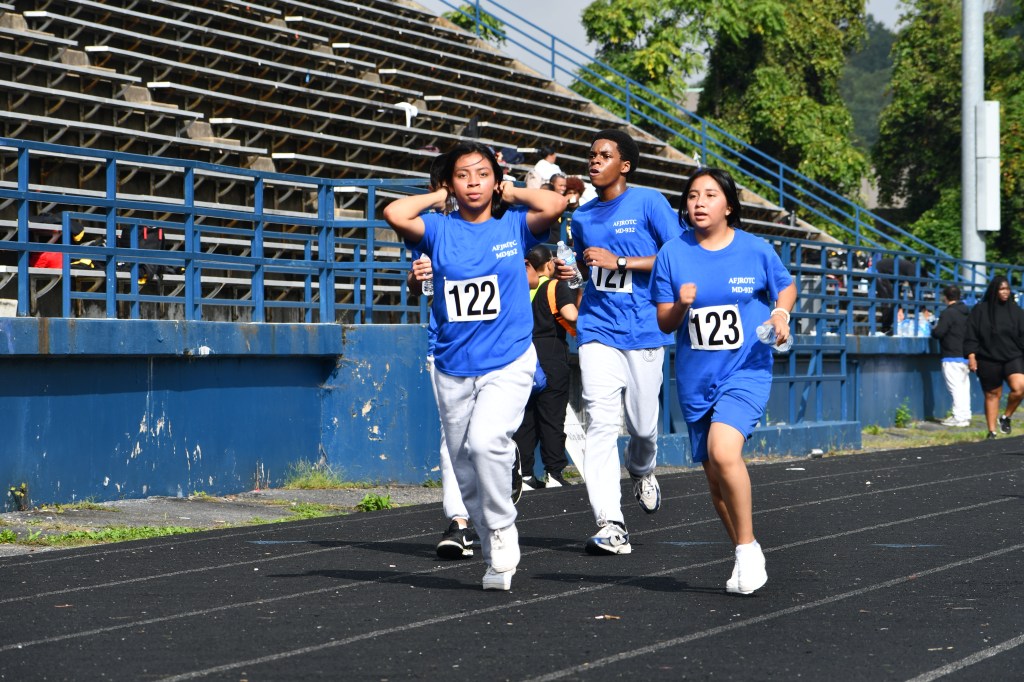
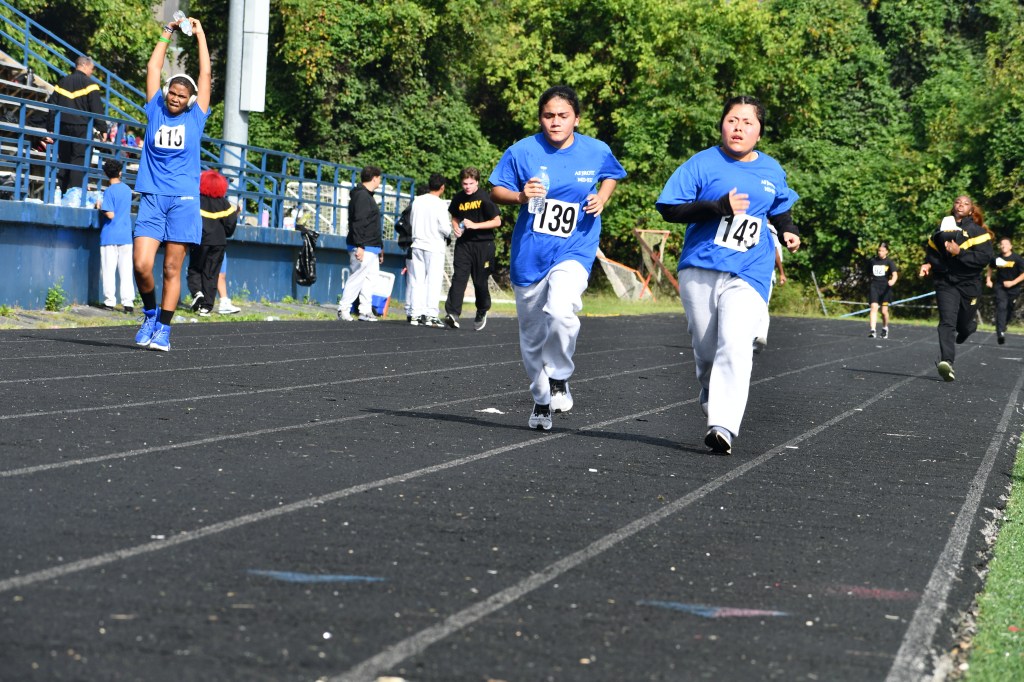
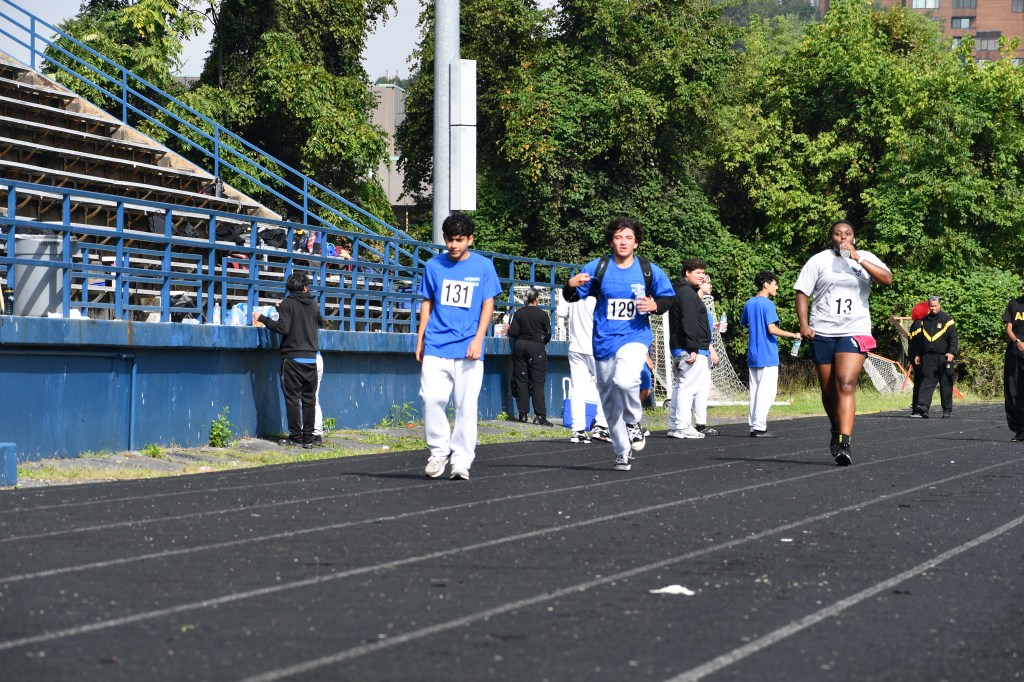
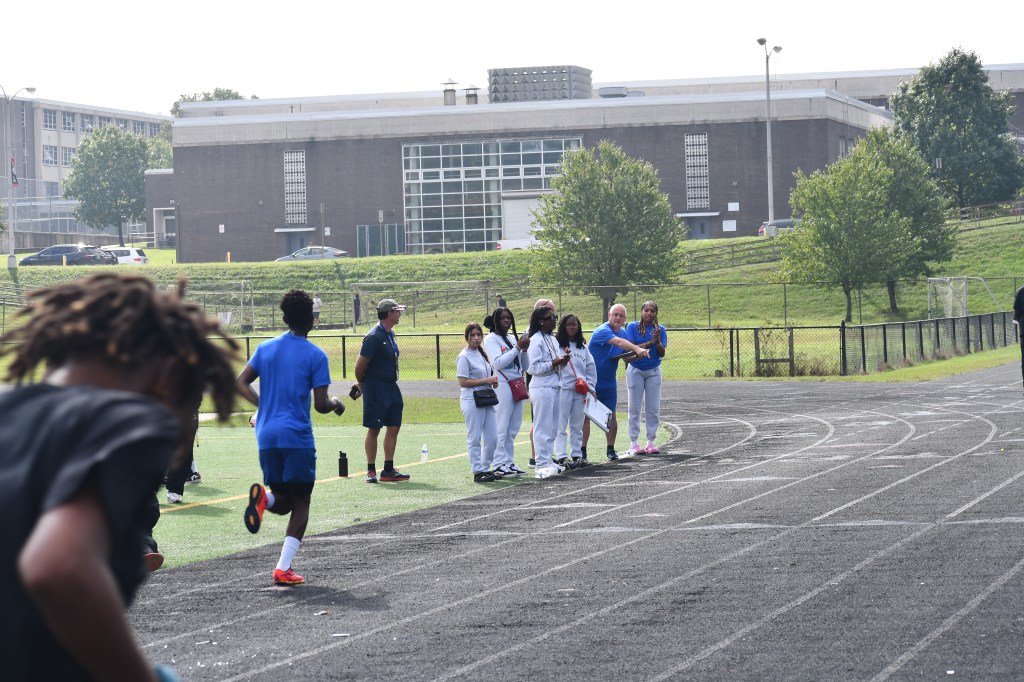
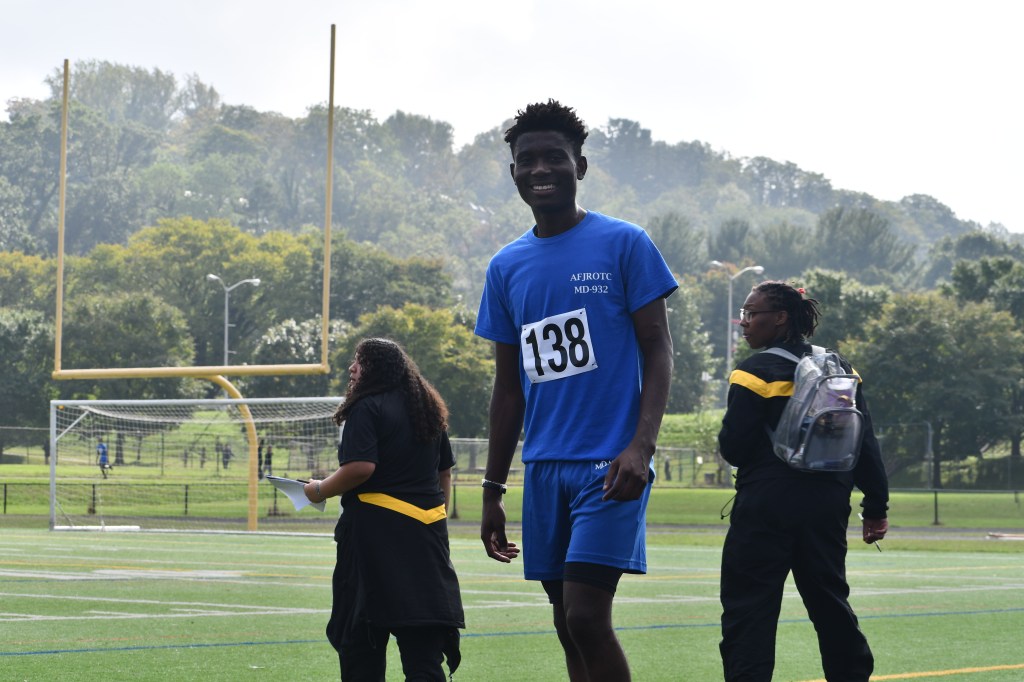
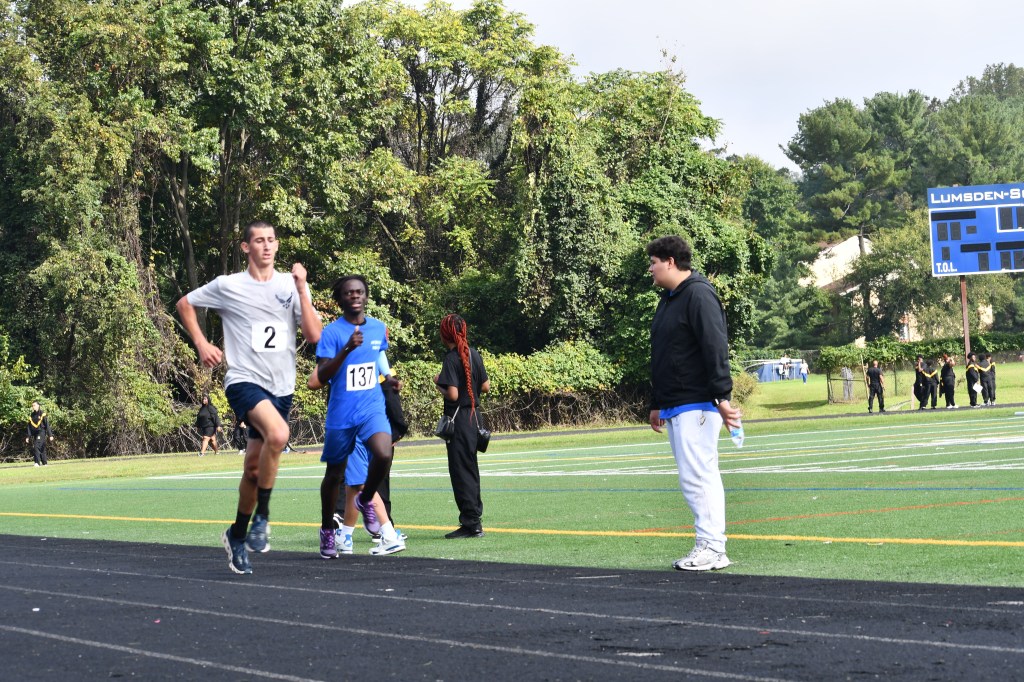
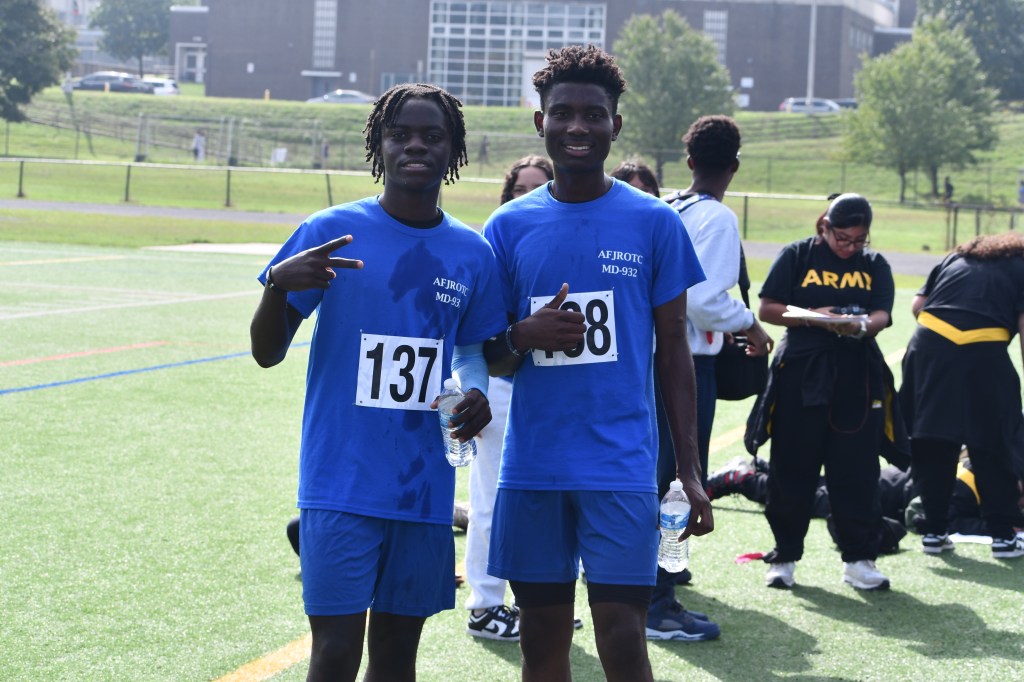
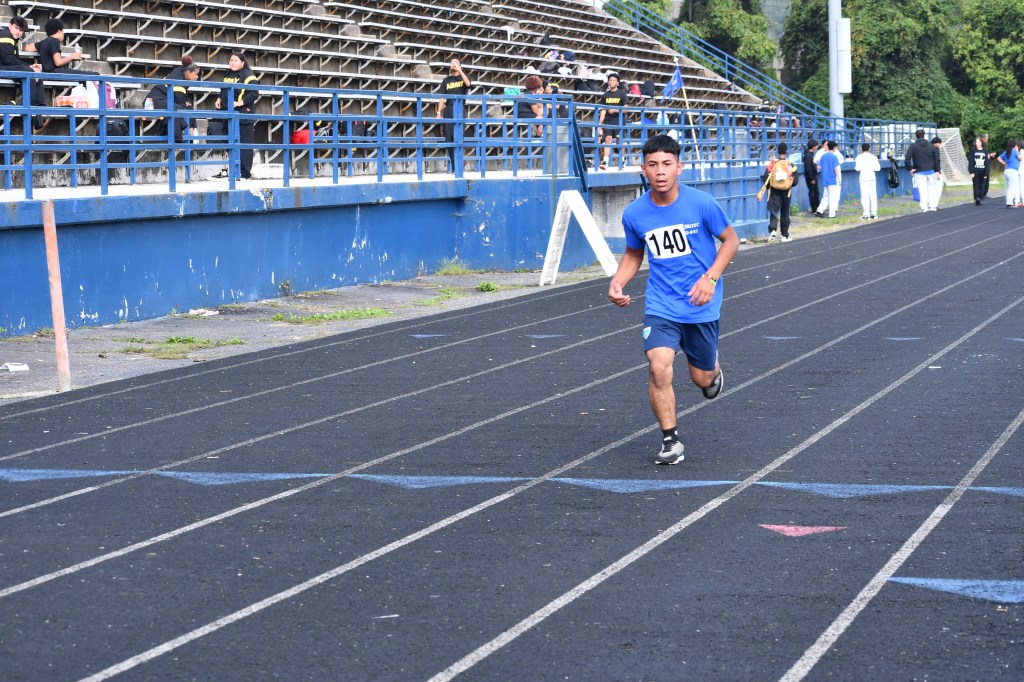
JROTC organized a citywide 5K run on October 3 at Baltimore Polytechnic Institute (Poly) that any cadet (JROTC student) could participate in. The Patterson High School JROTC finished in 2nd place overall.

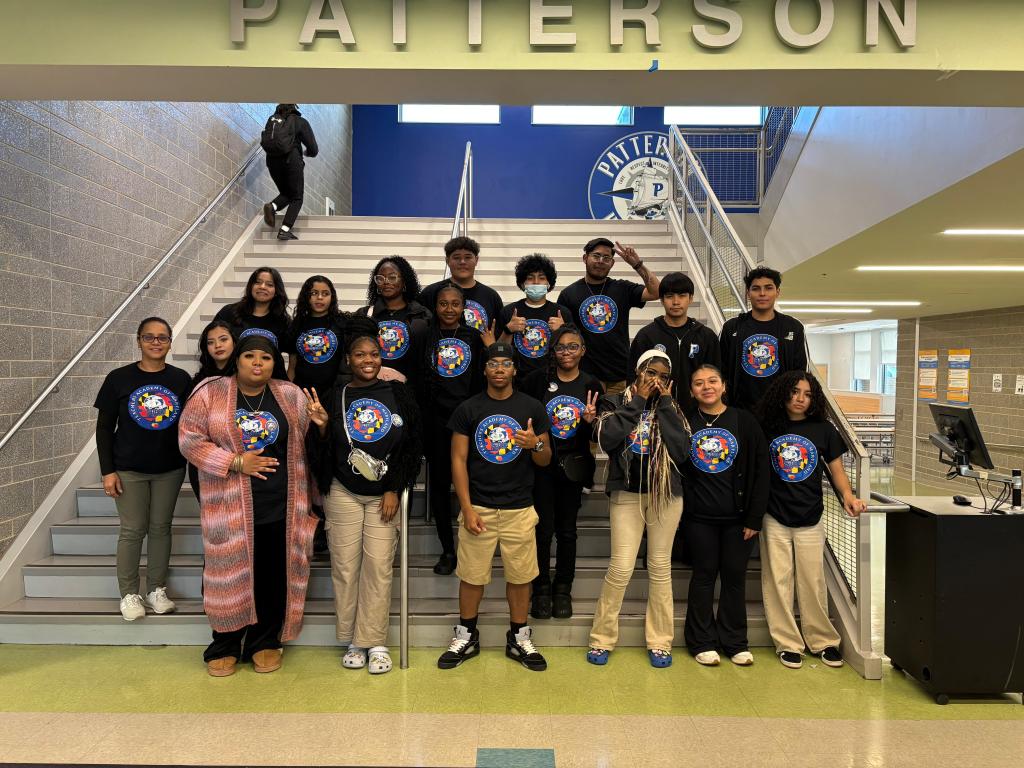
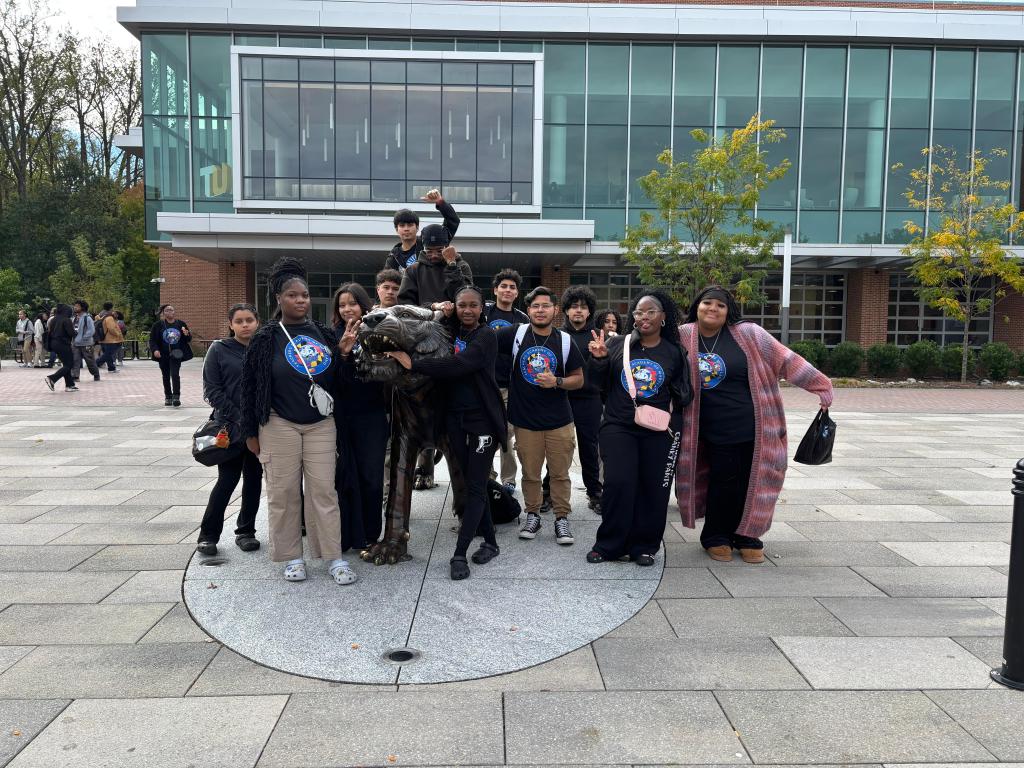
Students reflect on Teacher Academy experience

Editor’s Note: What follows are reflections from two graduating seniors who participated in Patterson’s Teacher Academy of Maryland (TAM) CTE Pathway. We were not able to include these in the May 2024 print edition of the Patterson Press but we present them to you here:


In the program, I learned many things. I progressed in my learning skills and people skills. Before, I was quiet, not really an interactive person, but the program helped me out of my comfort zone to succeed further in everyday life. This program expands my education to have a positive effect on my life. It showed me very important lessons. The T.A.M. program teaches you how to be a teacher and the ways to be a successful one. Being with my mentor (Mr. Baron) was a great experience. He let me in on key things when teaching and he helped me to really interact with students as if I was a teacher. This let me see a different perspective. Enjoy the T.A.M. pathway–It will be a great experience!
-Iyanna Jenkins – Internship TAM program, Cohort 2024


My experience being at the pathway Teacher Academy of Maryland has been wonderful. I have learned very nice things and I have also overcome some of my fears in grade ten. I learned all the wonderful things about child development. Throughout this year I have overcome one of my biggest fears, which is to be speaking in front of people I don’t know. The most difficult thing is learning how to teach like a professional, but Ms. Sanchez has helped me and she has has also given me the example of how to do it at the same time. Just like my mentor: he has been patient
with me and I have learned a lot in his class because his class is in Spanish, my first language, and I feel good learning too. And of course I am going to recommend this pathway to my friends because it is very nice to learn so many things.
-Nesly Oliva, Cohort 2024

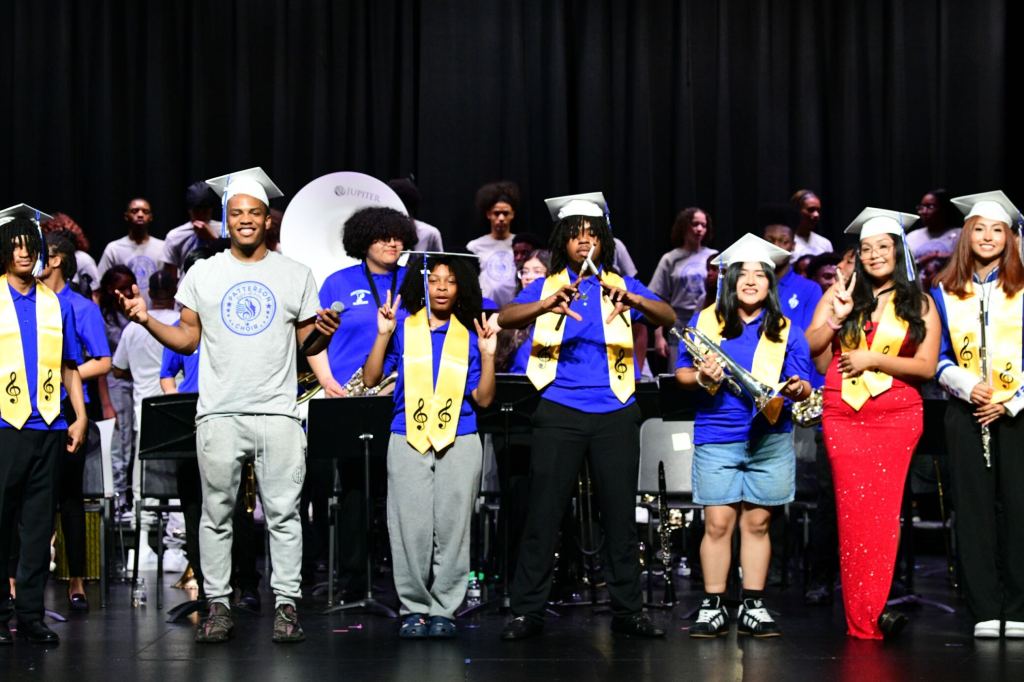
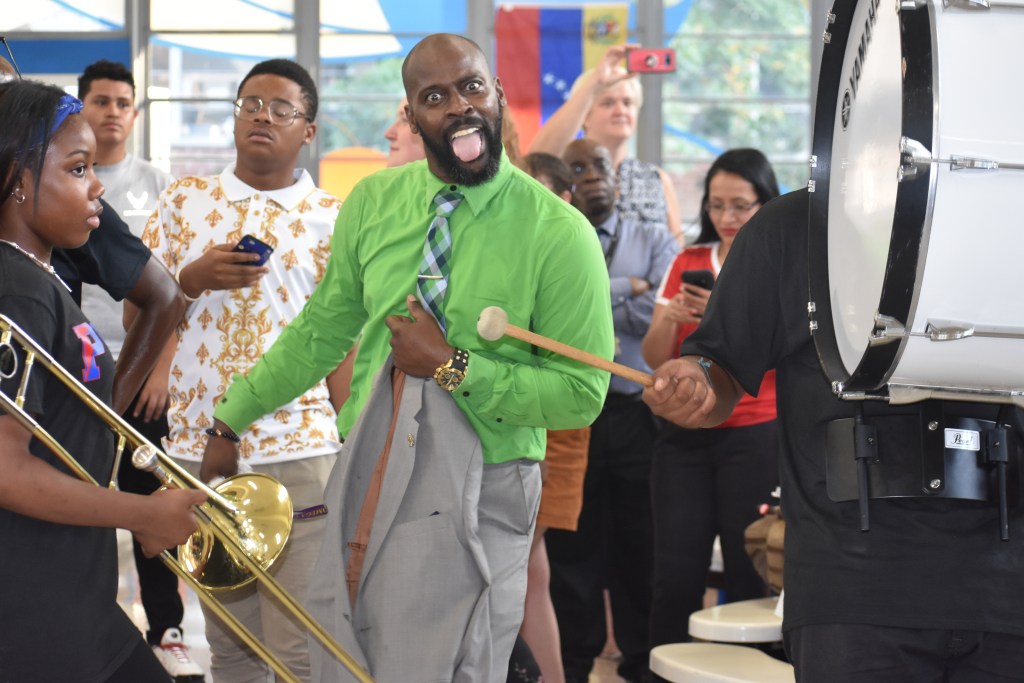
Patterson Band marches to greatness

(Photo by Mr. Antoine)

by Deontay Blackwell

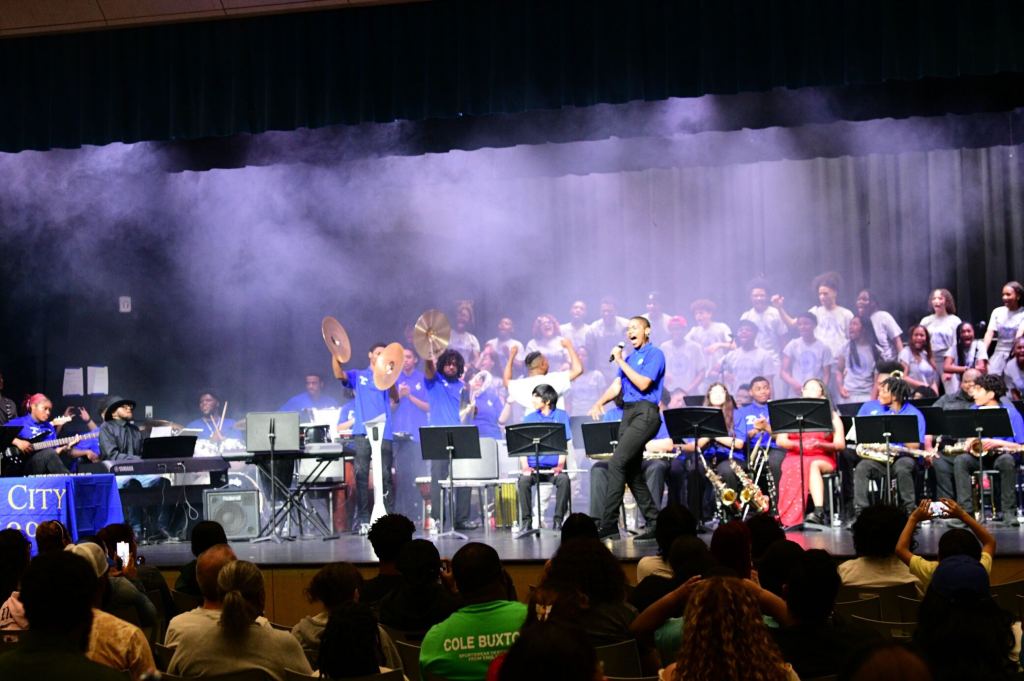
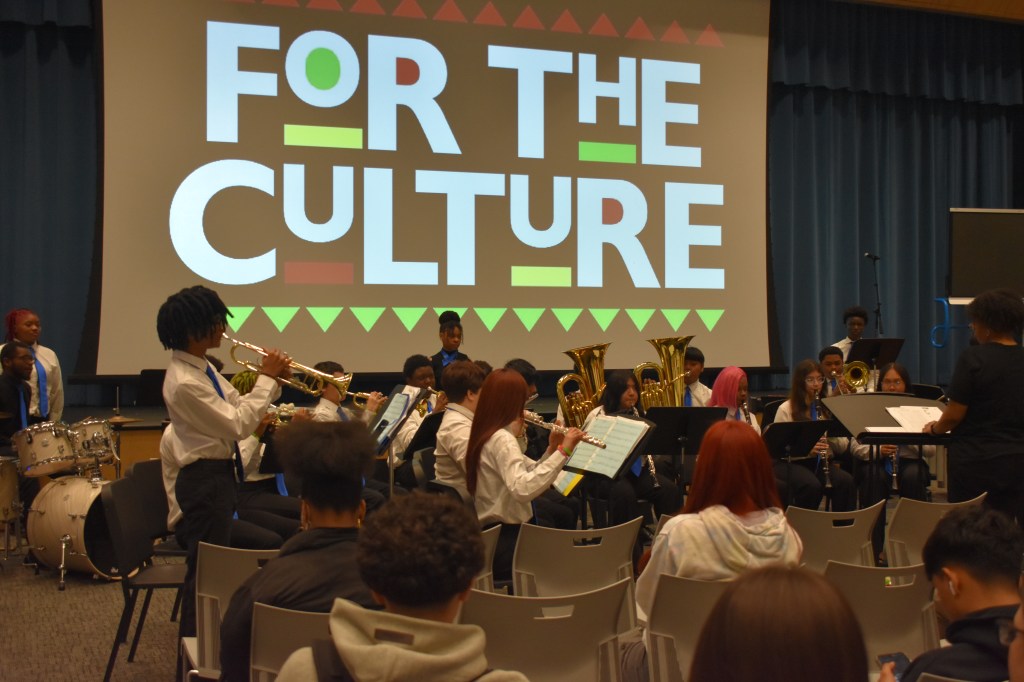
Patterson High School offers a plethora of different CTE pathways and clubs. Among them is our school’s band. The and is split into two sections: the marching band, which is mobile and performs at parades and sporting events, and the concert band, which wears formal attire and performs at indoor events. Both sections of Patterson High School’s band have participated in many great events this school year, such as the Mayor’s Parade, the Winter Concert, the School Choice Fair, the St. James Parade, and the Springs Art Show. Additionally, Patterson has added a new musical group this school year: the choir. Although the choir is separate from the band, they frequently collaborate and perform together. 

Music teacher and band director Ms. Williams has reflected on her opinions of the band, what they have accomplished, the hardships they faced, and the efforts that went into preparing the students for the many events they did this year.

“One of the things that we’re working on is them coming up with a set list right before the performance to see if they can execute that. They don’t like it but it forces them to bring their ‘A’ game.”, Ms. Williams said.  

As a small band, they lack the numbers of performers that some other schools have, so Ms. Williams has to make sure they can play to the best of their ability through practice and testing them with a set list. There also struggles that come with having few staff members to help. 

“Sometimes I have to focus on the woodwinds to make sure they sound right, to the neglect of the percussion, which is why I asked Terrance [Whitaker] to come, so he can pay a little bit more attention to them.”

With only Ms. Williams and Mr. Whitaker on staff, they have to split their time to try make sure everyone can get equal attention and improve their abilities. Yet despite these challenges, everyone in the band still performs well. For most students, joining the band has helped them a lot. 

“[Ms. Williams] helps me a lot, helps me be outside my comfort zone, which helps me gain that confidence. She’s an amazing teacher.”, said Kailani Becker.

Becker is a band member who plays the flute. In the beginning, she used to be shy, but after a while being around her peers and the teacher it helped her as a person to become confident socially.

Kylayah Davis, the editor in chief of the Patterson Press, also plays in the band as a trumpet player. She expressed how band changed her as a person.

“ I can open myself to a lot more things… and the effort I put into band expanded to other areas.” 

Band has helped Davis become capable of putting the same amount of effort into other things she is interested in, which help her apply herself more, changing her as a person and expanding her capabilities.

As this program continues to grow, the experience will hopefully help others to also be a part of something bigger than themselves. As for Patterson, this current iteration of the band didn’t start until 2015, after many years of not having a fully functional band.

“Patterson didn’t have a band program for decades. Until I got here in 2015 is when we started…And it’s a slow build.”, Ms. Williams said.

There are many things Ms. Williams would like to add to the band to get more help, such as having coaching staff for each part of the band, including woodwinds, brass, percussion, flags, etc., and getting more instruments and equipment. But a big barrier to getting those upgrades is obtaining the funds to pay for them. Ms. Williams has been trying to get more funding for the band. Meanwhile, the school administration has been expanding the music program in other ways. This school year, Patterson hired a choir teacher, Mr. Fowler, who has already made a huge impact in terms of what kinds of performances the school can do now that we have both a band and a choir. Next year school leaders aim to add a dance teacher to the staff as well. Together, Ms. Williams and the rest of the Patterson performing arts staff will explore the possibilities of what our talented students can do for next year’s performances and for years to come as the band and the performing arts program as a whole becomes better and better.

(Photo by Mr. Antoine)
(Photo by Patterson Press)

BOAST applies STEM skills to real life problems

by Kenneth Dorsey, BOAST Program Participant

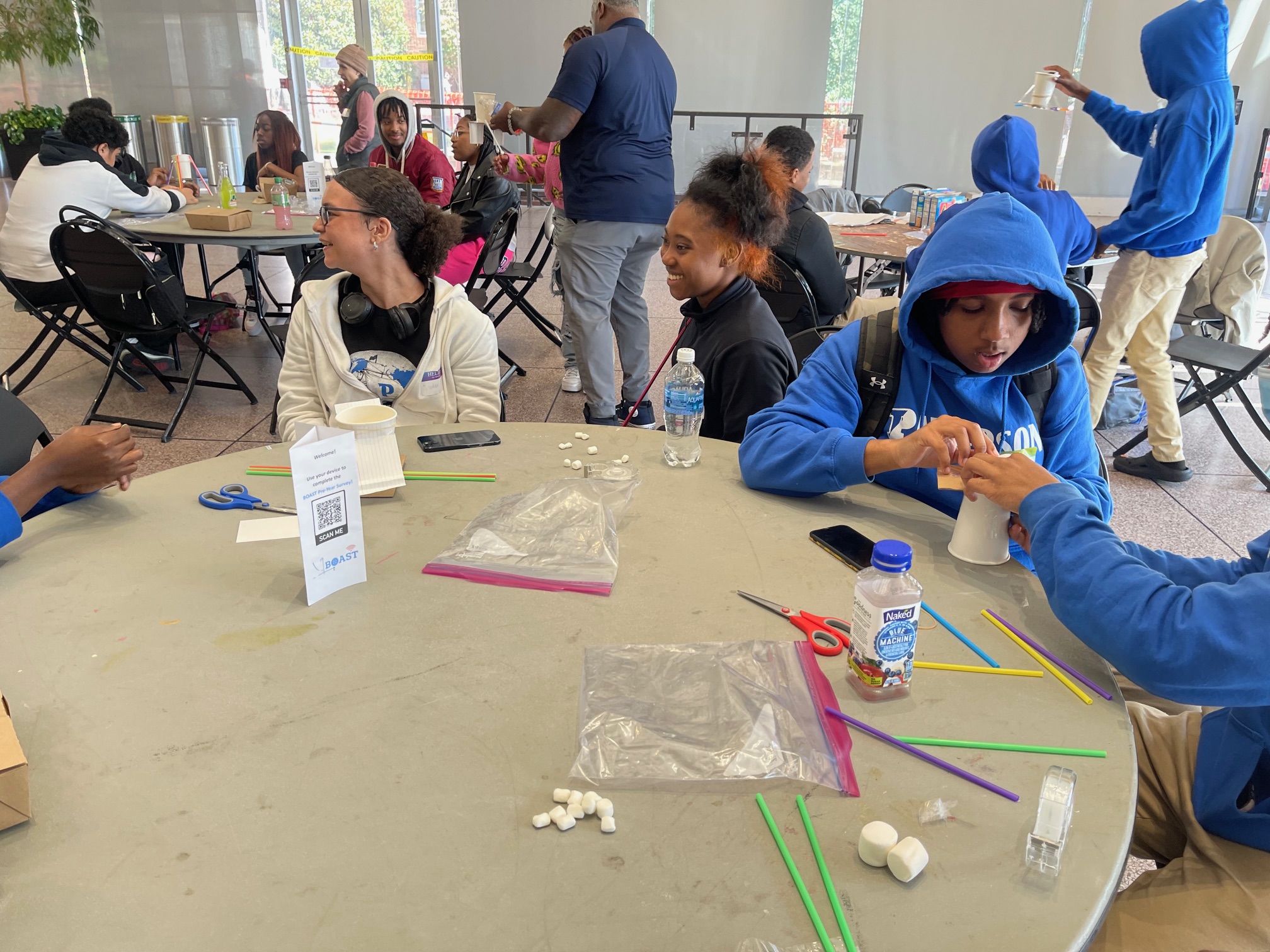
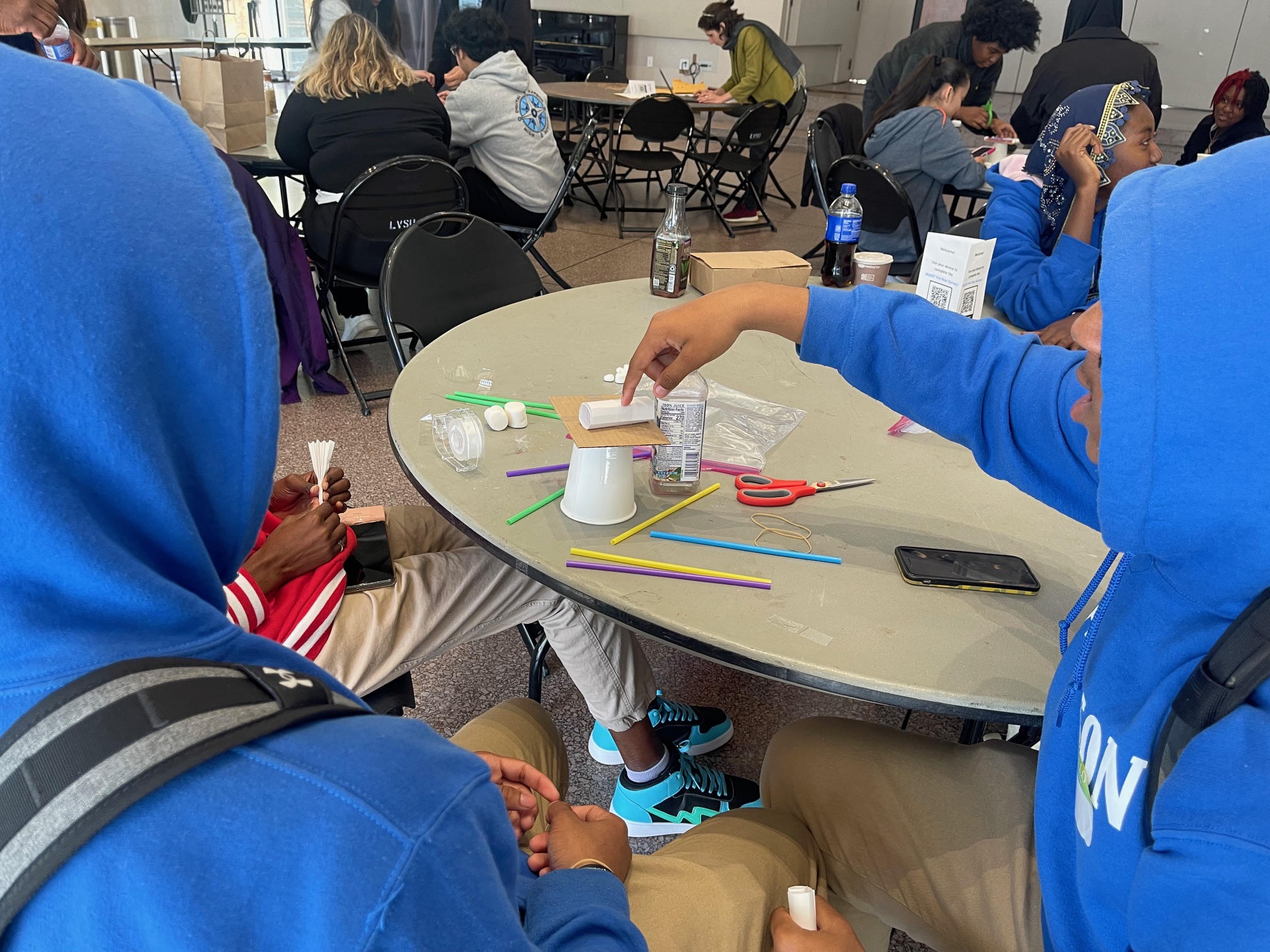
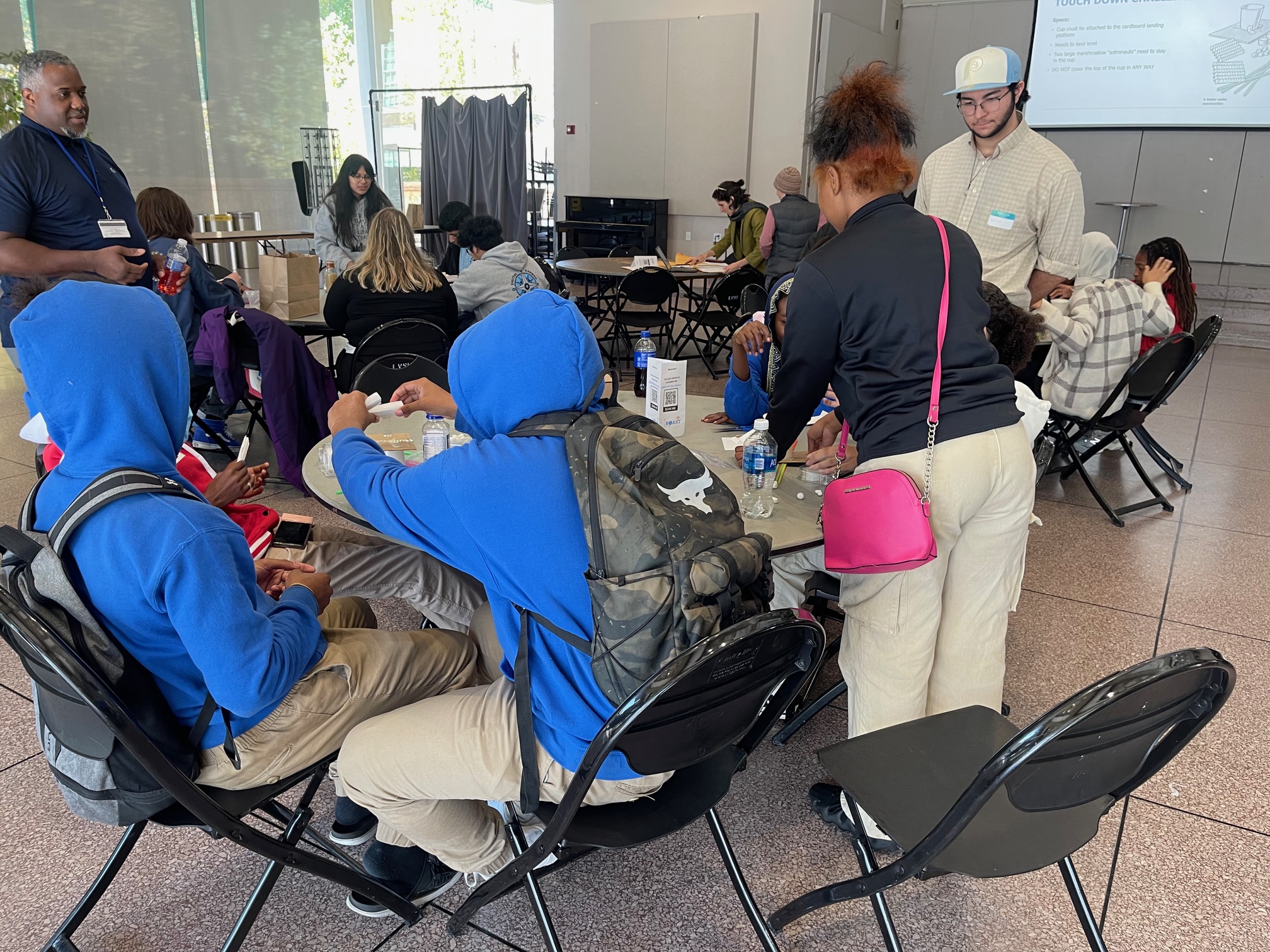
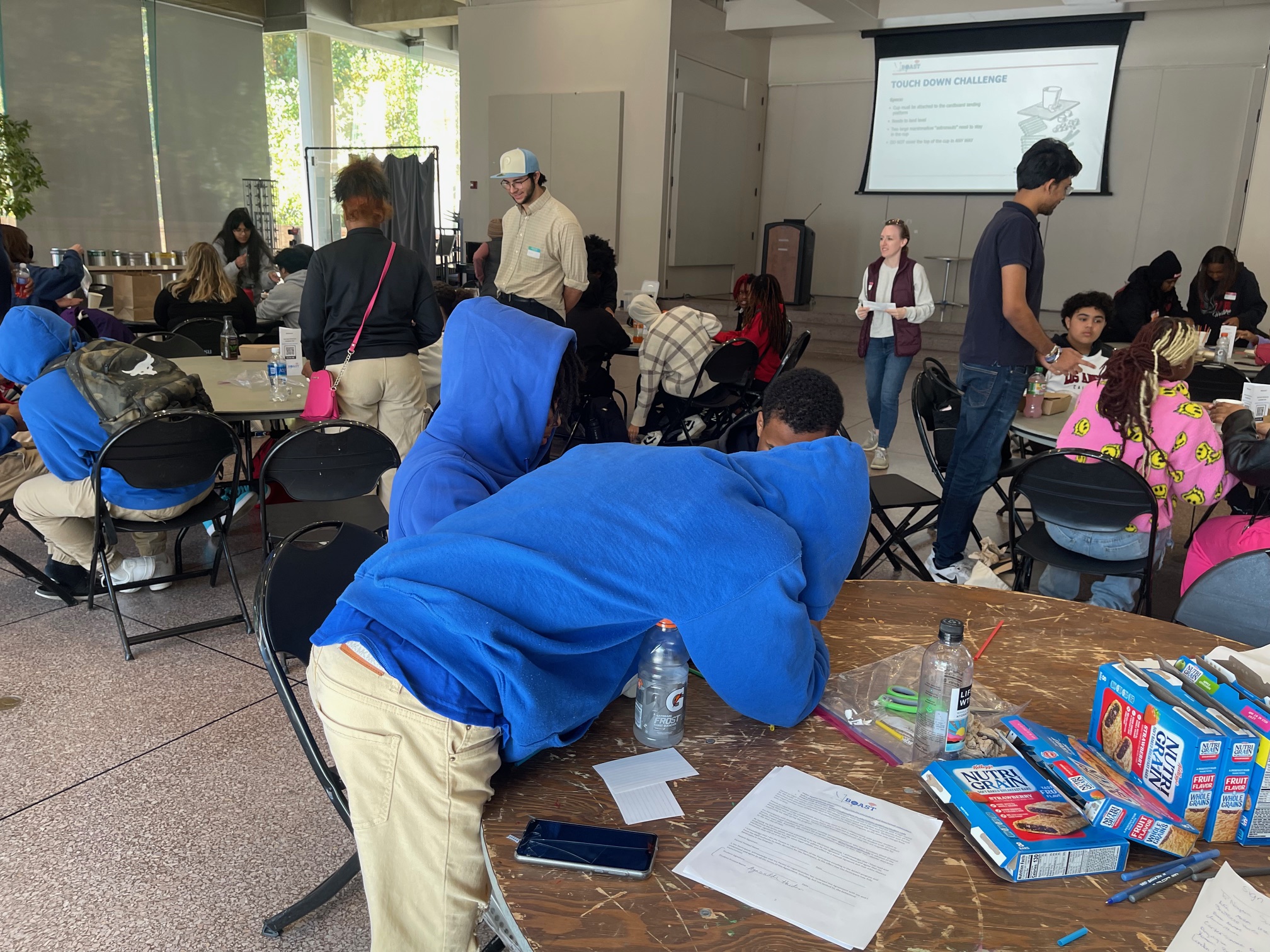
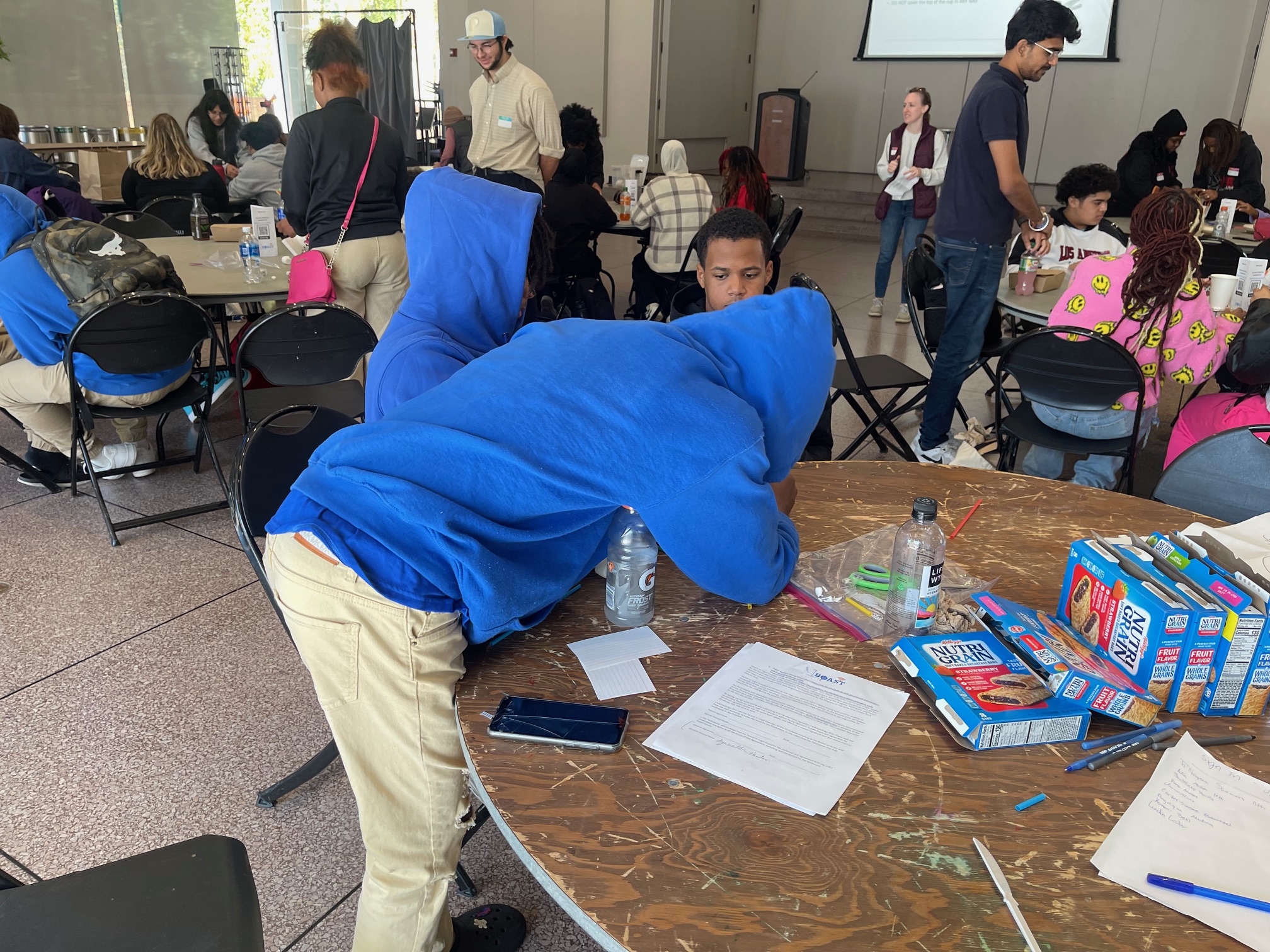
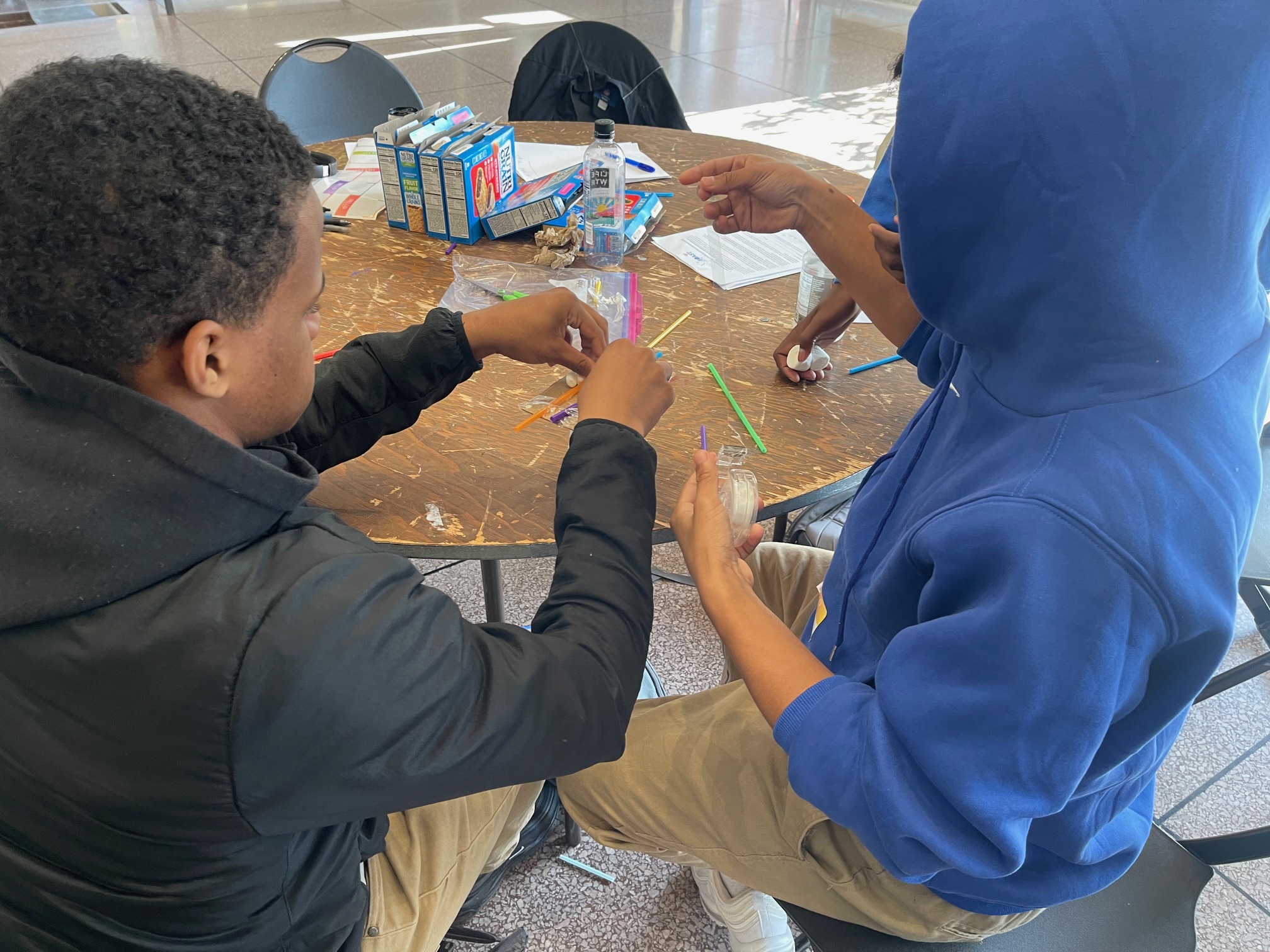
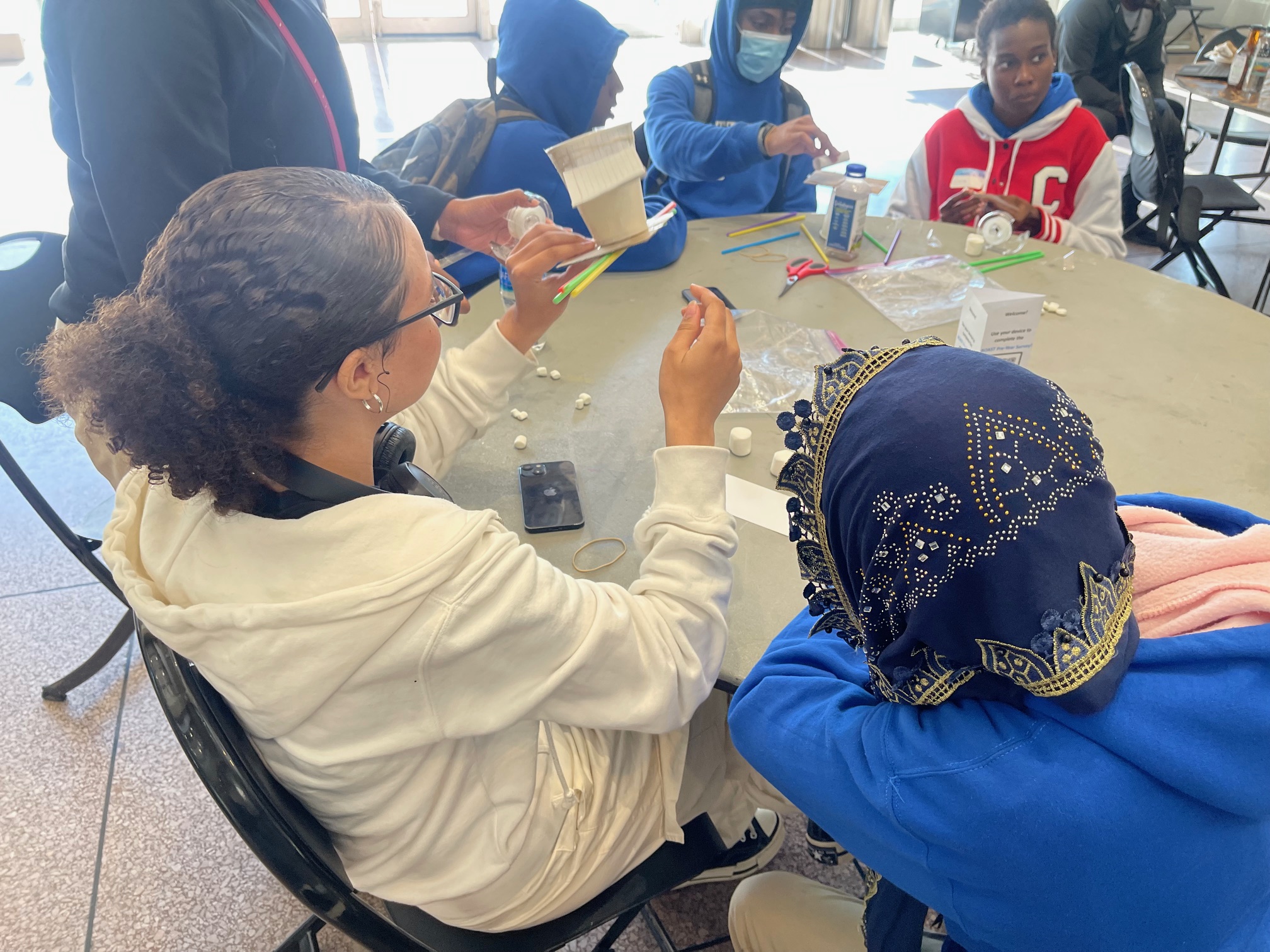
BOAST stands for Baltimore Online Algebra for Students in Technology. It is a free, after school program for students who are interested in STEM fields and careers and want to apply their Math skills to solving real world challenges. It is part of  a research study by Johns Hopkins.

Mr. Tiras is the in school representative for this program. Students in the BOAST program meet every Monday after school in Room 334. The program spans one school year, and students enrolled engage in many different engineering fields including:

  • Optical Engineering
  • Mechanical Engineering
  • Electrical Engineering
  • Biomedical engineering

This school year, BOAST went on two field trips to Johns Hopkins University. On the first trip, we went over an introduction of the program. This was where we got to meet our assigned Johns Hopkins representative–the person who guides us through the BOAST curriculum.

The Hopkins representative that Patterson students were assigned was named Mr. Kohlbatz. He not only connected with us on an academic level, but on a personal level as well. He felt more like a friend than a teacher. He shared information about his personal life and academic background with us. This encouraged us to be more engaged with the work.

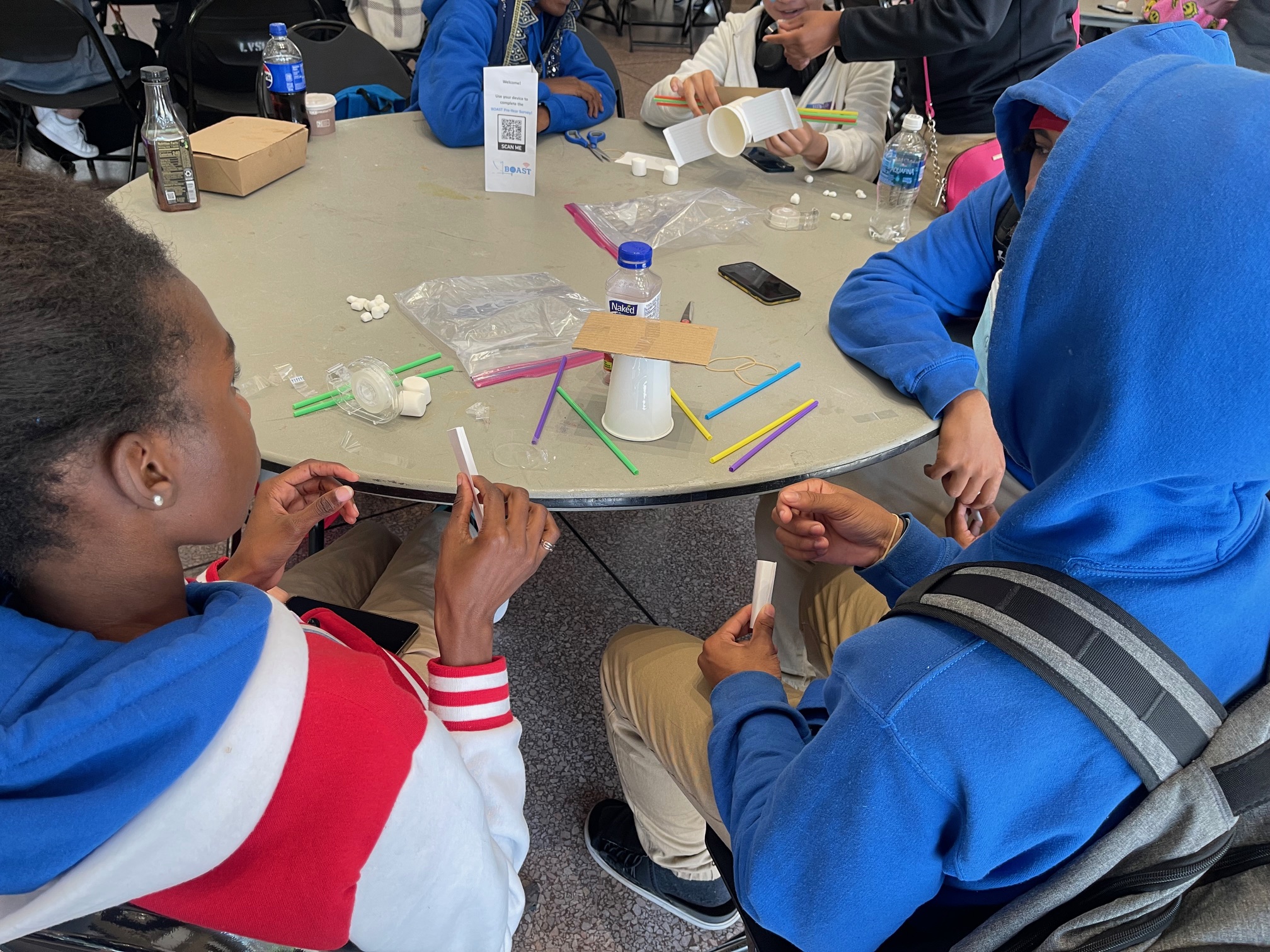
On the second trip, we met up back at the University and participated in a competition with the other BOAST teams. The focus of the competition was on acoustical engineering. The objective was to make a soundproofing box that could block specific decibel levels. Patterson didn’t win, but we tried our best.

The competition entailed 5 short stages or missions, which were made to be beginner friendly:

Mission 1: BOAST Introduction

¨You and your team of BOAST engineers are applying to be part of the Readiness Taskforce charged with protecting the Baltimore area from alien lifeforms. In your first Mission, familiarize yourselves with the platform used by the Taskforce. Then create an avatar to describe yourself and pitch your engineering team to the city officials looking to hire.¨

Mission 2: Technical Rescue

“The James Webb Space Telescope detects an asteroid leaving the Starfish Galaxy and heading towards Earth. As the asteroid moves closer to Earth, smaller meteoroids crash down in the Baltimore area, blocking the main roads entering the city. Use your knowledge of mechanical advantage and pulleys to design a pulley system that will allow crews to move the meteoroid debris and unblock the road.”

Mission 3: Machine Learning

“Just as things seem to be calming down, more space debris slams into a network of satellites used to gather data for weather forecasts! Using machine learning tools and the K-Nearest Neighbor technique develop a program that can accurately predict precipitation based on historical weather data collected by the National Oceanic and Atmospheric Association.”

Mission 4: Soundproofing

“The meteorites’ energy is causing high frequency sounds. To protect critical operations of Baltimore area institutions from the sound disruptions, city leaders call for engineering teams to develop a soundproofing device. A competition will determine the design implemented in the city. Jump into the research about sound waves and develop a soundproofing device prototype.¨ 

Mission 5: Business optimization

“Continued weather and public safety disruptions caused by the meteorites mean school is often remote, and students need the ability to learn from home and school. Your soundproofing prototype got the attention of an eccentric billionaire and she offers you a substantial grant to kickstart a business to provide at-home and classroom STEM lab kits. Make a business plan to show cost optimization and profitability predictions so you can receive the funding.”

If you’re looking to get into the engineering or medical fields, BOAST is a great option for you. It not only allows you to network with Johns Hopkins University (which is known for its engineering and medical accomplishments), but it also allows you to get a jump start in the world of engineering. Most importantly, upon completion of the program in May, they give you a college recommendation letter. So if you’re looking to go to college and want an extra credential on your resume, Join BOAST.

(Photos by Mr. Tiras)

JROTC teaches leadership skills

by Gabriela Hernandez-Guzman

JROTC (Junior Reserve Officers’ Training Corps), is a program offered by high schools in the United States that focuses on leadership, citizenship, character development, and military skills training. It provides students with opportunities to develop leadership qualities and learn about the importance of service to their community and country.

When Lieutenant Colonel Bill York first became an instructor for JROTC at Patterson High, it was the fulfillment of a longtime dream of his.

“I always wanted to teach”, Lt. Col. York reflected, explaining that JROTC Journey has been the most rewarding job he has ever had in his life.

Lt. Col. York’s best experience teaching JROTC was “the visit to the Columbia internship in Baltimore”. His favorite part of JROTC is helping cadets work through the challenges of their day-to-day lives.

JROTC can help students change their decision-making process and get people to view them in a more positive light.

Some activities that JROTC cadets engage in include wearing their blue uniform every Thursday, wearing their Physical Training (PT) uniform every Friday, and doing exercises. They also plan activities such as walking, running, and playing kickball. JROTC has a lot of competitions such as drill competitions, a 5K run, archery, and the “Toughest Team Challenge”.

JROTC helps cadets develop leadership skills by challenging them to push their personal limits through sports like rappelling, and the aforementioned racing and archery. Lt. Col. York states that when students get through basic training they put them in the position to lead.

One of the main benefits of joining JROTC is learning leadership skills in a safe place for all people. The program also provides opportunities for students interested in joining the military. “For the 2-3 years you are in the  programs, you can gain a rank as soon you enter and graduate from basic training.”, Lt. Col. York explained. 

The Junior Reserve Officer Training Corps (JROTC) was established by the National Defense Act of 1916. JROTC’s mission is to motivate young people to be better citizens. JROTC programs include a curriculum that covers a wide range of subjects from military history to leadership skills, and health and wellness. Cadets learn through classroom instruction, physical training, and other activities.

JROTC plays a big role in personal development and ethics. Cadets are taught the importance of honor, courage, and commitment, which are values that they can carry with them throughout their lives. JROTC cadets and students can earn community service learning hours by doing reveille (raising the American flag) and retreat (taking the flag down), and also by participating in the Green Team, collecting recycling outside of the building and inside classrooms. 

JROTC is a high school program that teaches leadership, citizenship, and life skills. It is sponsored by the U.S military and aims to instill discipline, responsibility, and teamwork in students. JROTC is not a recruitment tool but it offers a structured environment for personal development. Additionally, JROTC provides opportunities for scholarships and military education benefits. Participants can engage in community service, drill competitions, and summer camps, enhancing their high school experience and preparing them for future success.

The JROTC curriculum is designed to prepare cadets for success in both military and civilian life by instilling valuable skills, knowledge, and values. It offers a unique educational experience that combines academic rigor with practical training and leadership development.

Editor’s Note: After this article was written, Lt. Col. Bill York shared the following update: “AFJROTC MD-932 has earned the Distinguished Unit Award for AY2023/24. The award recognizes the personal growth and accomplishments of the cadets, contributions of the instructor as a mentor, and the support of the school and local community.”

A blast from the past: Fashion inspired by history

Students in Ms. Tucker’s cosmetology class created hairstyles, makeup and nail designs inspired by several different cultures and time periods from history.


1. The Middle Ages

We were inspired by the Middle Ages.  Why, one might ask?  Because this age falls between Classical Antiquity and the Renaissance Period (A.D. 476~1450), we wanted to see how the previous and the following era influenced the Middle Ages.  “Madam Butterfly” was created as a result of us demonstrating the towering hair styles from the Middle Ages which were considered very flattering and elegant.  This striking presentation was accented with complimentary nail color bringing this look into the twenty-first century. 

-Mo-Yah Jones Benjamin, Author

-Olga Reyes Villanueva, Contributor


2. Victorian Age

In the Victorian Age (1837-1901), women preferred a more soft and natural look.  Because of her fair skin and blonde hair, we decided to use earth tones both with her make-up and nail color.  Women from the Victorian Age pinched their cheeks to create a natural blush effect.  When wearing subtle makeup, earth tones such as dark chocolate nail color is very complimentary.  Her overall look, including her conservative hairstyle, is perfect for a professional woman.

-Bryonna Butler: Author

-Bre’Asia Thomas, Aislinn Garcia: Contributors


3. The Greek Culture

Hairstyling became a highly developed art in the Greek culture (~500 B.C.).  “The Mermaid” reflects the Greek contributions to beauty because of her curly locks and hair accessories.  We used shells to create a decorative hair clip emphasizing her soft waves.  We used multi-colored loose glitter that could be mistaken for such minerals as chalcopyrite, epidote and apatite to mimic the colors and textures of fish scales.  The Greeks used lavish cosmetics made from ground cinnabar (an orange to brick-red mineral) and kohl around the eyes creating what we now call the ‘smoky eye’. 

-Shauna Key, Author

-Meylin Diaz, Co-Author

-Beontae Carter, Contributor

-Dayonna Ckyyou, Contributor


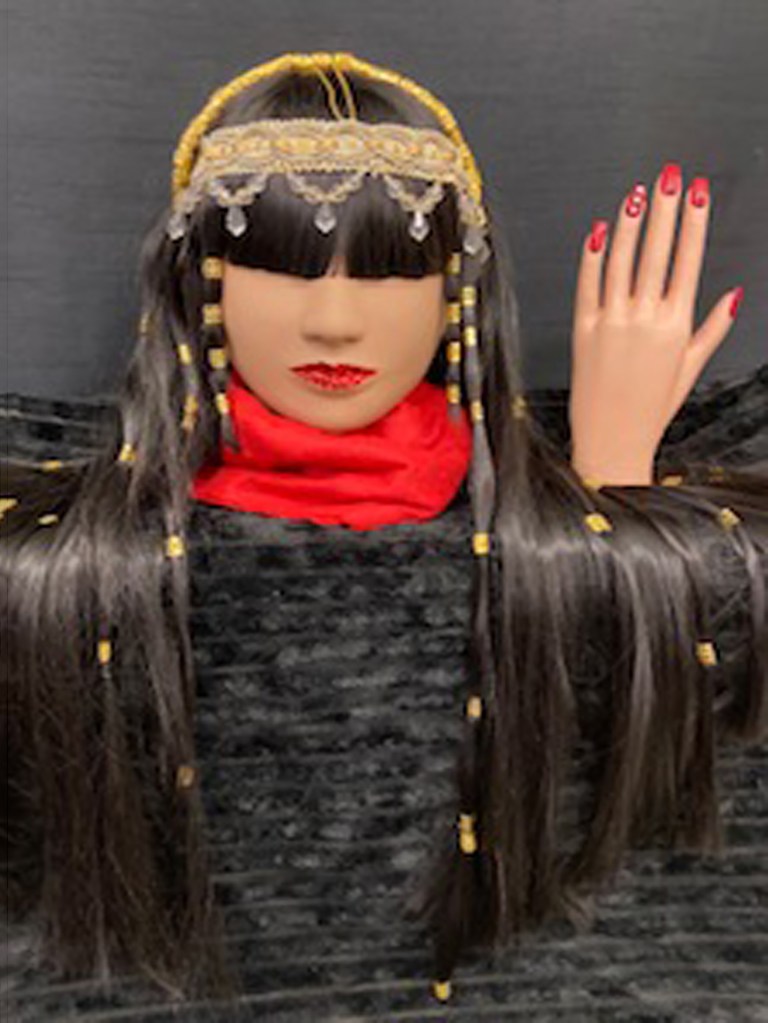
4. The Egyptians

The Egyptians were very innovative with their creativity.  They used minerals, insects and berries for makeup. That’s amazing!  Don’t you think? Not only that, they used henna paste to stain their nails red.  Red is the color of power, so we painted the mannequin’s nails fire engine red and applied the same color to her lips.  The Egyptians were the first to cultivate beauty in an extravagant fashion, which is why they used a lot of jewelry in their hair.   Wearing jewels was believed to protect the owner and give them strength.

-Adamary Reyes, Author

-Arnyah Brown, Contributor


5. The Chinese Culture

Throughout the Chou Dynasty (1100 B.C.), gold and silver nails were  strictly reserved for royal family members.  The color purple is also associated with luxury, power, and ambition. Naturally we selected our home football team to create our Ravens Girl a.k.a. Ms. Jackson #8. Not to overdo it with the gold, we incorporated silver glitter with her purple nails.  We also used clip-in hair streaks, colored hair spray and gold hair accessories to complete her look.

-Shayla Jackson, Author

-Ariell Hayes, Co-Author

-Luz Amaya, Contributor

-Ayslinn Garcia, Contributor

Back to School Night brings smiles to Patterson faces

By Hailey Shifflett

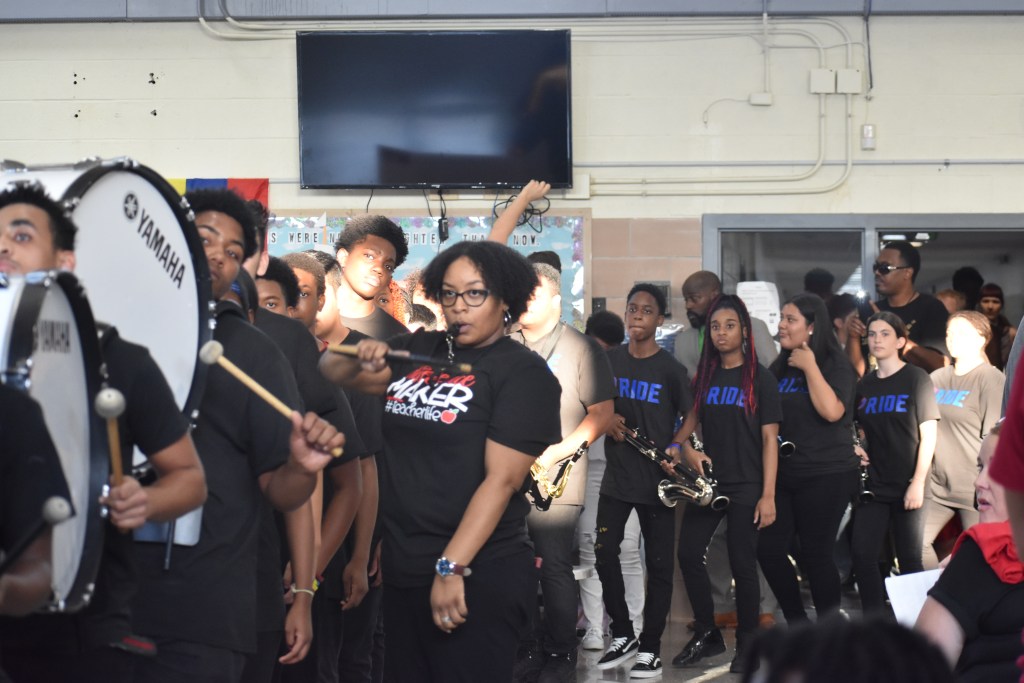
Ms. Williams and the band as they are walking in to perform at Back to School Night (Photo: Patterson Press)

Patterson High held its 9th annual Back to School Night and Community Fair on September 26th from 5-8 pm in the school cafeteria. There were many things to do and many more things to see. From belly dancers to our own marching band’s performance, Back to School Night was a fun time.

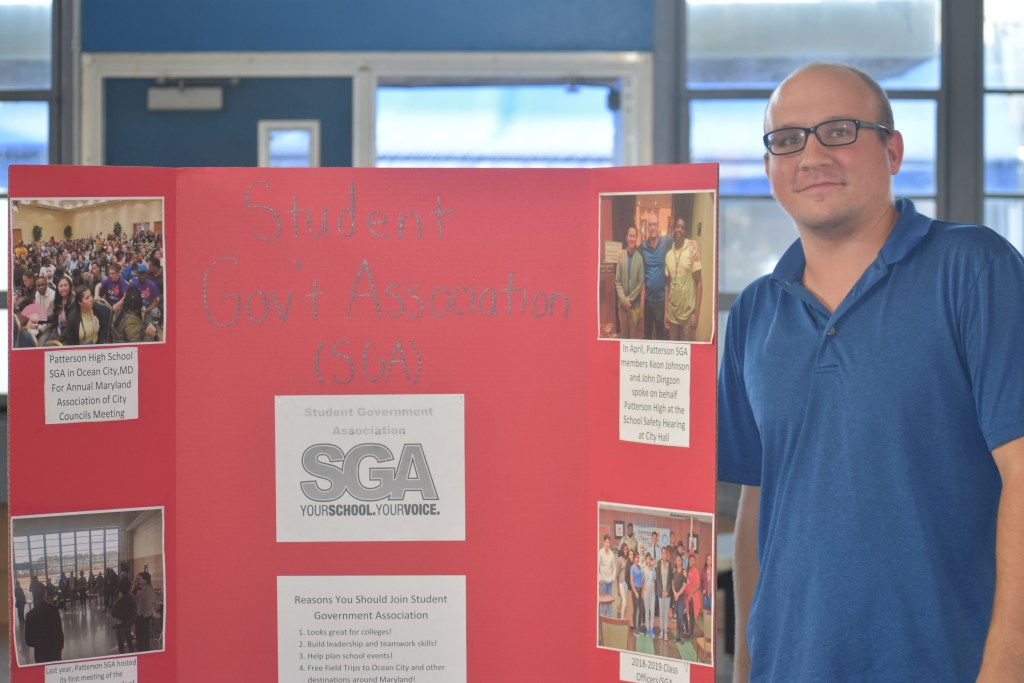
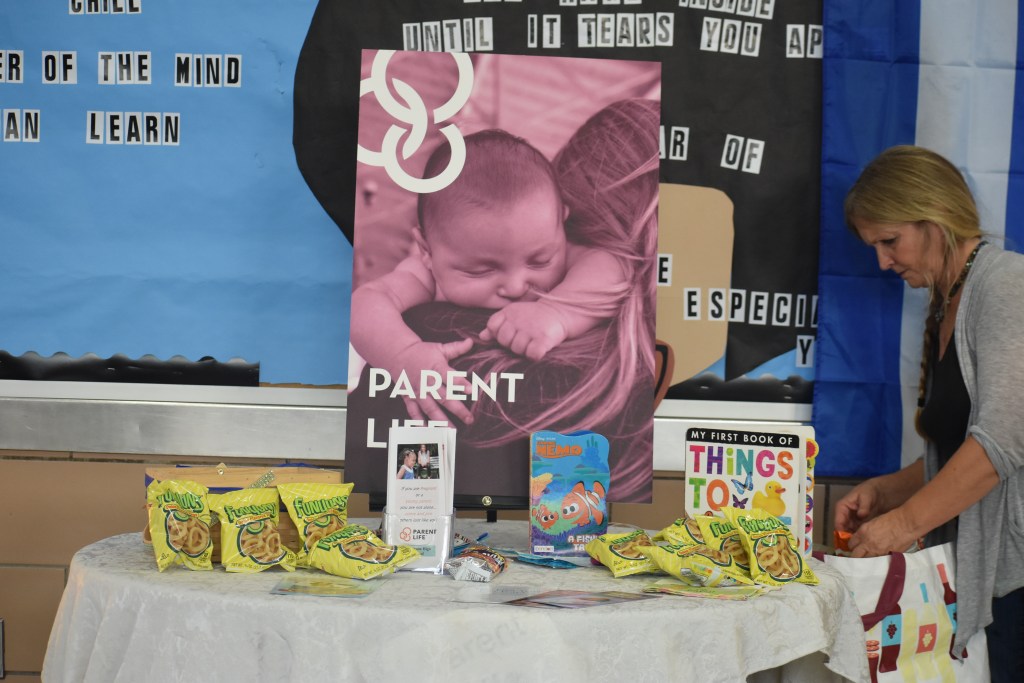
Patterson has multiple groups and clubs that you can participate in during or after school. Back to School Night introduced students and their families to the teachers and organizers that host many different clubs. There were many tables for clubs like Art Club, the Student Government Association, the Patterson Press, etc along with a number of other groups from the community. Everyone who attended enjoyed Back to School Night, including some parents.

Ms. Ciera Garner, mother of Destiny Garner, remarked, “I love this Back to School Night. It is a lot of fun and I love how they have music too. My favorite event so far is the band performance.”

Not only parents enjoyed it, but students did too. Moussa Bombwe, a tenth grader, felt that Back to School Night was “good.” His favorite table was Soccer Without Borders, one of the groups that were featured at the event.

Some more clubs and groups at Patterson are SGA, run by Adam Sokolski, a social studies teacher, Roberta’s House, and Empowering Minds.
The SGA is the Student Government Association, The SGA’s goal is to teach student leadership, and to work with SGA all around Baltimore, and to work on teamwork skills. Also, in the past the SGA went to City Hall.

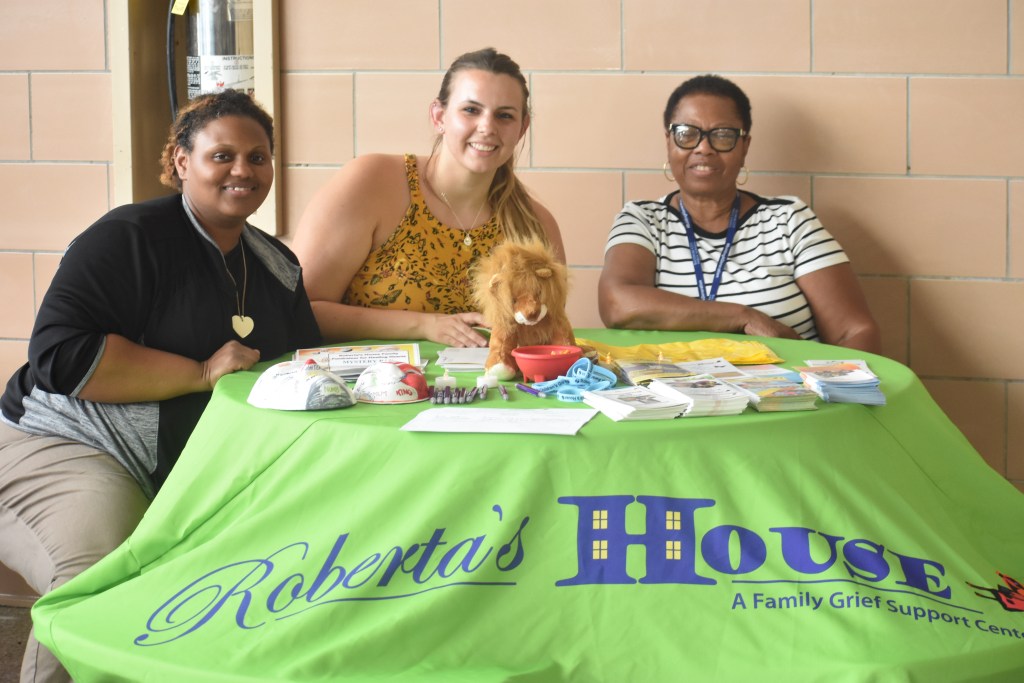
Roberta’s House is a family support group. They have multiple programs that help both parents and children for family loss (death, deportation, missing, etc.) Also, they help mothers with child loss (miscarriage, child died, etc.) They work here at Patterson and any student can join. Lastly, There is Empowering Minds. They are also a support group which has therapeutic counseling and talks to you about your problems, mental health, and many other things.

Mr Benton, Patterson’s principal, also shed light on what he thought about the Back to School Night. “I’m always excited about the Back to School Night. It doesn’t matter about the amount of people that come, but the smiles on their faces.”

His favorite event of the night was the band’s performance and the people enjoying the band’s performance as well. He’s appreciative for the adults that help out at Patterson and spend their own time with students to make new and exciting clubs. Mr. Benton loves all of the Back to School Nights because people showed up and had a good time and he is grateful for that.

Overall, Back to School Night was a good time. People had fun and enjoyed themselves. Some joined new clubs or met new people. Back to School Night was a way for the community to join together and forget, even for a second, the problems that might be going on in their lives. Their main focus was to just have a good time. And that is what Back to School Night is all about.
Our principal, Mr. Benton, showing that he is even having a good time (Photo: Patterson Press)

Ms. Ball makes engineering class fun and exciting

By Kayla Holeman

Ms. Ball and Mr. Yates won the Excellence Award at the Twenty-Second Annual Technology Education Excellence in Education Awards Program in February. (Photo: Ms. Ball/Mr. Yates)

We wanted to know more about engineering at Patterson High School and why should students take engineering classes so we interviewed the engineering teacher, Ms. Ball.

To me, engineering seems cool and fun. You learn a lot. I’m not even taking the class yet, but I will take it because I really like how it is. It seems interesting.

Engineering teacher Ms. Sharon Ball got inspired by luck because her recruiter from high school inspired her to get into engineering. She worked as an engineer on massive cruise ships and she loved it so she kept doing what she loves to do. Ms. Ball started working in the field of engineering 24 years ago.

In February, Ms. Ball and Mr. Yates received the Excellence Award at the Twenty-Second Annual Technology Education Excellence in Education Awards Program. Ms. Ball and her students have also won other prestigious awards over the last few years.

The engineering pathway has gone on a number of field trips, including visits to an engineering company, colleges, and a drum company. Ms. Ball loves to inspire students and to blow stuff up.

Ms. Ball’s advice is, “If you fall down to get back up.” I like this quote because you should never be scared to not get it right the first time. If you get it wrong, just keep trying; never give up. This is why I would like for engineering to be my pathway, because it’s just great in my opinion.
Ms. Ball seems like a nice, wonderful teacher and I can’t wait to have her and blow stuff up. If you have any questions about the engineering pathway at Patterson, then just go to Ms. Ball in 107, and she would be happy to answer anything you need about engineering. If you are into engineering, you should take this class because it seems pretty cool, going on trips and just learning new things. I would love to take this class next year. I can’t wait. It’s just going to be wonderful and if you are not sure what class to take but you want something like this, try it out because you are only going to know if you try.

Dante Wilds contributed to this article.

Students tour battleships on Fleet Week

By John Dingzon

AFJROTC cadets and students from the homeland security pathway took a field trip for fleet week to the Inner Harbor on Monday, October 1,  where they learned more about fighter jets, other aircraft, ground vehicles and ships.

They also learned about military life as well as how to join the military and the application that they need to fill out if they are interested in joining the military later in their future career.

The military personnel talked about their experience in the military, including any battle experience and whether it was reserve or the front lines, as well as the eligibility to enter the military.

Ms. Brett and Ms. Knowles were the chaperones that led the field trip. The students and cadets had the opportunity to see not just American Navy ships but also international ships from other countries, including England, Australia, France and Germany.

The HMS Monmouth was present from England and as well the U.S.S. Milwaukee from the American Navy.

Most of the military personnel were on shore leave but others were in transition to different ships to report for duty and get ready to ship out.

Overall, students learned a lot on this field trip and enjoyed getting to see the ships.

« Older Entries